
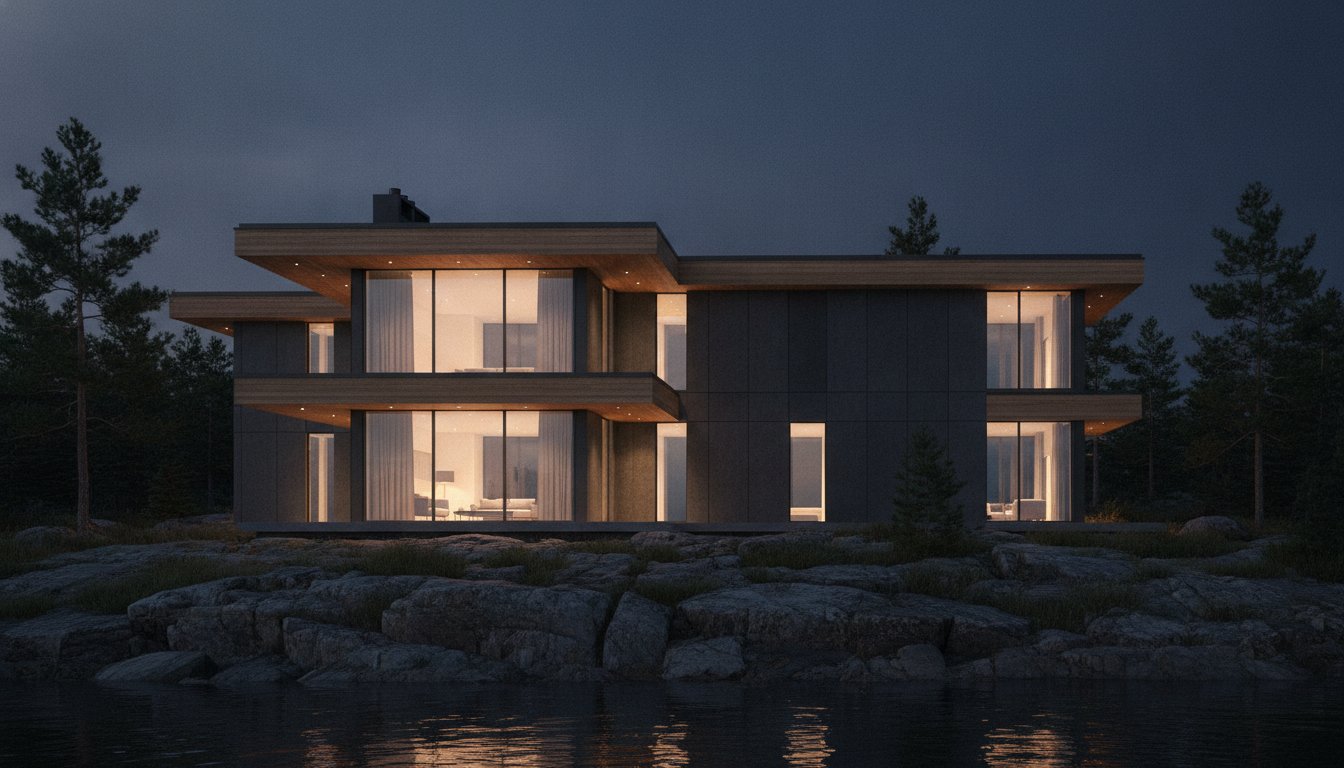
In 2026, the most sophisticated architectural statements aren’t defined by aesthetic excess, but by the invisible precision of high-performance engineering. You likely recognize that building for the Canadian climate requires more than just a creative vision; it demands a rigorous commitment to durability and structural health. Yet, many homeowners still worry that “green” choices mean compromising on elegance or getting lost in the technical noise of conflicting R-value claims and off-gassing concerns. Selecting the right sustainable building materials for canadian homes is no longer a niche pursuit for the rustic-minded. It’s a strategic investment in longevity that defines the modern luxury estate.
We understand that your home is both a private sanctuary and a significant financial legacy. This guide will show you how to harmonize bespoke design with the latest eco-conscious innovations, ensuring your residence remains a healthy, energy-independent sanctuary that exceeds the National Building Code of Canada 2025. We’ll explore the sophisticated applications of mass timber, the performance gains of low-carbon concrete, and the rigorous human impact assessments of LEED v5 to help you future-proof your investment against a changing climate and evolving regulatory standards.
Key Takeaways
- Understand why the Canadian climate demands a specialized approach to material science to ensure your home’s longevity and resilience against extreme weather.
- Discover how to utilize sustainable building materials for canadian homes, such as mass timber and advanced insulation, to achieve exceptional R-values while maintaining a thin, sophisticated architectural profile.
- Learn to identify high-performance interior finishes that eliminate off-gassing, allowing you to prioritize indoor air quality without compromising on high-end aesthetic standards.
- Gain a strategic framework for conducting Life Cycle Assessments to evaluate the ethical and financial impact of your material choices over the entire life of your property.
- See how a visionary, integrated design-build approach ensures that every sustainable objective is realized through persistent dedication and expert project management.
The Evolution of Sustainable Construction in the Canadian Climate
For decades, the concept of “green building” was often relegated to secondary status, perceived as a collection of compromises that favoured ethics over elegance. In 2026, this paradigm has shifted entirely. True sustainability is now defined through the lens of longevity and resilience; it is the art of selecting sustainable building materials for canadian homes that can endure the brutal cycle of freeze and thaw while maintaining a pristine architectural finish. This evolution represents a move away from superficial “green-washing” toward verified high-performance standards that prioritize the structural health of the building and the physical well-being of its occupants.
Our architectural design philosophy views the Canadian landscape not as an adversary, but as a primary informant of material science. The National Building Code of Canada 2025 and the recent implementation of LEED v5 have codified this necessity, moving the industry toward mandatory carbon assessments and climate resilience. By adhering to Green building principles, we ensure that every material chosen serves a dual purpose: it must honour the natural beauty of the site and provide a level of modern comfort that remains unaffected by external volatility. This approach transforms the home into a high-performance vessel that protects your investment and your family for generations.
Climate Resilience: Building for Extreme Temperature Swings
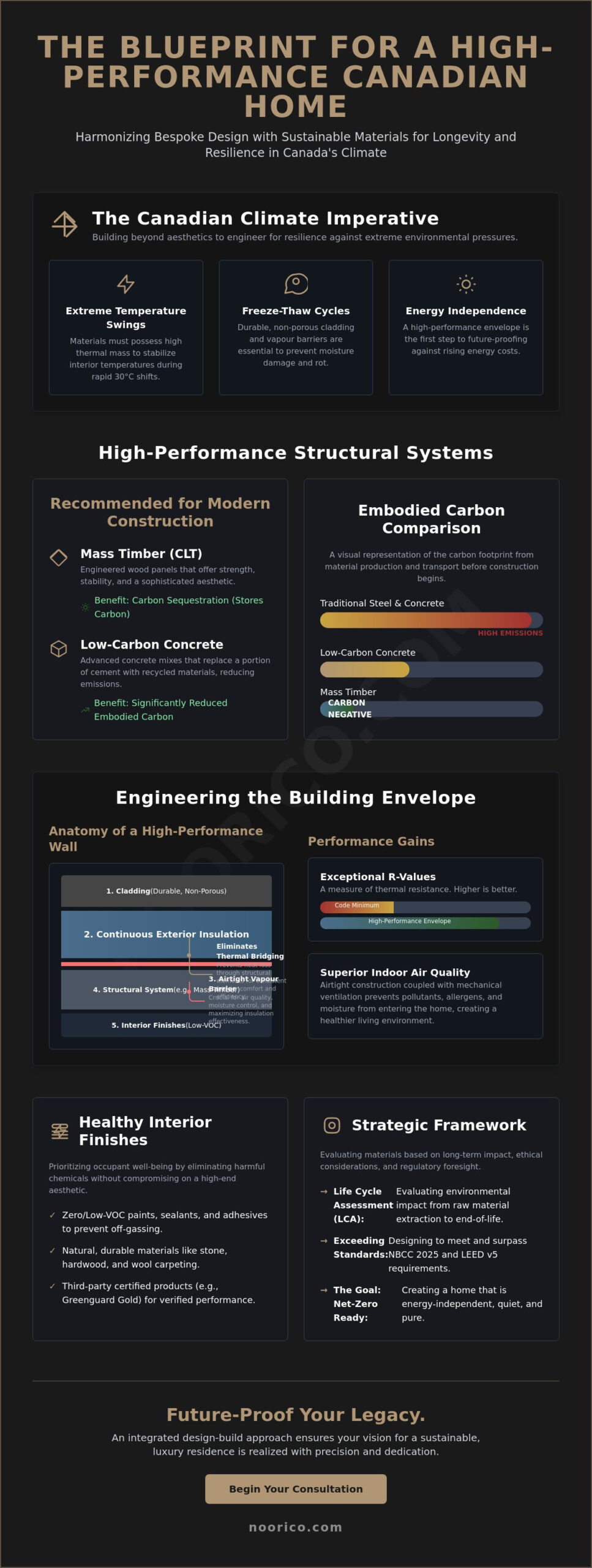
The Canadian climate demands materials with exceptional thermal mass and moisture management capabilities. High-performance concrete and mass timber act as thermal batteries, absorbing heat during the day and releasing it slowly as temperatures drop at night. This stability is crucial for energy efficiency in a region where a 30-degree temperature swing in a single day is a common occurrence. Additionally, we prioritize materials that resist moisture and rot during the critical spring thaw period. Selecting durable, non-porous cladding and advanced vapour barriers reduces the total lifecycle impact of the home by eliminating the need for frequent repairs or premature replacements.
The 2026 Vision: Net-Zero and Beyond
In the luxury custom home market, “net-zero ready” has become the baseline for excellence rather than an optional upgrade. This standard reflects a deep intersection between evolving building codes and personal environmental ethics. Homeowners now seek to future-proof their properties against rising energy costs and changing regulations by investing in superior building envelopes today. Net-zero architecture is a fusion of airtightness and renewable energy. By integrating these elements into the initial architectural design, we create residences that are not only energy-independent but also possess an inherent quietude and air purity that traditional construction simply cannot match.
Structural Integrity and High-Performance Insulation Systems
Selecting sustainable building materials for canadian homes often begins with the skeleton of the structure itself. While traditional steel and concrete have long been the industry standard, they carry a heavy burden of embodied carbon. In 2026, the sophisticated expert looks toward materials that sequester carbon rather than emit it. The Canada Green Buildings Strategy underscores this shift, aiming for a 30% reduction in embodied carbon for major construction projects. This transition is not merely an ethical choice; it’s a strategic move to future-proof your investment against changing building codes and carbon pricing.
A high-performance structure also requires a rethink of the building envelope. We prioritize air barriers and continuous exterior insulation to eliminate thermal bridging, which is the primary cause of heat loss in traditional builds. By maintaining a pristine interior environment through airtight construction, we ensure that your mechanical systems work less, your air stays purer, and your comfort remains absolute. When planning your next custom home building project, consider how these structural choices impact both immediate comfort and long-term value.
Mass Timber: The New Standard for Bespoke Structures
Mass timber and Cross-Laminated Timber (CLT) have emerged as the premier alternatives for high-end residential design. Beyond their striking aesthetic appeal, these materials offer exceptional fire resistance and seismic performance. Because CLT panels are precision-engineered in a factory setting, they allow for a cleaner, faster assembly process on-site. We advocate for sourcing these materials locally to support Canadian forestry, ensuring that your home’s structural core is as rooted in the regional landscape as its architectural vision.
Advanced Insulation: Beyond Fibreglass and Foam
Modern luxury renovations now utilize sustainable building materials for canadian homes that offer superior R-values without necessitating excessively thick walls. We often recommend the following high-performance systems:
- Hempcrete and Wood-Fibre: These bio-based materials provide natural breathability and excellent thermal regulation, preventing the “stuffy” feeling of over-sealed homes.
- Vacuum Insulated Panels (VIPs): For projects where every square centimetre of floor space is vital, VIPs offer five to ten times the insulating power of traditional materials at a fraction of the thickness.
- Continuous Exterior Insulation: Wrapping the home in a seamless layer of rigid mineral wool or wood-fibre board ensures that the structural studs don’t act as conduits for cold.
Our commitment to persistent dedication ensures that these technical systems are integrated seamlessly into your home’s design. By combining strategic industry knowledge with creative foresight, we transform the invisible components of your home into a foundation for enduring luxury.
Sustainable Interior Finishes: Merging Health with Sophisticated Design
Luxury is often associated with visual grandeur, but the true measure of a refined home lies in its invisible qualities. Indoor Air Quality (IAQ) has become a primary priority for discerning homeowners undertaking Major Renovations. Standard interior finishes often contain a cocktail of volatile organic compounds (VOCs) that off-gas for years, compromising the health of the inhabitants. By prioritizing sustainable building materials for canadian homes that are zero-VOC or low-emission, we create a sanctuary that supports cognitive function and physical vitality. This approach ensures that your home’s interior is as healthy as it is beautiful.
Our Interior Design philosophy integrates biophilic principles to enhance psychological well-being. By using natural stone, reclaimed wood, and mineral-based finishes, we bring the calming essence of the Canadian outdoors inside. These materials don’t just look premium; they possess a tactile soul that synthetic alternatives cannot replicate. Through our alignment with Canadian green building initiatives, we continuously source innovative finishes that bridge the gap between ecological responsibility and high-end aesthetics.
Non-Toxic Interiors: A Healthy Foundation
A healthy interior starts with what you don’t see. We carefully audit standard cabinetry and flooring adhesives to identify harmful chemicals like urea-formaldehyde, which are common in mass-market products. Instead, we advocate for natural clay plasters and mineral paints. These materials offer a sophisticated, matte texture while naturally regulating indoor humidity levels. For interior styling, we select GOTS-certified textiles and natural fibres like wool and linen. These choices eliminate synthetic off-gassing and ensure that every surface your family touches is pure and safe.
Reclaimed Luxury: Storytelling Through Material
Reclaimed materials offer a level of character and history that new products simply lack. In modern Home Additions, the inclusion of heritage timber from old Ontario barns or B.C. warehouses creates a powerful narrative of continuity. Our design team elevates these salvaged materials by pairing them with recycled glass and metal accents, creating an aesthetic of industrial elegance. This isn’t about a rustic look; it’s about using sustainable building materials for canadian homes to create a bespoke environment. We believe that professional design turns a piece of recycled history into a focal point of modern luxury, proving that ethical sourcing and high-end style are perfectly compatible.
Evaluating the Lifecycle: A Framework for Material Selection
Sophisticated decision-making in high-end construction requires a framework that transcends mere upfront costs. We utilize a “Three Pillars” methodology to evaluate every selection: Performance, Aesthetics, and Ethics. This rigorous approach ensures that the sustainable building materials for canadian homes we specify provide a superior return on investment over a 25-year horizon. By conducting a Life Cycle Assessment (LCA) for major home renovations, we provide our clients with a transparent view of how their material choices will perform across decades of Canadian winters.
Balancing initial construction costs with long-term operational savings is a hallmark of strategic project management. The Canadian green building materials market is projected to grow at a compound annual rate of 7.28% through 2034, reflecting a broad industry shift toward value-based procurement. Our role as your visionary partner is to guide you through these complex financial and environmental intersections, ensuring your investment is both principled and profitable. If you are ready to define the legacy of your property, our Project Management team provides the oversight necessary to align your financial goals with high-performance execution.
Embodied Carbon vs. Operational Carbon
Reducing energy consumption is only half of the sustainability equation. We must also address the “hidden” carbon footprint of the structure itself. Embodied carbon represents the total greenhouse gas emissions from manufacturing to installation. While low-carbon concrete currently carries a 5 to 15% premium over standard mixes, this cost is often offset by superior performance gains and future-proofed compliance with the National Building Code of Canada 2025. We prioritize materials with low carbon footprints within the Canadian supply chain to minimize transportation emissions and support regional innovation.
R-Value and the Comfort Factor
Thermal resistance, or R-value, is the primary metric for interior stability. Higher R-values translate to more consistent interior temperatures, eliminating the cold spots and drafts that plague traditional builds. This stability allows for greater architectural freedom; high-performance glazing and advanced insulation systems mean we can design expansive, light-filled spaces without sacrificing thermal integrity. We evaluate the “cost-per-comfort” metric for every custom home building project, ensuring that every dollar spent on the building envelope delivers a tangible improvement in your daily living experience.
The NOORICO Approach: Integrating Sustainability into Bespoke Residential Design
We don’t view sustainability as a peripheral checklist; we see it as a fundamental pillar of superior creative achievement. Our role as a visionary partner is to guide you through the complex intersections of material science, finance, and execution. By applying persistent dedication to every phase of the project lifecycle, we ensure that the high-performance goals established in the initial architectural design aren’t diluted during construction. This commitment to ethical and transparent building creates enduring professional bonds, reassuring you that your significant investment is in safe, principled hands.
Realizing a truly bespoke residence requires a holistic understanding of how sustainable building materials for canadian homes interact with the local environment. Our integrated model allows us to maintain a steady, structured rhythm from the first sketch to the final interior finish. By defining philosophical values and technical requirements early, we create a predictable and reassuring flow for our clients. This methodical approach mirrors our operational process, ensuring that every strategic industry insight is translated into a tangible, localized benefit for your property. We believe that a home is a legacy, and our Project Management expertise ensures that legacy is built on a foundation of integrity.
Design-Build Synergy: From Blueprint to Sustainable Build
The primary advantage of our integrated model is the elimination of the “design-to-build” gap. In traditional construction, energy-efficient details often get lost in translation between separate firms. At NOORICO, our Architectural Design and construction teams work in unison to preserve the integrity of the building envelope. We utilize natural light optimization to reduce energy loads, ensuring your home remains bright and efficient without excessive mechanical intervention. This same level of precision applies to our home additions gta, where we seamlessly expand existing properties using high-performance materials that match the original structure’s sophistication while enhancing its overall efficiency.
Future-Proofing Your Investment
As Canadian building standards evolve, including the integration of future climate data into the National Building Code of Canada 2025, proactive design becomes essential. We stay ahead of these regulatory shifts to ensure your custom home remains a high-value asset for decades. By selecting sustainable building materials for canadian homes that exceed current requirements, we protect your property against changing codes and rising energy costs. Your home should be a sanctuary that endures, and our dedication to precision ensures it remains an architectural benchmark in your community. Realize your vision of a sustainable luxury home with NOORICO.
Defining the Future of the Canadian Estate
Building a residence that endures requires a precise alignment of architectural vision and material science. You now understand that the most effective sustainable building materials for canadian homes go beyond mere energy savings; they establish a foundation for structural resilience, indoor air purity, and long-term financial security. By prioritizing high-performance insulation and non-toxic interior finishes, you transform your home into a sanctuary that remains comfortable regardless of the external climate. This strategic approach ensures your investment is protected against evolving building codes while reflecting your personal commitment to environmental ethics.
At NOORICO, we bring over 25 years of established expertise to every project we undertake. Our integrated design-build project management model eliminates the gap between inspiration and execution, ensuring your sustainable goals are met with persistent dedication. We maintain an uncompromising commitment to superior creative achievements, guiding you through the complex intersections of luxury and ecology. Begin your journey toward a sustainable masterpiece with NOORICO. Your vision of an enduring, high-performance home is within reach, and we’re here to ensure it’s realized with absolute precision.
Frequently Asked Questions
What are the best sustainable building materials for Canadian winters?
Mass timber and advanced insulation systems like wood-fibre or hempcrete are the most effective sustainable building materials for canadian homes during extreme winters. These materials offer high thermal mass, acting as a thermal battery that stabilizes interior temperatures during 30-degree fluctuations. This resilience ensures your home remains comfortable and energy-efficient even during the most severe freeze-and-thaw cycles typical of the Canadian climate.
Is it significantly more expensive to use sustainable materials in a custom home?
High-performance materials often carry an initial premium, such as the 5 to 15% increase seen in low-carbon concrete, but they provide a superior return on investment. You’ll realize significant savings through lowered operational costs over a 25-year horizon. Strategic selection also future-proofs your property against tightening building codes, ensuring your asset maintains its high-end market value as standards evolve.
How do sustainable materials improve indoor air quality in a renovation?
Sustainable finishes improve air quality by eliminating the volatile organic compounds (VOCs) found in standard cabinetry adhesives and synthetic paints. Using natural clay plasters and mineral-based coatings prevents off-gassing while naturally regulating indoor humidity levels. This creates a healthier sanctuary that supports cognitive function and physical well-being, which is a primary priority for any sophisticated interior renovation.
Can I achieve a modern aesthetic using only eco-friendly materials?
Modern luxury is perfectly compatible with eco-conscious selections like reclaimed heritage timber, recycled glass, and natural stone. These materials possess a tactile soul and architectural distinction that synthetic alternatives simply cannot replicate. Our design-build process ensures these elements are integrated with creative foresight, resulting in a sophisticated, industrial elegance that defines the contemporary Canadian home.
What is embodied carbon and why should I care about it for my home?
Embodied carbon represents the total greenhouse gas emissions associated with the manufacturing, transportation, and installation of your home’s structure. It’s a critical metric because the Canada Green Buildings Strategy targets a 30% reduction in these emissions for major projects. Prioritizing sustainable building materials for canadian homes with low embodied carbon ensures your residence is as ethical as it is architecturally stunning.
How does the design-build model help with sustainable material selection?
The design-build model eliminates the gap between architectural vision and construction execution, ensuring technical details like airtightness aren’t lost in translation. This integrated approach allows for a steady, structured rhythm where material performance is verified at every stage. You benefit from a visionary partner who manages the complex intersection of industry knowledge and high-performance design to realize your sustainable goals.
Are there Canadian certifications I should look for when choosing materials?
You should prioritize materials that align with the National Building Code of Canada 2025 and the latest LEED v5 standards released in 2025. These frameworks emphasize mandatory carbon assessments and climate resilience. Looking for GOTS-certified textiles and regional designations also ensures your selections meet the highest ethical and performance benchmarks recognized within the Canadian construction industry.
Do sustainable materials require more maintenance than traditional ones?
Most high-performance materials actually require less maintenance because they are engineered for superior durability and longevity. Natural stone, mass timber, and high-quality metal cladding age with a distinction that reduces the need for frequent repairs. By choosing materials that resist moisture and rot during spring thaws, you lower the total lifecycle impact and long-term upkeep requirements of your property.