
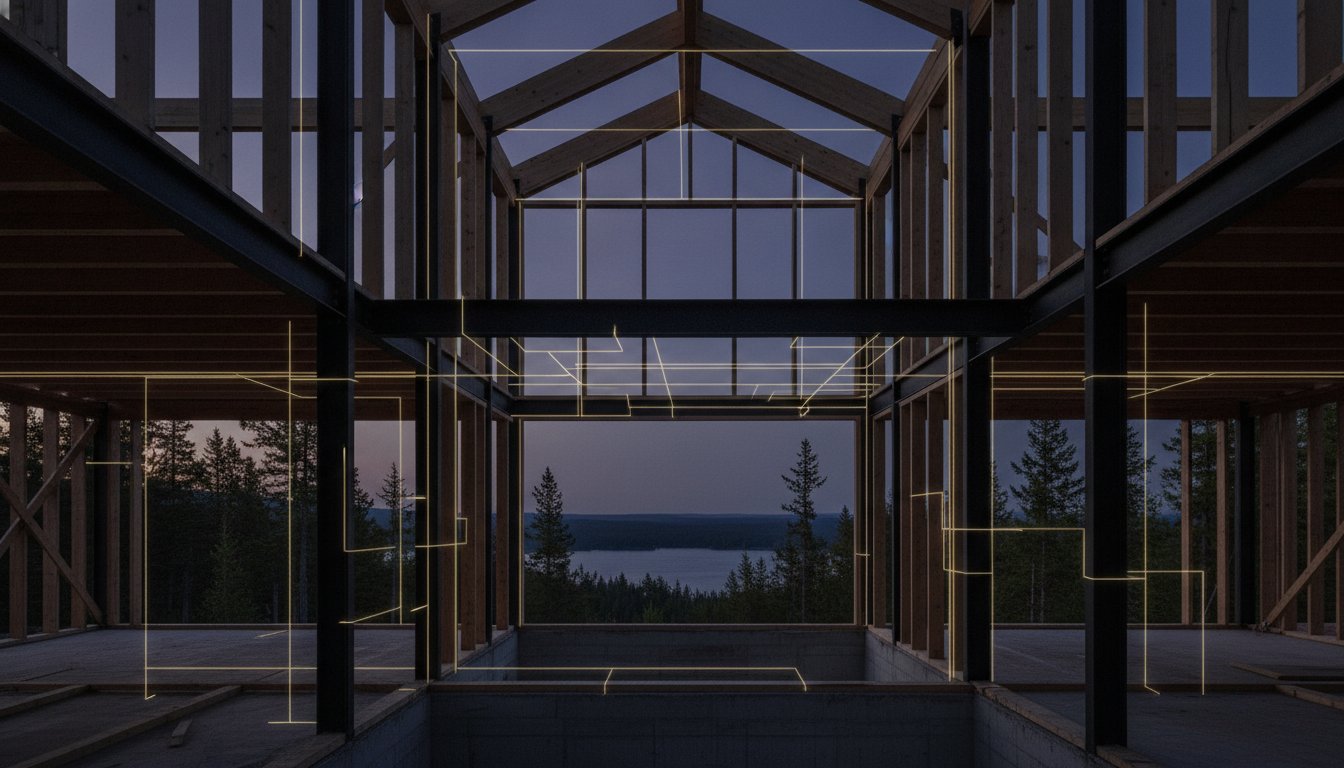
What if the most sophisticated technology in your home was the one you never actually saw? You likely recognize that a truly intelligent residence should feel intuitive rather than intrusive, yet it’s natural to feel anxious about fragmented DIY systems or the potential for gadgets to clutter your carefully curated interior design. We understand that smart home integration for new construction is no longer a luxury add-on but a structural fundamental that requires precise architectural foresight before the first sheet of drywall is ever installed.
This guide provides the clarity required to architecturally integrate sophisticated automation into your new build for a seamless, future-proof luxury experience. You’ll discover how professional integration utilizes the latest Matter 1.4 standards and structured wiring to create an invisible, high-value asset that anticipates your needs. We’ll explore the strategic intersection of industry knowledge and creative foresight to ensure your home remains as functional as it is beautiful for decades to come. By prioritizing infrastructure during the framing phase, you can secure a home that evolves with technology while maintaining its sophisticated elegance.
Key Takeaways
- Learn why the most critical decisions for a sophisticated home occur before the foundation is poured, prioritizing robust pre-wiring to eliminate the need for future renovations.
- Discover how smart home integration for new construction transforms technology from a collection of gadgets into a core utility that elevates your architectural vision.
- Understand the distinction between fragmented devices and a unified operating system that provides centralized, intuitive control over your entire living environment.
- Master the strategy for future-proofing your investment by implementing modular systems that allow your home to evolve seamlessly alongside technological advancements.
- Realize the value of a design-build approach where project management and technical execution work in synergy to deliver a truly intelligent luxury residence.
The Evolution of Residential Design: Why Smart Integration is Essential for New Construction
The definition of a modern home is undergoing a radical transformation. We no longer view technology as an overlay or a collection of peripheral devices. Instead, smart home integration for new construction has ascended to the status of a core utility, standing alongside electricity, plumbing, and HVAC as a non-negotiable structural element. A visionary build recognizes that a home’s digital nervous system must be as robust and permanent as its physical foundation. By treating connectivity as a primary utility, we ensure that every room is prepared to support the sophisticated lifestyles of tomorrow.
Looking back at the history of home automation, the industry has moved far beyond the early days of niche hobbyist gadgets. We’ve shifted from a reactive approach, where homeowners purchase disparate devices to solve isolated problems, to a proactive model of environmental design. This evolution ensures that technology serves the architecture rather than distracting from it. When you embed intelligence into the very fabric of the build, you eliminate the aesthetic clutter of visible wires and plastic hubs, preserving the pristine lines of a custom interior.
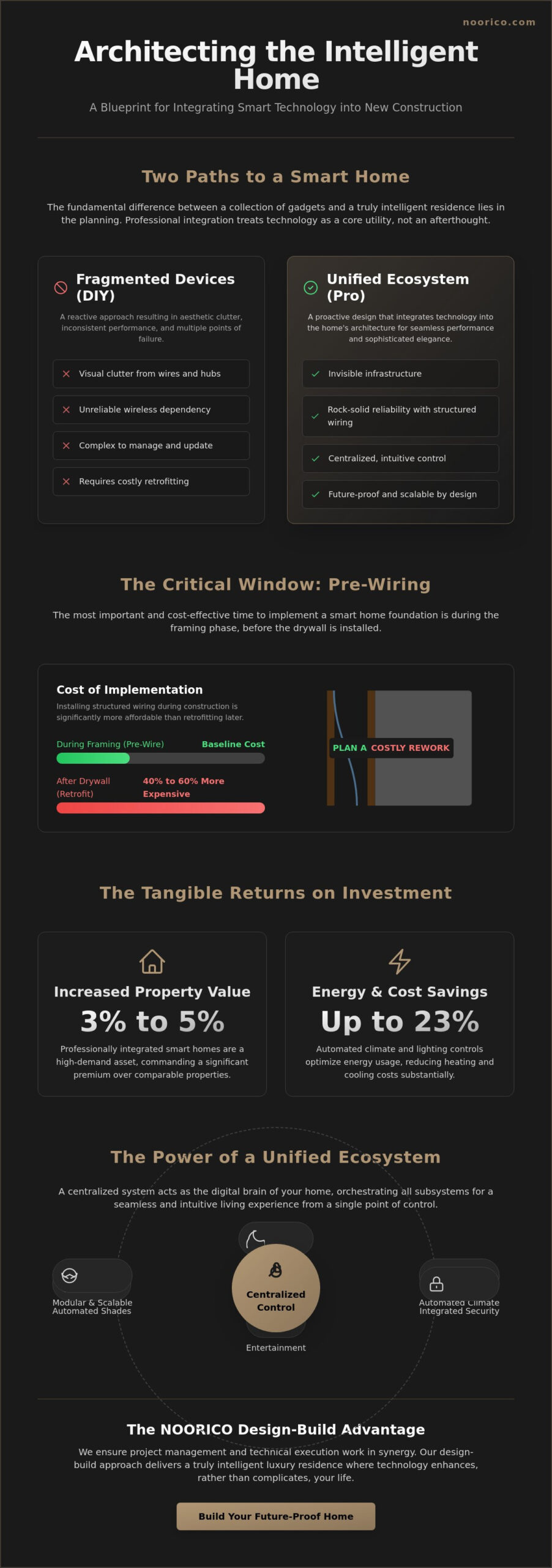
The financial and psychological incentives of this approach are substantial. Verified data from early 2026 suggests that homes with integrated smart technology can command a premium of 3% to 5% over comparable properties. Beyond resale value, there’s a profound sense of well-being that comes from a residence that anticipates daily rhythms. Imagine a home that gradually adjusts its lighting colour temperature to match your circadian rhythm or pre-cools the master suite as your evening routine begins. This creates a living environment that supports your lifestyle with quiet, persistent dedication, turning a static structure into a responsive sanctuary.
Beyond Convenience: The Practical Case for Integration
Practicality drives the modern custom build. Automated climate and lighting controls aren’t just about comfort; they’re essential tools for energy management. Research indicates that smart thermostats can reduce heating and cooling costs by up to 23%, a significant factor in large-scale Canadian residences. Security protocols also integrate directly with architectural entry points, providing a cohesive shield that’s managed through a single interface. This modernization ensures that every square foot of your home is optimized for both performance and protection.
The 2026 Standard for Luxury Living
Basic Wi-Fi connectivity is the bare minimum, not a luxury feature. High-end Canadian architecture now demands “invisible technology” that provides maximum utility with zero visual impact. Smart integration is the intersection of structural design and digital intelligence. This standard ensures that smart home integration for new construction remains a sophisticated, functional asset that evolves alongside your needs without requiring invasive renovations later.
The Architectural Skeleton: Prioritizing Pre-Wiring and Infrastructure
The most consequential decisions for smart home integration for new construction occur long before the foundation is poured. While many homeowners focus on the visible interfaces, the true value of a luxury residence lies in its hidden architectural skeleton. A robust physical infrastructure provides the reliability that wireless-only systems simply cannot match; it ensures that your digital experience is as stable as the walls surrounding you. This phase is also the most cost-effective time to act, as installing infrastructure during framing is typically 40% to 60% less expensive than retrofitting after the drywall is up.
A centralized mechanical room or tech closet serves as the command centre for this infrastructure. This dedicated space houses the core hardware, networking racks, and amplifiers, keeping equipment out of sight while ensuring ease of maintenance. By consolidating these components, we preserve the aesthetic integrity of the living spaces and provide a controlled environment for the home’s digital brain. It’s a strategic move that moves the “grit” of project management into a single, manageable location.
Planning for high-capacity cabling is essential to meet 2026 data demands. We prioritize Cat6A or Cat7 cabling to support multi-gigabit speeds and high-bandwidth applications like 8K streaming and real-time security analytics. This hardwired backbone is supplemented by strategic conduit runs. These empty pathways allow for future technological upgrades without the need to open finished walls, ensuring your investment remains relevant as standards evolve. For those beginning their journey, our team provides the architectural design expertise necessary to align these technical requirements with your aesthetic goals.
A sophisticated build also requires a meticulous approach to power supply. We implement whole-home surge protection and dedicated circuits for sensitive electronics to prevent disruptions from grid fluctuations. This proactive methodology transforms a standard build into a high-performance asset that operates with quiet confidence. By securing the power foundation, we protect the longevity of every integrated component.
Pre-Wiring: The Foundation of Reliability
Wireless technology is a supplement, not a substitute. Hardwired connections eliminate the latency and interference issues common in dense residential environments. We strategically place access points to ensure seamless Wi-Fi 7 coverage throughout the property, reaching every corner from the basement to the outdoor terrace. Additionally, we install “ghost wires” in ceilings and walls. These dormant cables allow for the effortless addition of future audio zones or environmental sensors once the home is occupied, providing a modular path for expansion.
Architectural Integration of Hardware
Technology should complement, not compete with, your interior design. We coordinate with interior designers to create custom millwork that conceals equipment while maintaining proper ventilation. Keypad placement is carefully planned to reduce “wall acne,” using elegant finishes that match your home’s hardware palette. Dedicated cooling for centralized rack systems is a necessity to prevent overheating and ensure the persistent dedication of your sophisticated investment over many years.
Selecting a Unified Ecosystem: Centralized Control vs. Device Fragmentation
A common pitfall in smart home integration for new construction is the “app fatigue” caused by a fragmented collection of independent devices. While individual smart bulbs or standalone thermostats may offer basic functionality, they often operate in digital silos. A truly sophisticated residence requires a unified smart home Operating System (OS). This centralized brain ensures that lighting, HVAC, audio, and security systems speak a single, cohesive language. By consolidating these controls, we eliminate the need to juggle dozens of conflicting apps, replacing chaos with a streamlined, intuitive interface.
Evaluating professional-grade platforms is a critical step in the design process. Systems like Control4, Crestron, or Lutron are engineered specifically for high-end residential environments where reliability is paramount. These platforms don’t just control devices; they orchestrate environments. For instance, a “Welcome” scene can simultaneously disarm the security system, illuminate the hallway in a warm hue, and activate your preferred climate settings. This level of interoperability is what transforms a house into a responsive sanctuary that understands your intent.
Choosing a unified ecosystem also simplifies the long-term management of your property. When every component is part of a singular ecosystem, software updates and hardware expansions become predictable and manageable. This architectural foresight ensures that your home remains a high-value asset, free from the technical debt that often plagues DIY installations. It’s a strategic investment in both current lifestyle and future resale appeal.
Professional Systems vs. DIY Solutions
High-end builds demand a level of stability that off-the-shelf solutions simply cannot provide. Professional systems offer a single point of accountability for system maintenance and performance. Unlike DIY products that may lose manufacturer support within a few years, professional platforms are built for longevity with robust software update cycles. This ensures that your integrated technology remains functional and secure, backed by an expert partner who understands the complexities of your specific installation.
User Experience and Aesthetic Harmony
One of the most profound benefits of a unified ecosystem is the elimination of “wall acne,” the unsightly rows of mismatched switches and dimmers. We replace these with elegant, unified keypads that offer a clean, minimalist aesthetic. These interfaces can be customized with engraved buttons for specific scenes like “Entertain” or “Relax.” The inclusion of voice control and haptic feedback further enhances the luxury experience, allowing you to interact with your environment in a way that feels natural and effortless.
Future-Proofing Your Investment: Modular Tech and Scalable Systems
The fear of technology becoming obsolete is a valid concern for any high-end build. However, true smart home integration for new construction avoids this trap by prioritizing modularity over static installations. By designing a system with open standards and accessible APIs, we ensure that your home can adopt new functionalities as they emerge. This approach treats your technology stack as a living entity that evolves alongside your lifestyle, rather than a fixed asset that begins to age the moment you move in.
The emergence of the Matter 1.4 protocol in 2026 represents a pivotal shift in this evolution. This interoperability standard allows devices from disparate manufacturers to communicate seamlessly across major platforms like Apple Home, Google Home, and Amazon Alexa. With Matter 1.5 anticipated in mid-2026 to include expanded camera support, choosing a compatible foundation is essential for long-term flexibility. This architectural foresight ensures that you aren’t locked into a single vendor, providing the freedom to integrate the best-in-class components of tomorrow without costly structural changes.
A well-documented tech infrastructure is also a significant driver of property resale value. Providing a future buyer with a comprehensive “digital blueprint” of the home’s wiring, conduit paths, and system architecture transforms the technology from a potential liability into a verified asset. Research from early 2026 indicates that integrated smart homes can sell for 3% to 5% more than their conventional counterparts. This documentation serves as a testament to the persistent dedication applied during the construction phase, reassuring future owners that the home is ready for whatever the next decade brings.
Scalability for Growing Needs
Your requirements for a home may change as your family grows or your professional life evolves. A modular hardware approach allows us to swap out components at the rack level, upgrading processing power or storage without disturbing your home’s interior finishes. This scalability prepares your residence for the next wave of AI-driven home management, where predictive automation learns your habits to optimize your environment before you even realize a need exists. If you are ready to begin planning your future-proof residence, our team specializes in Project Management that bridges the gap between today’s vision and tomorrow’s technology.
Sustainable Tech Integration
Modern luxury is increasingly synonymous with sustainability. We integrate smart technology with sustainable building practices to create homes that are as efficient as they are intelligent. Automated systems optimize energy consumption by adjusting blinds based on solar gain or managing HVAC loads with smart thermostats, which can reduce heating and cooling costs by 10% to 23%. Modular design prevents technological obsolescence in luxury homes by allowing individual components to be updated independently of the home’s structural elements.
Designing the Intelligent Home: The NOORICO Design-Build Advantage
NOORICO approaches smart home integration for new construction through a lens of total architectural harmony. While a specialized tech firm might focus solely on the hardware, we recognize that true intelligence is a byproduct of the construction process itself. We integrate your technological aspirations with our structural execution from the very first consultation. This ensures that every conduit, every sensor, and every keypad is a deliberate part of the home’s command centre rather than an afterthought. This proactive alignment prevents the costly mid-project corrections that often plague less organized builds.
Our project management team acts as the bridge between your aesthetic desires and the technical requirements of low-voltage contractors. This synergy is essential for avoiding the friction that often occurs when separate entities attempt to work on a single site. We maintain a persistent dedication to the final programmed result, ensuring that the transition from the initial blueprint to your first night in the home is effortless. By managing the complex intersections of industry and execution, we protect your significant investment and deliver a result that feels both grounded and elevated. We manage every detail, from the cooling requirements of your hardware racks to the invisible integration of speakers in your master suite.
A Multi-Disciplinary Approach to Tech
Our architectural design services prioritize the digital nervous system as early as the framing stage. We coordinate with our interior design experts to ensure that integrated automation complements your chosen finishes rather than detracting from them. This multi-disciplinary strategy allows for a zero-friction installation where hardware is concealed within custom millwork and control interfaces are positioned for maximum intuitive use. It’s a methodical, step-by-step process that mirrors our commitment to transparency and organizational order. By categorizing these services early, we create a predictable and reassuring flow for the entire project lifecycle.
Your Visionary Partner in Custom Construction
With decades of experience in the Canadian luxury market, NOORICO serves as a sophisticated expert through the complexities of a modern build. We operate on ethical pillars and accountability, providing a trust-based approach that prioritizes your peace of mind. We aren’t merely service providers; we’re your multi-disciplinary guide through the entire lifecycle of your custom build. We take pride in our longevity and the enduring professional bonds we’ve built across the region. We invite you to realize your vision for a responsive, intelligent sanctuary through professional smart home integration for new construction by consulting with our seasoned professionals.
Realize your vision for an intelligent home with NOORICO
Architecting Your Intelligent Future
The transition from a standard residence to a truly responsive sanctuary requires more than just the latest gadgets. It demands a fundamental shift in how we perceive the architectural skeleton of our homes. By prioritizing smart home integration for new construction, you secure a living environment that is both aesthetically pristine and technically superior. You’ve seen how robust pre-wiring and unified ecosystems eliminate the clutter of fragmented devices, transforming your property into a high-value, future-proof asset. This strategic foresight ensures your home remains a source of comfort rather than technical frustration.
NOORICO brings over 25 years of established expertise to every high-quality residential transformation. Our integrated design-build model and meticulous project management ensure that your vision is realized with quiet confidence and persistent dedication. We don’t just build houses; we curate sophisticated environments that anticipate your every need. Start your intelligent custom build journey with NOORICO today. Your visionary home is ready to be realized.
Frequently Asked Questions
When should I start planning for smart home integration in my new build?
Planning should begin during the initial architectural design phase, ideally before the foundation is poured. This early start allows your builder to incorporate smart home integration for new construction into the structural blueprints. By identifying tech needs during the design stage, you ensure that mechanical rooms and conduit paths are properly sized. This proactive approach prevents the need for invasive structural modifications once the framing is complete.
Is it better to use wired or wireless technology for a custom home?
A hardwired backbone is the superior choice for any custom luxury residence. While wireless protocols like Thread 1.4 are excellent for peripheral devices, a wired network using Cat6A or Cat7 cabling provides unmatched stability and security. Hardwiring your primary systems eliminates the latency and interference issues common in wireless environments. It ensures that your home’s digital nervous system can handle the high-bandwidth demands of 2026 and beyond.
How does smart home integration affect the resale value of a new construction?
Integrated smart technology significantly enhances the marketability and value of a new home. Verified data from 2026 indicates that homes with professional-grade automation can sell for 3% to 5% more than comparable properties. Potential buyers recognize the value of a move-in-ready, future-proofed residence. Beyond the financial return, a well-documented system provides a competitive edge in the luxury real estate market by demonstrating superior quality and foresight.
What are the must-have smart home features for a luxury home in 2026?
The essential features for a modern luxury home include Matter 1.4 compatibility, circadian rhythm lighting, and unified energy management. These systems allow for a seamless experience where your environment automatically adjusts to your daily needs. Intelligent climate control is also a priority; smart thermostats can reduce heating and cooling costs by 10% to 23%. These features transition a house from a static structure into a responsive, high-performance living space.
Can I integrate my smart home with solar power or energy storage systems?
Yes, modern smart home systems are designed to integrate directly with solar panels and battery storage. Advanced energy management platforms allow you to monitor production and consumption in real time through a single interface. These systems can automatically shift heavy electrical loads to periods of peak solar production. This level of automation helps you realize a lower carbon footprint while maximizing the efficiency of your renewable energy investment.
How do I ensure my smart home technology remains private and secure?
Ensuring privacy requires a combination of professional-grade hardware and secure local control. Unlike many DIY gadgets that rely on vulnerable cloud servers, professional systems often process data locally within your home network. We implement the latest encryption standards and secure network protocols to protect your digital footprint. Regular software updates and a robust firewall further safeguard your family’s information from external threats in an increasingly connected world.
What is the role of a low-voltage contractor in the design-build process?
A low-voltage contractor is responsible for the technical execution of your home’s digital infrastructure. They work alongside the primary electrician to install specialized wiring for networking, security, and automation systems. Their role is critical in ensuring that the physical cabling meets the rigorous standards required for high-speed data transmission. By collaborating with your project manager, they ensure that the technical installation aligns perfectly with the overall architectural vision.
Can I upgrade my smart home system later if I do not install everything now?
You can certainly upgrade your system in stages, provided that the necessary infrastructure is installed during construction. The key is to include empty conduit runs and a centralized tech closet during the initial build. This allows you to add new zones or replace hardware at the rack level without opening finished walls. Strategic planning ensures that smart home integration for new construction remains a modular, scalable investment that grows with your needs.