
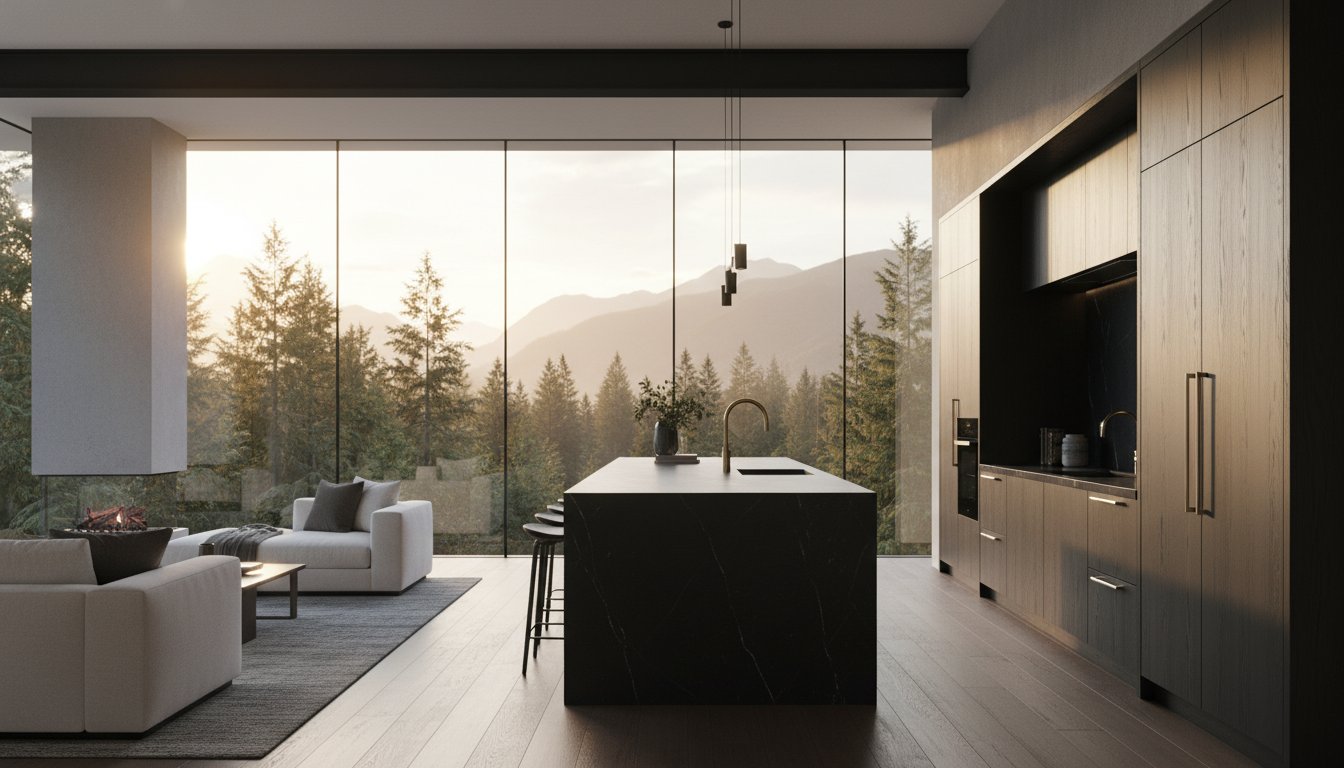
A truly transformative home isn’t defined by the walls it keeps, but by the sophisticated boundaries it creates without them. You likely appreciate the allure of open concept living room and kitchen designs for their ability to flood a floor plan with natural light and foster effortless social connectivity. However, it’s natural to feel concerned that removing partitions might result in a cold, cavernous environment where cooking aromas and noise travel unchecked. You want the freedom of an expansive layout without losing the distinct, cozy character of each functional zone.
This visionary guide demonstrates how to masterfully integrate your living and culinary spaces through disciplined architectural design and structural precision. We’ll explore the strategic use of zoned concepts, where ceiling treatments and matte stone finishes define areas while maintaining a seamless flow. From navigating the complexities of load-bearing walls to selecting tactile materials that dampen sound, you’ll discover how to realize a high-end interior that reflects your personal style. You’ll gain the clarity needed to turn a standard renovation into a bespoke masterpiece of modern Canadian living.
Key Takeaways
- Understand the evolution from compartmentalized Victorian floor plans to fluid, modern layouts that prioritize natural light and social connectivity.
- Learn to master open concept living room and kitchen designs by utilizing strategic anchors like kitchen islands to define distinct functional zones.
- Gain insight into the structural precision required for wide spans, including the sophisticated application of steel I-beams and Laminated Veneer Lumber.
- Address the technical logistics of high-performance ventilation and plumbing relocation to ensure your culinary space remains practical and odour-free.
- Discover how integrating architectural design with construction management creates a seamless transition from visionary concept to a finished, bespoke home.
The Philosophy of Open Concept Living Room and Kitchen Designs
At its core, the shift toward open concept living room and kitchen designs represents a fundamental change in how we perceive the domestic environment. It’s a deliberate lifestyle choice that prioritizes human connection and the democratic distribution of natural light over rigid, historical boundaries. For the modern Canadian homeowner, this design philosophy transforms the home from a series of isolated boxes into a fluid, multi-functional sanctuary where daily rituals and social interactions occur in a shared, harmonious space.
This architectural evolution marks a significant departure from the compartmentalized Victorian layouts of the past. Historically, kitchens were utilitarian service areas tucked away from the formal living quarters to hide the labour of meal preparation. The Philosophy of Open Concept Living emerged as a rejection of these hierarchies, instead celebrating the kitchen as a social theatre. By removing physical barriers, we realize a more collaborative way of living that acknowledges the culinary process as a central, performative element of the home experience.
In many Canadian urban centres where space is at a premium, these designs are essential for maximizing perceived square footage. An open plan allows the eye to travel across the entire depth of the structure, creating an expansive feel that traditional layouts cannot replicate. It turns the kitchen into the definitive heart of the home, where the host can engage with guests and parents can supervise children without losing the sophisticated elegance of their primary living area.
The Emotional Impact of Spatial Flow
Removing structural barriers does more than just expand the view; it fundamentally alters the social rhythm of the household. When you eliminate the walls separating the culinary and living zones, you effectively end the isolation of the person preparing the meal. This fosters a sense of togetherness and encourages spontaneous conversation. Sunlight now penetrates deep into the floor plan, reaching areas that were once shrouded in shadow. This increased exposure to natural light has documented psychological benefits, contributing to a sense of “quiet luxury” defined by unobstructed sightlines and a calm, airy atmosphere.
Modernizing Traditional Layouts
Transitioning a closed-off bungalow or a traditional two-storey home into a contemporary open space requires a visionary approach to architectural design. The challenge lies in preserving the original structure’s character while introducing modern fluidity. We often utilize a “broken plan” strategy to balance this openness. This involves using partial walls, double-sided fireplaces, or custom millwork to create private nooks without sacrificing the overall sense of unity. This method ensures that while the space remains connected, it still offers the functional “zones” necessary for a truly liveable and organized home environment.
Structural Engineering: The Foundation of Seamless Open Spaces
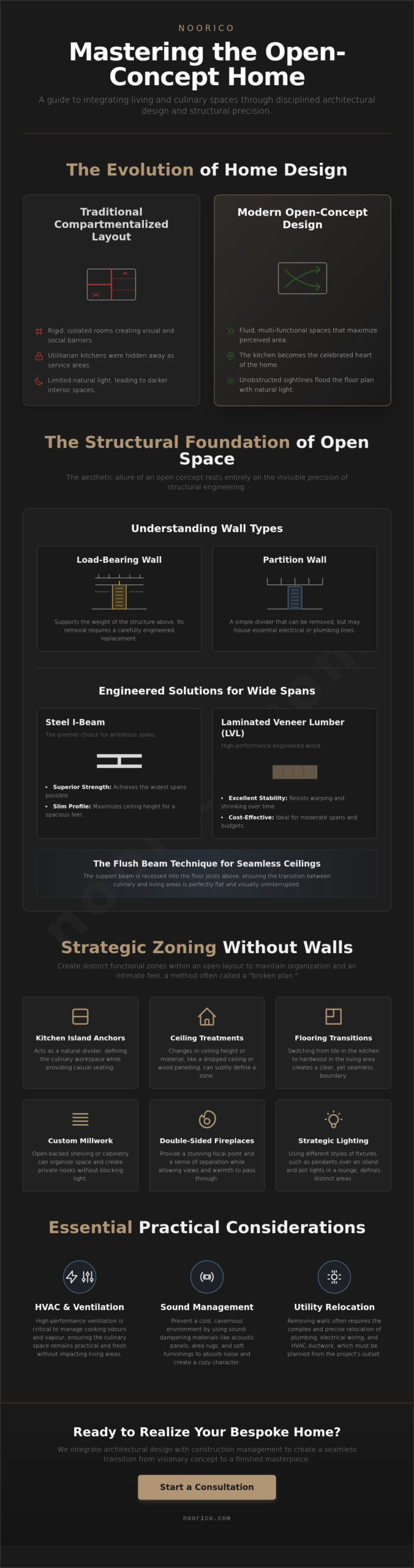
The aesthetic allure of open concept living room and kitchen designs rests entirely upon the invisible precision of structural engineering. While the vision focuses on expansive vistas, the execution requires a deep understanding of how your home distributes weight. Distinguishing between a simple partition and a load-bearing wall is the first critical step. A load-bearing wall supports the weight of the roof or the floors above, and its removal requires a strategic replacement that maintains the structural integrity of the entire building. In contrast, decorative or “curtain” walls can be removed with minimal intervention, though they often house essential electrical or plumbing lines that must be carefully rerouted.
To achieve the wide, uninterrupted spans that define modern luxury, we typically utilize either steel I-beams or Laminated Veneer Lumber (LVL). Steel offers superior strength with a slimmer profile, making it ideal for the most ambitious residential designs where every centimetre of ceiling height matters. LVL is a high-performance engineered wood product that provides excellent stability and is often more cost-effective for moderate spans. For homeowners seeking a perfectly flat, “gallery-style” ceiling, we employ the flush beam technique. This involves recessing the support beam into the floor joists above, ensuring that the transition between the culinary and living areas is entirely seamless. For those embarking on such a complex transformation, engaging a professional for architectural design and project management ensures that these technical decisions align with your long-term vision.
Navigating Load-Bearing Wall Removal
Removing a primary support structure is a high-stakes operation that demands the expertise of a licensed structural engineer. They calculate the precise loads to ensure the new beam can handle the weight of the second story and the roof. During the construction phase, we utilize temporary shoring to support the structure while the original wall is removed and the new beam is installed. This phase is the “grit” behind the elegance, requiring meticulous attention to detail to prevent any settling or cracking in the existing finishes. Understanding these mechanics is vital for maintaining good flow in open-concept spaces without compromising safety.
Ceiling Heights and Volume
Volume is just as important as floor area in creating a sense of grandeur. While a 9-foot ceiling is standard, a 10-foot ceiling can dramatically enhance the feeling of openness. In cases where structural bulkheads are unavoidable due to HVAC or plumbing requirements, we integrate them into architectural features. Coffered or tray ceilings are excellent tools for this, as they provide a logical place to hide mechanical systems while simultaneously defining functional zones without the need for walls. These details add a layer of sophisticated craftsmanship that elevates the entire main floor.
Mastering Zoning: How to Organize Large Open Floor Plans
Successful open concept living room and kitchen designs require more than just the removal of physical barriers; they demand a disciplined approach to zoning. While the absence of walls creates a sense of liberation, a space without structure can quickly feel cavernous and disorganized. Zoning is the architectural art of creating distinct functional areas within a unified floor plan. It ensures that while the eye moves freely, the purpose of each area remains clear and intentional. This process begins with smart structural planning, where permanent architectural anchors are established to guide the flow of movement and sight.
The kitchen island serves as the primary strategic anchor in these layouts. It acts as a bridge between the culinary and living zones, providing a clear boundary without obstructing the view. By giving the island significant visual weight through a contrasting countertop material or a bold cabinetry colour, you create a definitive centre for the room. This is where the practical grit of a workspace meets the sophisticated elegance of a social hub. To complement this, custom millwork and integrated built-ins provide essential storage while defining the transition between spaces. A floor-to-ceiling bookshelf or a recessed bar area can act as a subtle vertical marker that signals a change in function as you move from the kitchen into the lounge.
Lighting as a Spatial Divider
Lighting is perhaps the most effective tool for defining zones without using floor space. A successful design utilizes layering to separate tasks from relaxation. We install high-intensity task lighting over the kitchen counters and prep areas to ensure precision during meal preparation. In contrast, the living area benefits from soft, ambient lighting that encourages rest. Statement pendants over the island create a visual “centre” for the entire room, acting as a beacon that draws people together. We always recommend dimmable circuits for each zone. This allows you to fade the kitchen lights into the background after dinner, shifting the focus entirely to the living area for a more intimate atmosphere.
Material Continuity and Contrast
Maintaining a sophisticated, bespoke look across a large area requires a delicate balance of continuity and contrast. We often suggest a unified flooring material, such as wide-plank oak, to lengthen the space and create a seamless transition. However, you can differentiate zones through texture. A plush area rug in the living room provides a tactile contrast to the sleek surfaces of the kitchen. Coordinating your cabinetry colours with living room furniture ensures a harmonious aesthetic. For instance, a backsplash material that reflects the overall colour palette of the home can tie the culinary space to the rest of the main floor, ensuring the design feels like a singular, curated vision rather than a collection of separate parts.
Practical Logistics: HVAC, Plumbing, and Sound Management
The technical execution of open concept living room and kitchen designs relies on a disciplined approach to mechanical infrastructure. While the architectural vision focuses on flow and light, the “practical grit” of the project involves a complex reorganization of the systems hidden behind your finishes. Relocating a kitchen to a more central, social position often necessitates the rerouting of gas lines and plumbing stacks. This requires surgical precision, especially when working within the constraints of existing floor joists or concrete slabs, to ensure that drainage and supply lines function perfectly without compromising the structural integrity or ceiling heights of the levels below.
In the Canadian climate, HVAC balancing is a critical consideration for large, wall-free volumes. Without partitions to contain air, heat naturally migrates, which can lead to uncomfortable temperature gradients during our extreme winters. We utilize sophisticated load calculations and smart zoning technology to ensure that air is distributed evenly across the entire main floor. This methodical approach guarantees that your lounge remains cozy while the culinary zone stays cool during active meal preparation. If you are ready to navigate these technical complexities with confidence, our team provides expert project management for major renovations to ensure your home’s infrastructure matches its aesthetic ambition.
Mechanical System Relocation
Opening up a main floor often reveals a complex network of plumbing and electrical stacks that must be strategically relocated. We prioritize “island venting” solutions and high-performance drainage to facilitate the placement of sinks and dishwashers in central social hubs. For ventilation, the choice between a powerful overhead range hood and a sleek downdraft system depends on your specific architectural goals. We also integrate advanced electrical layouts to support modern smart home living, ensuring that your open space is as technologically capable as it is beautiful.
Managing Noise and Atmosphere
A common concern with open layouts is the migration of noise and odours. We mitigate this through the selection of “whisper-quiet” luxury appliances that allow for conversation even during a heavy dishwasher cycle. To manage sound echoes in high-ceiling environments, we incorporate acoustic solutions such as custom millwork, plush area rugs, and heavy drapery. These tactile materials absorb sound while adding a layer of sophisticated texture. Furthermore, we employ high-volume, silent ventilation systems to create “scent zoning,” ensuring that cooking aromas are extracted efficiently before they reach the living area.
The NOORICO Approach to Bespoke Open Living
Realizing the full potential of open concept living room and kitchen designs requires a partner who understands the delicate intersection of strategic industry knowledge and creative foresight. At NOORICO, we don’t view ourselves as a mere service provider. Instead, we act as a multi-disciplinary guide through the complex journey of transformation. Our philosophy is rooted in quiet confidence and deep-seated reliability, ensuring that your significant investment is managed with the highest ethical standards. By integrating architectural design with the practical grit of construction, we eliminate the friction often found in large-scale residential projects.
The primary benefit of our approach is the provision of a single, authoritative point of contact for your custom home building or major renovation. This organizational order provides a reassuring flow for the homeowner, moving from abstract inspiration to concrete implementation without the risk of miscommunication between separate designers and contractors. We take immense pride in our longevity and the enduring professional bonds we’ve built across the region. Every decision we make is driven by a persistent dedication to superior creative achievements and structural precision, ensuring your home reflects a high-end, bespoke interior tailored to your unique lifestyle.
From Initial Concept to Final Build
Our architectural design team works in close collaboration with our project managers to ensure that every open concept is as functional as it is beautiful. We prioritize rigorous project management to maintain strict timelines and budgets, protecting you from the common pitfalls of uncoordinated renovations. This methodical process allows us to deliver high-quality residential projects that stand the test of time. We focus on the “Who-What-Why” of every structural change, identifying the specific action needed to achieve the emotional and financial benefit you desire for your home.
Customized for the Canadian Lifestyle
A visionary home must account for the specific demands of the Canadian climate. We design open spaces that prioritize energy efficiency and HVAC balancing, ensuring comfort during both the humid summers and the frigid winters. Whether we are executing a home addition or a full gut renovation, our goal is to add significant long-term value to your property through sophisticated elegance and uncompromising quality. We invite you to move beyond the limitations of traditional layouts and embrace a fluid, modern environment. You can start your architectural journey with NOORICO today to realize a home that is truly a masterpiece of spatial flow and social connectivity.
Realize Your Vision for a Harmonious Home
Mastering open concept living room and kitchen designs is a journey that moves from structural grit to aesthetic elegance. You’ve seen how the strategic removal of walls requires more than just a sledgehammer; it demands the foresight of steel I-beams and the precision of flush-mount engineering. By establishing clear functional zones through architectural anchors and layered lighting, you ensure your space remains intimate and organized. Managing the invisible elements, such as HVAC balancing and acoustic dampening, is what truly transforms a large volume into a comfortable sanctuary.
With over 25 years of established expertise, NOORICO specializes in these high-end residential transformations. Our integrated Design-Build methodology ensures a seamless transition from your initial concept to a final, bespoke build. We invite you to Partner with NOORICO for Your Custom Home or Major Renovation to benefit from a multi-disciplinary approach that prioritizes your investment and your personal style. Your path to a sophisticated, modern Canadian home starts with a commitment to quality and a visionary partner by your side.
Frequently Asked Questions
Does an open concept living room and kitchen design reduce home value?
An open concept living room and kitchen design typically increases home value by creating the expansive, light-filled “great room” that modern Canadian buyers prioritize. This layout maximizes perceived square footage and social connectivity, making the property more competitive in high-end markets. While some trends shift toward “broken-plan” layouts, the fundamental desire for a fluid culinary and social hub remains a primary driver of residential appreciation and desirability.
How do I manage cooking smells in a large open floor plan?
Managing aromas requires a high-performance ventilation system with a high Cubic Feet per Minute (CFM) rating to extract air efficiently before it migrates. We recommend “scent zoning” through the strategic placement of powerful, silent range hoods or downdraft systems. Supplementing this with a balanced HVAC system ensures that air is constantly filtered and circulated, preventing lingering odours from reaching the lounge or dining areas.
Are open concept designs still popular for luxury homes in 2026?
Luxury residential design in 2026 continues to embrace openness but with a focus on sophisticated zoning. The trend has evolved from completely cavernous spaces to “broken-plan” layouts that utilize glass partitions, double-sided fireplaces, or custom millwork to define areas. This approach maintains the airy, aspirational feel of open concept living room and kitchen designs while providing the acoustic privacy and functional separation that high-end homeowners now demand.
What is the average cost to remove a load-bearing wall for a renovation?
The cost of removing a load-bearing wall varies significantly based on the span of the opening and the structural materials required, such as steel I-beams or Laminated Veneer Lumber (LVL). Factors include engineering fees, temporary shoring, and the complexity of rerouting mechanical lines hidden within the wall. For a precise assessment, homeowners should consult a structural engineer to produce stamped plans that comply with the National Building Code of Canada.
How can I make a large open space feel cozy and intimate?
Creating intimacy in a large volume relies on layering tactile materials and varied lighting levels. We utilize plush area rugs, heavy drapery, and custom millwork to add warmth and absorb sound echoes. Incorporating dimmable circuits allows you to fade the kitchen into the background, while statement pendants over an island create a visual “centre.” These elements work together to provide the “quiet luxury” of a large space without sacrificing comfort.
Do I need a building permit for an open concept renovation in Canada?
A building permit is mandatory for most open concept renovations in Canada, particularly when the project involves removing load-bearing walls or altering plumbing and electrical systems. Local municipalities require these permits to ensure the work complies with the current National Building Code and provincial safety standards. Engaging a professional for project management ensures that all necessary inspections are scheduled and that the structural integrity of your home is legally verified.
What are the best flooring options for a combined kitchen and living area?
Engineered hardwood, particularly wide-plank oak, remains the premier choice for creating a seamless transition between culinary and living zones. It offers the sophisticated elegance of natural wood with the stability needed to handle the temperature and humidity fluctuations common in Canadian homes. For high-traffic areas, luxury vinyl plank provides a durable, water-resistant alternative that maintains visual continuity without the need for transition strips that can break the spatial flow.
How do I choose the right kitchen island size for my open layout?
The ideal island size is determined by the proportions of the room and the necessity of maintaining clear traffic paths. We recommend a minimum of 36 to 48 inches of clearance on all sides to ensure effortless movement. The island should act as a strategic anchor that is large enough to serve as a social hub but scaled appropriately so it doesn’t overwhelm the living area’s visual weight.