
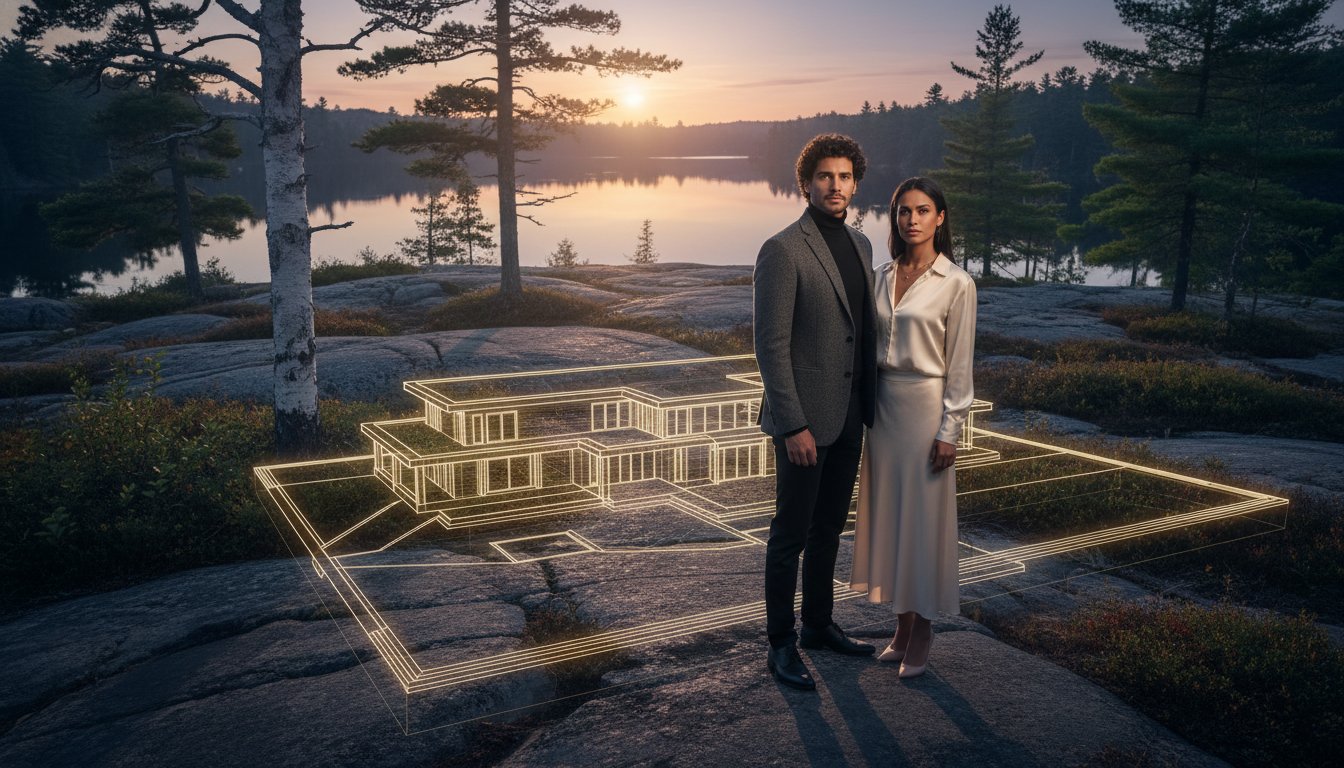
Selecting land is the first act of architectural design; the lot’s constraints are the canvas for your bespoke residential legacy. You likely recognize that an exceptional home begins with a site that can actually support your vision, yet the fear of hidden site preparation costs or restrictive zoning bylaws often looms over the creative process. Learning how to buy land to build a house requires more than just a keen eye for a view. It demands a sophisticated understanding of feasibility, local regulations, and the persistent dedication required to transform raw earth into a principled investment.
NOORICO will help you master the process of identifying and securing the ideal building site while eliminating the risk of purchasing unbuildable land. This guide provides a clear roadmap from purchase to groundbreaking, ensuring you have total confidence in your architectural plans. We will examine the essential financial considerations for 2026, including the current 30% to 50% down payment requirements for raw land and the strategic impact of relevant tax incentives. By the end of this article, you’ll possess the clarity needed to ground your high-level aspirations in a tangible, buildable reality.
Key Takeaways
- Distinguish between raw land and a ready-to-build site to understand why the initial purchase price is only a fraction of your total investment.
- Navigate the complexities of the Ontario Planning Act and local bylaws to ensure your architectural vision aligns with the legal constraints of the property.
- Master the technical feasibility of how to buy land to build a house in Ontario by utilizing rigorous site analysis and geotechnical reports to de-risk your foundation.
- Secure your investment with a strategic acquisition plan that accounts for specific Canadian financing requirements and construction-to-permanent loan structures.
- Leverage an integrated design-build approach to provide a seamless transition from site selection to the realization of your bespoke residential legacy.
Due Diligence: Distinguishing Between Raw Land and a Building Site
Understanding how to buy land to build a house in Ontario begins with a fundamental realization: not all earth is created equal. A parcel of land isn’t merely a geographic coordinate; it’s a complex asset defined by its readiness for habitation. Many prospective owners are seduced by the lower entry price of rural acreage, only to discover that the “as-is” cost represents a fraction of the total capital required to reach groundbreaking. Bringing a site to a build-ready state involves a relentless commitment to technical due diligence and strategic project management. It’s the difference between buying a problem and investing in a foundation.
The sticker price of a lot is rarely the true cost of ownership. Beyond the initial acquisition, you must factor in the soft costs of architectural design, engineering, and the various fees associated with site servicing. A visionary partner doesn’t just look at the soil; they analyze the intersection of technical constraints and creative foresight to ensure your investment remains secure. This proactive evaluation prevents the purchase of “unbuildable” land that could otherwise derail your financial plans. It requires the practical grit of a builder to see the labour required to transform a rugged landscape into a sophisticated residential site.
The Anatomy of Raw Land in Ontario
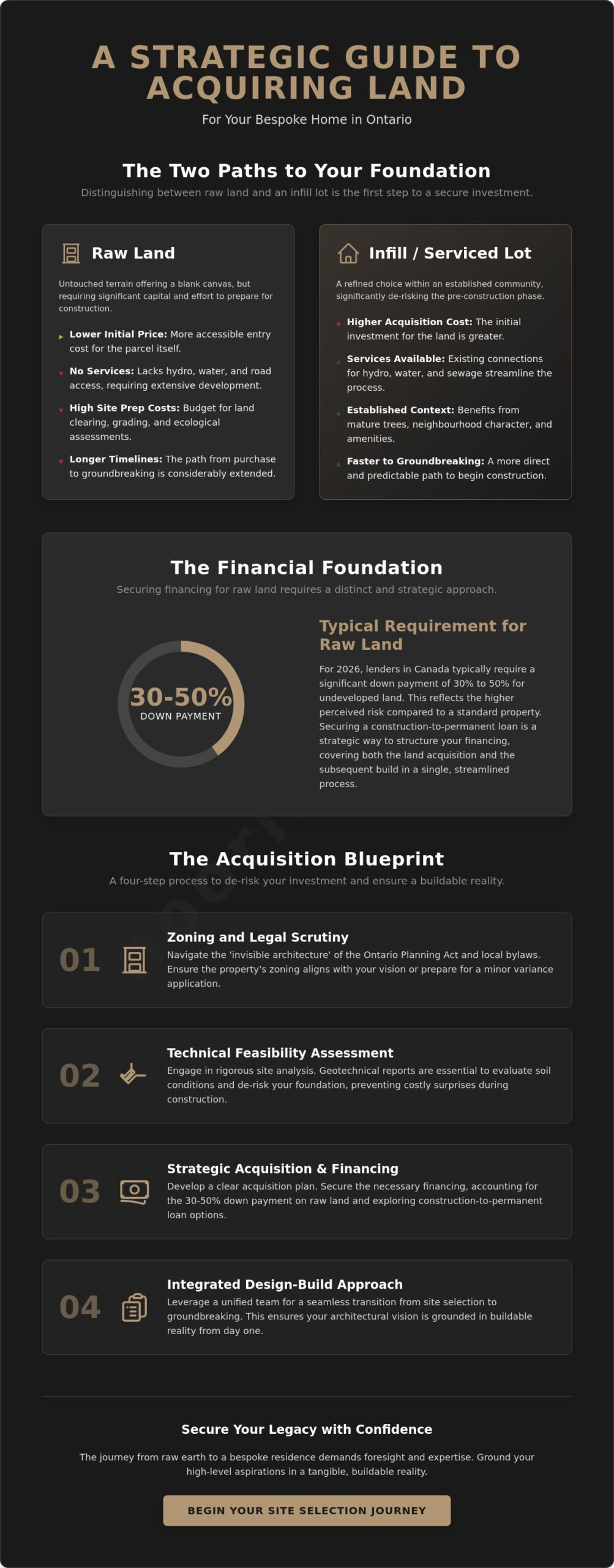
Raw land lacks the essential infrastructure that many take for granted in urban centres. There are no hydro lines, no municipal water connections, and often no reliable road access. Developing these untouched terrains requires a deep understanding of land-use planning to ensure the project meets provincial and local standards. You must account for the high-intensity labour of clearing the site and the ecological assessments required to protect local watersheds or species at risk. The persistent dedication required to bring municipal services to a remote area can be significant, both in terms of time and financial commitment.
Vacant and Infill Lots: The Sophisticated Choice
Infill lots represent a more refined path for those researching how to buy land to build a house in Ontario within established communities. These sites often come with existing service connections, which significantly de-risks the early stages of a custom home building project. While the purchase price is typically higher, the presence of mature trees and existing neighbourhood character provides an immediate aesthetic value that raw land cannot replicate. Choosing an infill site often involves a sophisticated demolition process, where an older structure is removed to make way for a contemporary masterpiece. This approach allows for a seamless integration into a community that already possesses the amenities and prestige you desire.
Zoning, Bylaws, and Conservation: The Invisible Architecture
Zoning regulations represent the invisible architecture of your future home. Before a single line is drawn, the Ontario Planning Act dictates the fundamental parameters of what can exist on a specific parcel of land. When you’re learning how to buy land to build a house in Ontario, you’ll quickly find that these ‘invisible’ constraints are just as important as the physical site visit. Many buyers mistakenly believe a clean title is the ultimate goal, but a favourable zoning designation is far more impactful for a custom residential legacy. It’s the legal framework that determines if your site can support the ‘Highest and Best Use’ for a premium residence.
Professional due diligence often highlights Seven Things To Know When Buying Land, where zoning alignment sits at the top of any expert checklist. If your architectural vision challenges existing standards, you’ll likely need to navigate the minor variance process. This involves presenting a case to the local Committee of Adjustment to prove your design maintains the general intent of the official plan while seeking relief from specific bylaws. It’s a structured path that requires both technical precision and a persuasive narrative to succeed. Our team approaches these meetings with quiet confidence, backed by decades of experience in regional land-use negotiations.
Navigating Ontario Zoning Bylaws
Deciphering municipal bylaws requires a keen eye for detail. You must evaluate setback requirements, height restrictions, and lot coverage ratios which vary significantly between the rugged terrain of Northern Ontario and the dense urban fabric of the GTA. Heritage designations can also add a layer of complexity, often requiring an uncompromising commitment to preserving certain historical elements or specific streetscape aesthetics. Our Architectural Design services are built on the ability to harmonize these restrictive parameters with sophisticated, high-end aesthetics, transforming limitations into unique design opportunities.
Conservation Authorities and Environmental Constraints
Ontario’s natural beauty is protected by various Conservation Authorities that manage delicate watersheds and natural heritage features. Identifying flood plains, wetlands, or erosion hazards on your potential lot is a non-negotiable step in the feasibility phase. The process of obtaining permits from these provincial bodies is meticulous and demands a persistent dedication to ecological integrity. Balancing environmental stewardship with your desire for a striking residential presence is where the grit of project management meets the elegance of design. Understanding how to buy land to build a house in Ontario requires navigating these complex regulatory waters with a seasoned partner who can ensure your vision remains buildable.
Feasibility Assessment: Evaluating Physical and Technical Constraints
The transition from a conceptual dream to a physical groundbreaking requires a meticulous evaluation of technical constraints. While the legal framework provides the boundaries, a feasibility assessment uncovers the tangible realities of the earth itself. Understanding how to buy land to build a house in Ontario involves more than just a surface-level walkthrough; it requires a deep dive into the site’s physical DNA. This rigorous analysis ensures that your architectural aspirations aren’t compromised by the hidden complexities of the terrain. Beyond the legalities of Ontario’s zoning and building regulations, identifying these factors early provides the reliability and accountability necessary to protect your significant financial investment.
Confirming the capacity of essential municipal services is the final piece of the feasibility puzzle. Even in established areas, you shouldn’t assume the existing infrastructure can support a modern, high-intensity custom home. Evaluating the pressure of water lines and the depth of sewer connections is vital for a seamless construction process. This technical due diligence prevents costly delays and ensures your project moves efficiently from the design phase to the groundbreaking ceremony. It reflects a pursuit of superior creative achievements grounded in practical industry experience.
Soil Integrity and Geotechnical Realities
Mastering the technicalities of how to buy land to build a house in Ontario demands an uncompromising commitment to site analysis. Soil composition is a primary driver of foundation design and overall construction costs. Whether your lot sits on the dense bedrock of the north or the expansive clays of southern regions, the geotechnical reality will dictate your structural requirements. A professional soil test identifies:
- Presence of Bedrock: Determining if blasting or specialized excavation is required for your basement.
- Water Table Levels: Influencing the depth of your foundation and the sophistication of your waterproofing systems.
- Soil Load-Bearing Capacity: Ensuring the ground can support the weight of a bespoke residential legacy without settling.
A professional engineer’s stamp on your site assessment isn’t just a regulatory hurdle; it’s a hallmark of quality that reinforces the stability of your future home. This level of precision reflects the persistent dedication required to transform raw earth into a principled investment.
Topography and Site Drainage
Topography offers a unique canvas for high-end design, allowing for the seamless integration of indoor and outdoor spaces. Utilizing natural slopes for walk-out basements or tiered landscaping can elevate a project from a standard build to an architectural masterpiece. Yet, these features must be balanced with the practical requirements of the Ontario Building Code regarding site grading and water management. Ensuring that runoff is handled ethically and effectively is a core pillar of responsible development. Our integrated approach to Architectural Design and project management ensures that these physical traits are leveraged to enhance, rather than hinder, your residential vision.
The Acquisition Strategy: Financing and Securing the Investment
Securing the capital for a bespoke residential project requires a level of financial sophistication that exceeds the standard mortgage process. When you’re determining how to buy land to build a house in Ontario, you must realize that lenders view vacant land through a lens of increased risk. Unlike an existing home, raw land offers no immediate shelter or predictable resale value if the project stalls. This necessitates a strategic acquisition plan that balances aggressive negotiation with a deep-seated reliability in your financial structure.
A sophisticated tool often overlooked by casual buyers is the Vendor Take-Back (VTB) mortgage. In this arrangement, the seller functions as the lender, holding a portion of the equity as a loan. This can be a strategic masterstroke, allowing you to preserve your liquid capital for the high-intensity construction phase while potentially offering the seller a steady stream of interest income. It’s a principled approach to financing that requires ethical negotiation and clear legal frameworks to protect all parties involved.
Establishing a robust contingency reserve is equally vital. Even with the most rigorous feasibility assessments, site preparation can reveal unforeseen technical challenges. We recommend a reserve that accounts for the practical grit of excavation and servicing, ensuring your project remains grounded in financial stability. Our Project Management services provide the oversight needed to manage these complex capital flows, ensuring your investment is handled with the precision it deserves.
Lending Tiers and Down Payment Requirements
Traditional Canadian lenders typically require a down payment ranging from 35% to 50% for vacant land. This higher threshold reflects the speculative nature of land development. To bridge the gap to construction, a construction-to-permanent loan is often utilized. This structure relies on an “As-Complete” appraisal, which estimates the future value of your architectural masterpiece once finished. Securing this funding requires a visionary partner who can present a detailed, authoritative project plan to the bank, demonstrating the enduring value of the proposed build.
Structuring the Offer with Meticulous Conditions
The offer to purchase is your primary shield against unbuildable land. It must be structured with meticulous conditions that allow for exhaustive due diligence. These conditions should include:
- Technical Verification: Confirmation of favourable soil tests and geotechnical reports.
- Zoning Alignment: Final verification that your specific architectural plans comply with municipal bylaws.
- Legal Boundaries: A current land survey to define the precise limits of your property and identify any easements.
Incorporating a “Time is of the Essence” clause is a hallmark of professional project management. It ensures that all parties adhere to a strict timeline, preventing the administrative delays that can erode a project’s momentum. Learning how to buy land to build a house in Ontario is ultimately about securing a site that can support your residential legacy without compromise.
From Purchase to Groundbreaking: The Design-Build Advantage
Integrating architectural design with construction from the very beginning is the most effective way to de-risk your investment. When you’re determining how to buy land to build a house in Ontario, the traditional model of hiring separate entities often leads to a fragmentation of vision and budget. A design-build approach ensures that the team designing the home understands the physical grit required to build it on that specific site. This synergy eliminates the friction between creative aspirations and technical feasibility, allowing for a more predictable and refined execution. It’s a structured path that moves your project from inspiration to practical implementation with quiet confidence.
Professional project management serves as the essential bridge between acquisition and groundbreaking. It transforms a complex series of administrative and technical tasks into a transparent journey, providing you with a single point of accountability. Whether you’re pursuing a completely new build or exploring the potential for luxury home additions, the goal remains the same: architectural distinction that commands long-term value. By positioning your project as a unified endeavour, you ensure that every dollar spent contributes to a principled and enduring residential legacy. This methodical approach reflects our deep-seated reliability and commitment to superior creative achievements.
The NOORICO Approach to Site Selection
Our multi-disciplinary team evaluates land through a creative and technical lens simultaneously. We don’t just see a lot; we see the intersection of light, topography, and municipal potential. This provides a level of foresight that protects you from the risks of unbuildable land or unforeseen site costs. Our persistent dedication to ethical pillars means your investment is managed with the highest level of professional integrity. We ground high-level aspirations in the tangible context of the Ontario landscape, ensuring that your site selection is the first step toward a masterpiece. We take pride in our longevity and the enduring professional bonds we build with our clients.
Securing Your Residential Legacy
The final appraised value of your home is deeply influenced by the sophistication of its interior design and its relationship with the natural surroundings. A seamless flow between the interior spaces and the rugged beauty of an Ontario site creates an emotional resonance that standard builds simply lack. This pursuit of superior creative achievements is what defines a true custom home. We invite you to take the next step in your journey and Partner with NOORICO for your visionary custom build to ensure your architectural vision is realized without compromise. Together, we will transform your vision into a sophisticated residential reality that stands as a testament to quality and precision.
Realizing Your Architectural Legacy in Ontario
Mastering the sophisticated nuances of site selection is the first step in protecting your residential investment. You’ve seen that identifying the “invisible architecture” of zoning and evaluating technical soil integrity are just as vital as the aesthetic appeal of the lot. By prioritizing a feasibility-first mindset, you eliminate the risk of purchasing unbuildable land and ensure your architectural plans remain grounded in reality. This disciplined approach transforms a complex acquisition into a secure foundation for your future home.
Understanding how to buy land to build a house in Ontario requires a partner who balances the practical grit of project management with the elegance of high-end design. With over 25 years of established industry leadership, NOORICO provides the meticulous attention to detail and integrated expertise your bespoke project demands. We invite you to Partner with NOORICO for your visionary custom build to transform your aspirations into a principled, enduring reality. Your journey from site selection to groundbreaking deserves the quiet confidence that only a seasoned expert can provide. We look forward to building your legacy together.
Frequently Asked Questions
Do I need a special permit to clear trees on my land in Ontario?
You often need a permit to clear trees in Ontario, as most municipalities enforce strict tree-protection bylaws. These regulations aim to preserve the local canopy and often require a professional arborist’s report before any high-intensity clearing begins. Failing to secure these approvals can result in significant fines and project delays. It’s a technical hurdle that requires persistent dedication to local environmental standards.
Is the Harmonized Sales Tax (HST) applicable to the purchase of vacant land?
HST is typically applicable to the purchase of vacant land in Ontario, especially when the seller is a corporation or the land was used for business. However, you should monitor the May 2026 legislative proposals regarding the removal of the full 13% HST on new homes valued up to C$1 million. This rebate could provide up to C$130,000 in savings for your overall residential project.
What is a land severance, and how does it affect my build plans?
Land severance is the legal process of dividing a single parcel of land into two or more independent lots. This requires “consent” from the local land division committee to ensure the new lots meet the size and frontage requirements of the Official Plan. A successful severance is a sophisticated way to unlock the “highest and best use” of a larger property for a custom build.
Can I build a custom home on land that is currently zoned as agricultural?
Building a custom home on agricultural land is possible if the specific zoning sub-classification allows for a residential use or a primary farmhouse. You must verify the local zoning bylaws, as many prime agricultural areas are protected from residential development. Navigating these restrictions often requires a visionary partner to ensure your architectural plans are legally feasible within the provincial framework.
How does the Ontario Building Code (OBC) influence the type of home I can build?
The Ontario Building Code dictates the technical and safety standards that every residential structure must meet. It influences your design by setting requirements for energy efficiency, fire safety, and structural integrity. When researching how to buy land to build a house in Ontario, you must ensure your plans align with these provincial standards to secure your building permit and ensure long-term stability.
What is the role of Tarion in a new custom home build on my own land?
Tarion administers the Ontario New Home Warranties Plan, which provides mandatory warranty coverage for new builds. Even when building on your own land, your custom builder must be registered with Tarion to protect your investment against structural defects. This ensures that your bespoke residential legacy is backed by a principled framework of accountability and deep-seated reliability throughout the construction process.
How long does the municipal building permit process typically take in Ontario?
The municipal building permit process in Ontario typically takes between 4 and 12 weeks for a residential application, provided the submission is complete. This timeline can extend if your site requires approvals from a Conservation Authority or if you’re seeking a minor variance. Professional project management is essential to keep this phase moving efficiently toward groundbreaking without compromising your architectural vision.
Can I use the equity in my current home to buy land for a new build?
You can use the equity in your current residence to fund the purchase of a new lot through a Home Equity Line of Credit (HELOC) or a mortgage refinance. This strategy often allows you to secure the land with a lower interest rate than a traditional land loan. It provides a sophisticated way to leverage your existing assets while you master how to buy land to build a house in Ontario.