
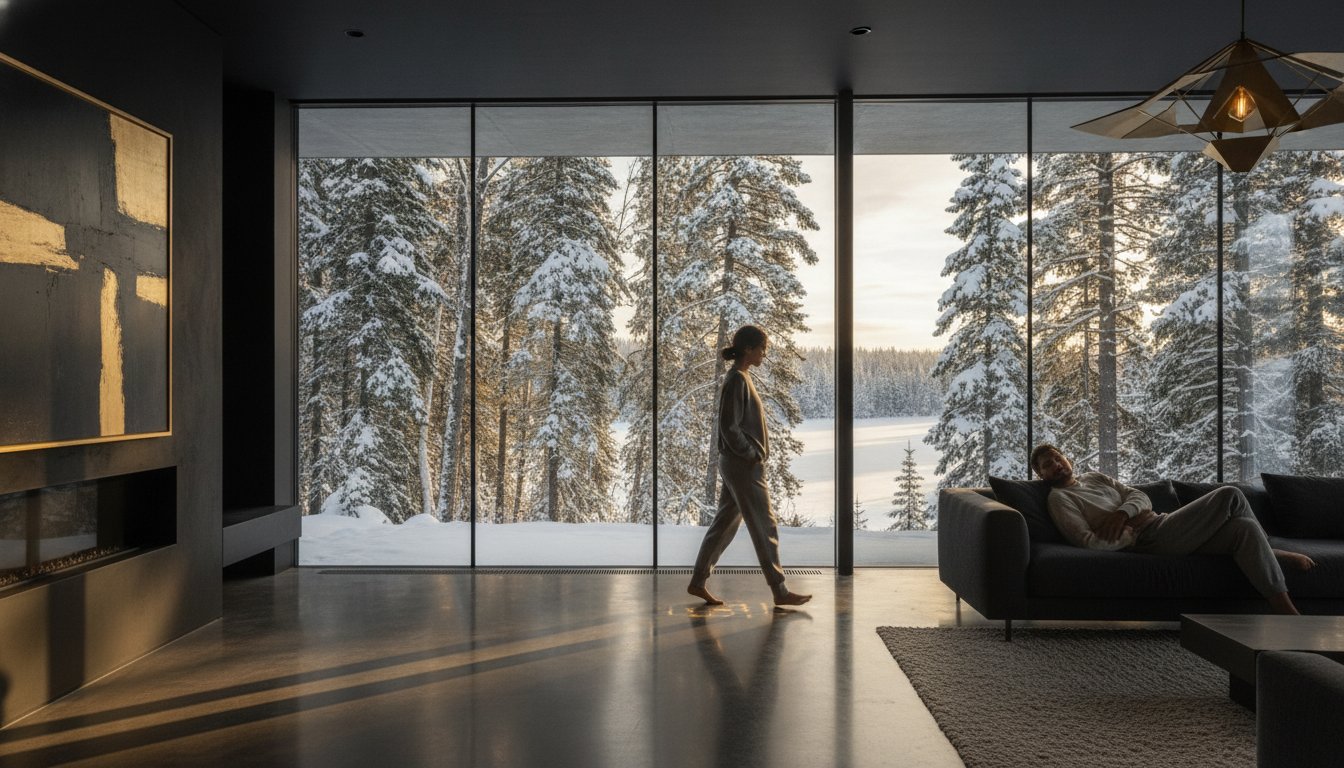
What if the most defining architectural feature of your bespoke Canadian home isn’t something you see, but something you feel? While grand vistas and open-concept layouts often take centre stage, the invisible climate of your living space dictates your daily comfort. Most homeowners accept the dry, uneven warmth of forced-air systems as a seasonal necessity. You likely feel that dust-laden vents and the aesthetic clutter of radiators are unavoidable compromises in a cold climate.
This guide examines the definitive heated flooring pros and cons to help you decide if radiant heat is the right investment for your high-end project. We will explore how these systems provide a silent, draft-free environment while granting you the design freedom to organize your space without the limitations of floor registers. From the 25% to 30% energy efficiency gains of hydronic systems to the technical requirements of the Ontario Building Code, we provide a sophisticated look at transforming your residence into a high-performance sanctuary.
Key Takeaways
- Understand how radiant heating uses thermal radiation to warm your home’s interior directly, providing a superior level of comfort that forced-air systems cannot replicate.
- Weigh the essential heated flooring pros and cons to determine if the long-term gains in energy efficiency and architectural freedom justify the higher initial capital investment.
- Distinguish between hydronic and electric technologies to ensure your heating solution aligns with the specific scale and scope of your custom construction project.
- Realize the aesthetic benefits of a vent-free environment, allowing your interior design to remain the focal point without the clutter of traditional HVAC hardware.
- Learn to optimize your system’s performance through strategic flooring material selection and predictive smart home automation.
Understanding Radiant Floor Heating in the Canadian Climate
Radiant floor heating is an invisible infrastructure of comfort. It utilizes a network of specialized tubing or electric cables installed directly beneath the floor’s surface. Unlike traditional methods, this technology relies on the principle of thermal radiation. It warms the objects and occupants in a room directly rather than simply blowing hot air into a space. For homeowners evaluating heated flooring pros and cons, understanding this fundamental shift in heat delivery is essential. In the context of a Canadian winter, where temperatures frequently plummet well below freezing, this method provides a steady, penetrating warmth that counteracts the cold more effectively than air-based systems.
A key component of this effectiveness is thermal mass. In a custom home, the floor itself becomes a heat reservoir. This mass absorbs energy and releases it slowly over time, maintaining a consistent indoor temperature even when the external environment is volatile. This synergy between high-performance building envelopes and radiant systems ensures that your home remains a sanctuary of stability. Underfloor heating systems represent a sophisticated integration of physics and design, turning the largest surface area of your home into its primary source of comfort.
How Radiant Heat Differs from Forced-Air Systems
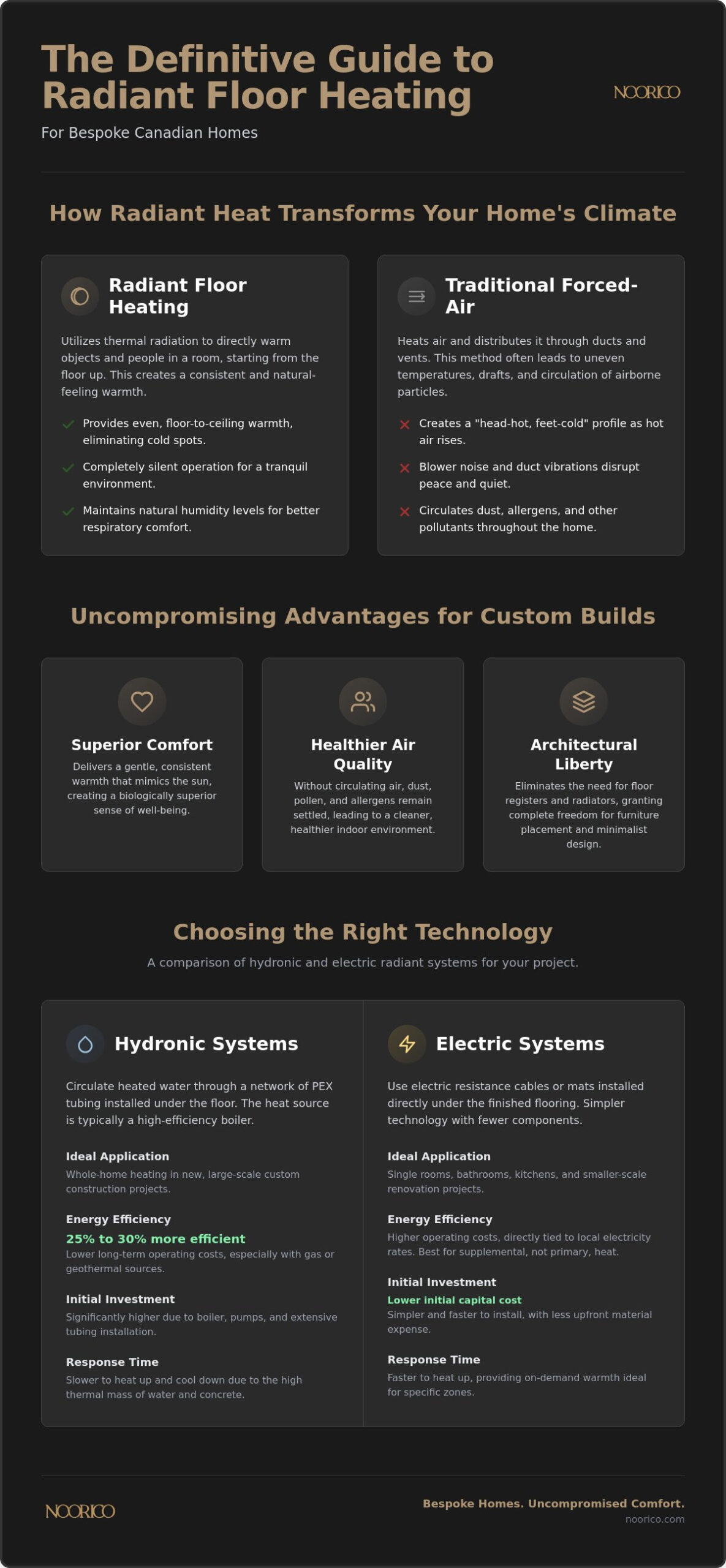
Traditional forced-air systems often create a stratified environment. Hot air rises quickly to the ceiling, leaving the floor level cold and uncomfortable. This results in a head-hot, feet-cold profile that feels unnatural. Radiant systems reverse this, providing warmth where you actually live. They eliminate the drafts and cold spots that often plague large, open-concept layouts. Because there are no blowers or high-velocity fans, the operation is entirely silent. When weighing heated flooring pros and cons, the silence of the system is often a deciding factor for those seeking a tranquil home environment. Your residence remains peaceful, free from the cyclical noise of ductwork expanding and contracting.
The Science of Thermal Comfort
Radiant heat mimics the natural warmth of the sun. It provides a biological sense of well-being that air-based heating cannot match. Because the system doesn’t rely on moving large volumes of air, it helps maintain more natural humidity levels. Forced-air systems often strip moisture from the environment, leading to dry skin and respiratory discomfort. Radiant heat preserves the air’s integrity. It creates a consistent floor-to-ceiling temperature gradient that aligns with human physiology, ensuring every corner of your bespoke residence feels intentionally designed for comfort. It’s a holistic approach to wellness that begins from the ground up.
The Pros: Why Radiant Heating is a Custom Home Essential
Integrating radiant heating into a bespoke residence is a strategic decision that transcends simple temperature control. One of the most compelling aspects of the heated flooring pros and cons debate is the superior energy efficiency these systems offer. Because they operate at lower temperatures than traditional radiators while delivering the same level of comfort, they can be 25% to 30% more efficient than forced-air alternatives. This performance is bolstered by ASHRAE research on radiant floor systems, which highlights how these installations minimize heat loss through the building envelope while maintaining peak thermal comfort.
Beyond the technical metrics, the health benefits for your family are significant. Without the turbulent air movement of high-velocity fans, dust and allergens remain settled rather than circulating through your living spaces. This creates an environment of exceptional indoor air quality, a critical priority for health-conscious homeowners. The system’s longevity also provides deep-seated reliability. While a standard furnace might require replacement every fifteen years, a professionally installed radiant system can reliably serve a home for decades with minimal maintenance. It’s an uncompromising commitment to the long-term integrity of your residence.
Architectural and Design Liberty
Radiant heat offers a level of aesthetic freedom that traditional HVAC systems simply cannot match. By eliminating floor vents and wall-mounted radiators, you remove the visual clutter that often disrupts a minimalist or high-concept interior. This allows for the removal of bulkheads and ductwork, facilitating higher ceilings and the clean, uninterrupted lines essential for sophisticated architectural design. Without the need to work around heating hardware, you gain absolute flexibility in furniture placement and wall treatments, ensuring your vision remains the focal point of every room.
Energy Efficiency and Sustainable Luxury
Modern radiant systems excel in their ability to provide localized comfort through advanced zoning. You can tailor the climate of each room individually, ensuring that energy is only directed where it is needed most. Zoning efficiency is the ability to reduce energy waste by up to 30% through localized temperature control. When paired with high-efficiency air-to-water heat pumps, these systems represent the pinnacle of sustainable luxury. They allow you to enjoy a barefoot-friendly environment year-round while maintaining a principled commitment to environmental stewardship. When you weigh the heated flooring pros and cons, this synergy between performance and sustainability often makes radiant heat the clear choice for the modern Canadian estate.
The Cons: Critical Considerations for Large-Scale Projects
A transparent analysis of heated flooring pros and cons must acknowledge that the pursuit of superior comfort involves a higher initial capital investment. Unlike standard forced-air setups, a whole-home hydronic system requires a sophisticated integration of boilers, pumps, and manifolds. This upfront expenditure is a reflection of the system’s longevity and performance, yet it remains a significant factor in the early stages of project finance. There is also the reality of thermal lag. Because the system warms the thermal mass of the floor rather than just the air, it can take several hours to adjust to significant temperature changes. This necessitates a predictive approach to climate control, moving away from the “instant-on” expectations of traditional HVAC.
Structural engineering is another critical factor for bespoke residences. Embedding hydronic tubing often requires a concrete over-pour, which adds substantial weight to the floor assembly. This requires precise architectural oversight to ensure the home’s skeleton can support the additional load without compromising the integrity of the design. Our project management teams coordinate these complex requirements early in the process, ensuring that the technical demands of your heating system align perfectly with the structural capabilities of your build.
Installation Complexity and Construction Timelines
Installation requires meticulous sequencing to avoid delays in your construction schedule. Radiant systems are woven into the home’s fabric, meaning every door swing, floor transition, and baseboard height must be coordinated with the raised floor profile. This isn’t a task for generalists; it requires a specialized understanding of how different trades intersect. We emphasize rigorous pressure testing of all lines before any final flooring is laid. This principled approach guarantees the system’s integrity under the pressure of daily life before it becomes a permanent part of your home.
Maintenance and Long-Term Repair Accessibility
Maintenance concerns often centre on the fear of inaccessible leaks beneath the floor. While modern PEX tubing is exceptionally durable and rarely fails, the manifold serves as the central control centre for the entire house. This allows for localized troubleshooting and adjustments without ever disturbing your finished surfaces. It’s also vital to recognize that retrofitting these systems into existing structures is a complex undertaking, often costing 50% to 80% more than installation during a new build. When evaluating heated flooring pros and cons, it becomes clear that radiant heat is most effectively implemented as a foundational element of a custom home’s initial design.
Electric vs. Hydronic Systems: Selecting the Right Technology
A precise evaluation of heated flooring pros and cons often hinges on the specific technology used to deliver warmth. For bespoke Canadian residences, the choice between electric and hydronic systems isn’t merely a technical preference; it’s a strategic decision that affects floor height, energy consumption, and long-term operating costs. Electric systems utilize thin heating cables or mesh mats, providing a low-profile solution that adds minimal height to your floor assembly. Hydronic systems, conversely, rely on a network of water-based tubing connected to a high-efficiency boiler or heat pump. While hydronic installations require more vertical space to accommodate the tubing and necessary concrete topping, they remain the most cost-effective solution for heating large, expansive areas in our harsh winters.
The operational logic of these systems differs significantly. Electric heat is often powered by the home’s standard grid, whereas hydronic systems can leverage diverse energy sources, including natural gas, electricity, or even solar thermal energy. In large-scale projects, the efficiency of water as a heat transfer medium usually results in lower monthly energy bills compared to electric resistance heating. This persistent dedication to efficiency ensures that your home’s operational costs remain manageable without compromising on the luxury of a warm environment.
When to Choose Electric Radiant Heat
Electric radiant heat excels in targeted applications. It’s the ideal choice for ensuite bathrooms, mudrooms, or smaller basement suites where a fast response time is preferred. These systems integrate seamlessly into existing electrical panels, making them a practical addition during mid-sized upgrades. Because they heat up more rapidly than their fluid-based counterparts, they’re perfect for rooms used occasionally. They provide immediate warmth exactly when you need it, ensuring that smaller zones of your home remain inviting without the need for extensive plumbing infrastructure.
The Case for Whole-Home Hydronic Systems
Hydronic technology is widely considered the gold standard for major home renovations and new builds. It offers a superior return on investment when paired with modern condensing boilers or air-to-water heat pumps, providing a reliable and principled approach to home heating. Beyond warmth, these systems can occasionally be engineered to provide radiant cooling in specific architectural configurations, offering a holistic climate solution for all seasons. The durability of the PEX tubing ensures that your home’s infrastructure remains robust for decades. To ensure your heating technology aligns with your long-term comfort goals, we invite you to consult with our experts on custom home building.
Maximizing the Value of Heated Flooring in Custom Construction
The true value of a radiant system is realized through the seamless integration of technology and aesthetics. While the technical heated flooring pros and cons are often debated in isolation, their real-world performance depends on the materials that surround them and the intelligence that governs them. Modern smart home automation has transformed radiant heat from a static utility into a predictive climate solution. These systems learn your family’s routines and adjust the thermal mass of your floors before the temperature even begins to drop. This proactive approach effectively eliminates the traditional concern of thermal lag, ensuring your home remains perfectly tempered without manual intervention.
A high-performance residence requires a sophisticated architectural design that balances heat loss with solar gain. Professional oversight ensures that the building envelope works in harmony with your radiant system, preventing the energy waste that occurs in less meticulously planned builds. Beyond daily comfort, radiant flooring is a premium asset that significantly enhances the resale value of a custom home. Discerning buyers in the Canadian market recognize these systems as a hallmark of quality construction and an uncompromising commitment to long-term efficiency. It’s a strategic investment that pays dividends in both lifestyle and equity.
Flooring Material Compatibility
Selecting the right surface material is a critical step in optimizing your system’s output. Natural stone and porcelain tile are the most efficient partners for radiant heat due to their high thermal conductivity and low R-value. They absorb and radiate warmth with exceptional precision. If your vision includes engineered hardwood, specific precautions are necessary to ensure longevity. We utilize specialized installation techniques and strict humidity controls to prevent warping, limiting the system’s surface temperature to 27°C. This careful calibration protects your investment while maintaining the barefoot-friendly environment you desire. When weighing heated flooring pros and cons, the ability to pair warmth with almost any high-end finish is a significant advantage.
The Visionary Partner Approach to Implementation
Successfully implementing a whole-home radiant system requires a multi-disciplinary guide who can navigate the complex intersections of HVAC engineering and interior design. NOORICO adopts a visionary partner approach, managing every detail from the initial slab insulation to the final smart-home programming. We ensure a transparent, step-by-step process that translates your architectural concept into a warm, functional sanctuary. Our persistent dedication to craft means your system is not just installed; it’s engineered for peak performance. We invite you to realize your vision of high-performance living through a consultation focused on the enduring professional bonds we build with our clients and their homes.
Elevating Your Vision of Home
Choosing the right heating infrastructure is a foundational decision that shapes the character of your residence for decades. We’ve explored the essential heated flooring pros and cons, from the 30% efficiency gains of zoned hydronic systems to the unparalleled design freedom of a vent-free interior. While the initial capital investment and thermal lag require a strategic approach, the result is a home that offers a silent, dust-free environment and a level of comfort that forced-air systems simply cannot replicate.
With over 25 years of established expertise in luxury residential construction, NOORICO provides the multi-disciplinary guidance needed to navigate these technical complexities. Our integrated approach combines visionary architectural design with meticulous project management to ensure your heating system is a seamless extension of your home’s aesthetic and structural integrity. We maintain an uncompromising commitment to ethical building standards and superior creative execution in every project. Consult with NOORICO to integrate high-performance radiant heating into your custom home design and transform your living space into a sanctuary of enduring warmth. Your journey toward a high-performance home begins with a partner dedicated to your long-term comfort.
Frequently Asked Questions
Is radiant floor heating worth the investment in a large Canadian home?
Radiant floor heating is absolutely worth the investment for those who prioritize thermal stability and long-term efficiency. In the context of heated flooring pros and cons, the primary value lies in its ability to be 25% to 30% more efficient than forced-air systems. This translates into a draft-free environment that maintains a consistent temperature even during the most severe Canadian winters, ensuring every corner of a large estate remains inviting.
Can I use heated floors with hardwood or laminate flooring?
You can use radiant heat with wood flooring, but engineered hardwood is the superior choice for stability. Natural wood can expand or contract with temperature changes, whereas engineered products are designed to withstand these shifts. It’s essential to maintain a surface temperature limit of 27°C to protect the material’s integrity. Laminate is also compatible, provided the specific product is rated for radiant heat applications by the manufacturer.
How much does it cost to run radiant floor heating per month?
Monthly operating costs for radiant systems are typically lower than traditional forced-air heating when a whole-home hydronic system is utilized. Because water transfers heat more effectively than air, the system requires less energy to maintain a set temperature. Your specific costs will depend on your home’s insulation levels and local utility rates, but the increased efficiency generally results in a noticeable reduction in seasonal energy expenditures compared to electric resistance heating.
Does radiant floor heating replace the need for a furnace or heat pump?
A properly designed radiant system can serve as the primary heating source for your home, effectively eliminating the need for a traditional furnace. It’s increasingly common to pair hydronic floors with high-efficiency air-to-water heat pumps for a complete, sustainable climate solution. This combination provides a silent, reliable heat source that meets the rigorous demands of the Ontario Building Code without the aesthetic clutter of ductwork or vents.
How long does it take for a heated floor to warm up from a cold start?
A heated floor typically takes several hours to reach its target temperature from a cold start. This is due to thermal lag, as the system must first warm the thermal mass of the floor assembly before that heat radiates into the living space. Because of this, these systems are most effective when maintained at a consistent temperature through predictive smart thermostats rather than being cycled off and on frequently.
What happens if a radiant floor heating pipe leaks under the floor?
Leaks in modern PEX tubing are exceptionally rare, but if one occurs, it is managed through the central manifold. This control centre allows technicians to isolate specific zones for pressure testing and repair without disturbing your entire finished floor. Most maintenance issues are identified and resolved at the manifold itself, ensuring that the system’s long-term reliability remains a cornerstone of your home’s infrastructure.
Is electric or hydronic floor heating better for a whole-house renovation?
Hydronic systems are the superior choice for whole-house renovations due to their lower long-term operating costs and compatibility with diverse energy sources. Electric systems are better suited for smaller, targeted areas like bathrooms or mudrooms where a low-profile installation is required. When analyzing heated flooring pros and cons for a major project, the scalability and efficiency of hydronic technology make it the gold standard for luxury residential construction.
Does heated flooring improve the resale value of a home?
Radiant floor heating significantly enhances the resale value of a custom home in the Canadian market. Discerning buyers view it as a premium architectural feature that signals high-quality construction and a principled commitment to energy efficiency. It differentiates your property in a competitive landscape, positioning the residence as a high-performance living environment that prioritizes the health, silence, and comfort of its occupants.