

A stunning photograph of a finished estate can easily mask a chaotic construction process that left the previous owners exhausted and over budget. You realize that a bespoke home is far more than an aesthetic achievement; it’s the culmination of a rigorous, ethical partnership built on transparency and accountability. When checking a builder’s references and portfolio, you aren’t merely looking for visual appeal. You’re seeking evidence of persistent dedication and the operational precision required to manage a complex, high-end project from its architectural inception to the final interior detail.
We understand the anxiety that comes with selecting a partner for such a significant life investment. This guide provides a clear framework for verifying a builder’s track record with quiet confidence. You’ll master the art of evaluating a portfolio through the lens of technical execution and learn how to conduct strategic reference checks that reveal the true nature of a firm’s project management. By the end, you’ll have the tools to distinguish a mere contractor from a visionary partner who will honour your creative goals while protecting your financial interests.
Key Takeaways
- Learn to distinguish between a mere contractor and a visionary partner by evaluating a portfolio for design continuity and the successful execution of renovations that honour the architectural intent.
- Master a framework of rigour when checking a builder’s references and portfolio to uncover the practical grit of their project management and the consistency of their communication.
- Recognize critical industry red flags, including portfolios that rely on digital renderings or firms that hesitate to share long-term performance data from past clients.
- Understand how an integrated design-build model fosters superior accountability and protects your investment through the intersection of creative foresight and technical precision.
The Strategic Importance of Verifying Builder Credentials and Past Performance
For a truly professional builder, rigorous scrutiny isn’t an obstacle; it’s a badge of honour. It signifies an opportunity to demonstrate the persistent dedication required to transform an architectural vision into a physical masterpiece. When you begin the process of checking a builder’s references and portfolio, you’re looking for more than a list of completed jobs. You’re searching for an ethical alignment. A visionary residential partner understands that their reputation is built on the enduring quality of every joint, finish, and structural element they oversee. They welcome your questions because they have nothing to hide and everything to prove.
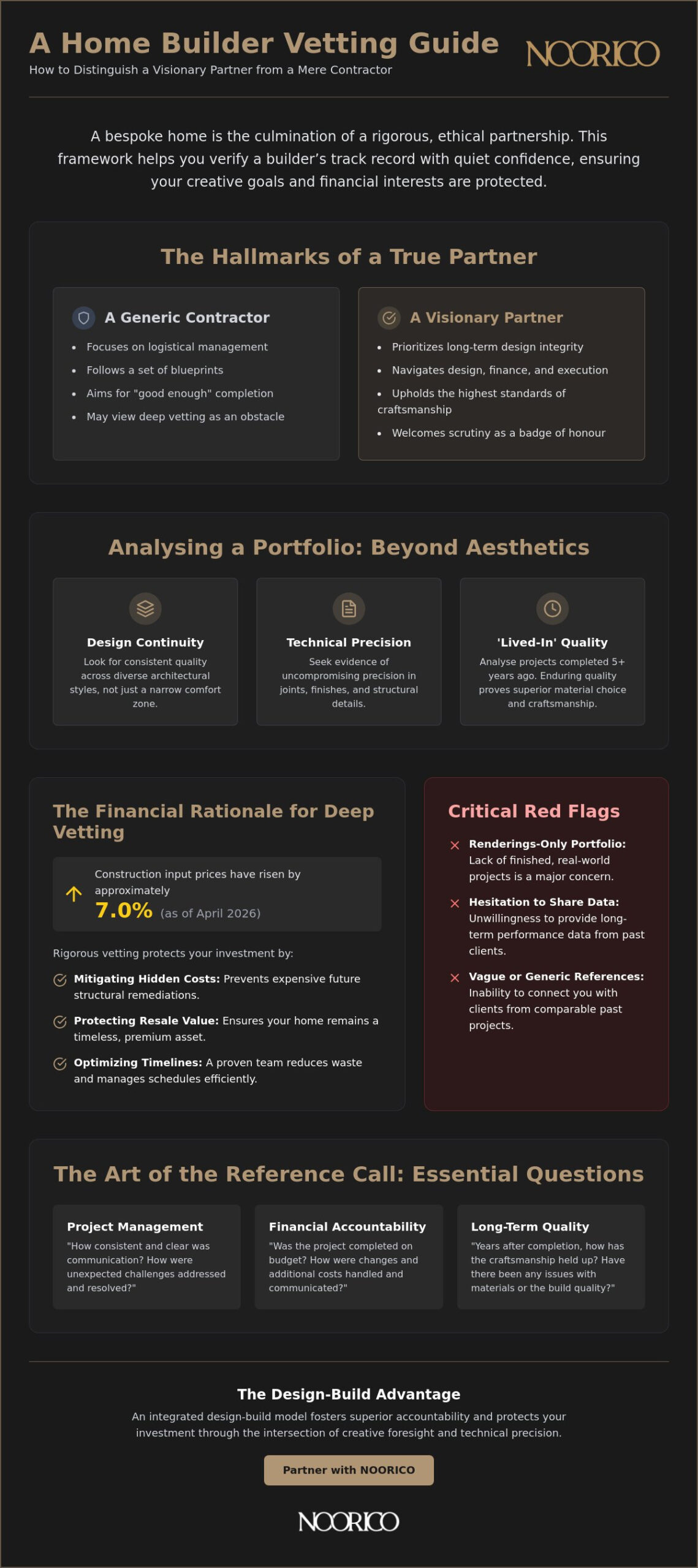
Distinguishing between a generic contractor and a visionary partner is the primary goal of this due diligence. While many can follow a set of blueprints, few can navigate the complex intersections of design, finance, and execution with quiet confidence. This level of vetting moves beyond the basic contract. It verifies the ethical pillars of a firm and ensures they possess the reliability to manage your significant investment. By conducting this deep analysis, you protect the long-term value of your bespoke living space and ensure the final product reflects your pursuit of superior creative achievements.
Defining the Professional Standard in 2026
The standard for high-end residential construction has evolved. In 2026, accountability is no longer just about meeting basic building codes; it’s about the sophisticated integration of design and execution. While a standard General contractor might focus solely on the logistical management of trades, a visionary partner prioritizes the long-term integrity of the design. “Good enough” is a phrase that has no place in a bespoke project. Superior results rely on a firm’s ability to maintain a steady, structured flow of information while upholding the highest standards of craftsmanship. This persistent dedication ensures that every architectural detail is realized with uncompromising precision.
The Financial Rationale for Deep Vetting
The financial stakes of custom home building are significant. With aggregate construction input prices having risen by approximately 7.0% as of April 2026, every error or delay carries a substantial price tag. Thoroughly checking a builder’s references and portfolio allows you to verify their ability to manage complex financial executions and navigate volatile material costs. Consider these financial benefits of rigorous vetting:
- Mitigating Hidden Costs: Identifying and avoiding substandard initial construction prevents expensive structural remediations in the future.
- Protecting Resale Value: Verified craftsmanship ensures your home remains a timeless asset that commands a premium in the market.
- Efficient Project Management: A proven team reduces waste and optimizes timelines, directly impacting your final bottom line.
Ensuring your project management team has a documented history of precision secures your investment. It provides the peace of mind that your home will be built to last for generations.
Analyzing a Builder’s Portfolio: Beyond Surface-Level Aesthetics
A portfolio is a visual record of a firm’s persistent dedication to excellence. When checking a builder’s references and portfolio, you must look past the glossy staging to identify the structural integrity and design continuity beneath. A visionary partner doesn’t just build walls; they curate environments where architectural design and interior design exist in a symbiotic relationship. Look for consistency across their body of work. Does the firm maintain their high standard across diverse styles, or do they falter when stepping outside a narrow aesthetic comfort zone? True mastery is revealed when a builder successfully realizes a client’s specific vision while maintaining their own uncompromising standards of quality.
Evaluating the ‘lived-in’ quality of a project is a critical step that many overlook. High-end builds shouldn’t just look impressive on the day the keys are handed over. They should age gracefully. Seek out projects in their portfolio that were completed five or more years ago. If those spaces still look pristine and function flawlessly, it’s a testament to the firm’s choice of materials and technical precision. Understanding your consumer protection rights ensures you’re selecting a partner who values both aesthetic brilliance and the ethical accountability required to stand behind their work for years to come.
Spotting the Details of High-End Design
Precision is often found in the transitions. Examine how a builder manages the meeting points of disparate materials, such as the seamless integration of natural stone against hand-milled timber. High-end design requires an uncompromising eye for spatial flow and the strategic manipulation of natural light. While reviewing their work, consider whether the interior styling feels like a fundamental component of the build or a superficial addition. This level of detail is a primary unique voice marker for firms that prioritize superior creative achievements over mere completion.
Assessing Structural and Technical Complexity
Simple cosmetic updates are vastly different from the technical rigour required for home additions GTA clients demand. A sophisticated portfolio should showcase major renovations and structural transformations that demonstrate a firm’s ability to navigate complex engineering challenges. If you are planning a significant expansion, you need a partner who has mastered the intersections of industry and execution. Our team provides the strategic industry knowledge necessary to ensure your structural aspirations are grounded in practical reality. Look for these signs of rigorous project management in their final finishes:
- Material Alignment: Perfectly balanced joints and symmetrical layouts in tiling and masonry.
- Mechanical Integration: Discreetly placed HVAC vents and lighting controls that don’t disrupt the visual harmony.
- Custom Millwork: Bespoke cabinetry and trim that fits the architectural proportions of the room exactly.
By focusing on these technical nuances, you move beyond the surface and gain a true understanding of a builder’s capability to deliver a bespoke living space.
The Art of the Reference Call: Essential Questions for Past Clients
While a portfolio offers visual proof of capability, the reference call reveals the practical grit of the construction process. Checking a builder’s references and portfolio is a multi-dimensional exercise that requires you to move beyond surface-level praise. You are seeking a partner who demonstrates persistent dedication to both the final product and the client experience. A truly professional firm understands that their reputation is anchored in the enduring professional bonds they build with homeowners. When speaking with past clients, your goal is to uncover how the builder navigated the inevitable complexities of a high-end residential project.
The most revealing questions focus on the “Communication Rhythm” of the firm. You should ask if the team maintained a steady, structured flow of information throughout the build. Did they provide predictable and reassuring updates? A visionary partner doesn’t just build; they guide you through the intersections of industry and finance with transparency. Inquire about their problem-solving abilities when structural challenges arose. You want to know if the final bespoke living space realized the aspirational outcomes promised at the start, and if the firm remained responsive long after the final payment was made.
Step 1: Preparing Your Inquiry Framework
Success begins with a logical, organized approach to your investigation. Request references from projects that match the scale and technical complexity of your own vision. A firm’s performance on a minor renovation may not reflect their ability to execute a multi-million dollar estate. Identify the primary liaison within the reference’s household to ensure you’re speaking with the individual who managed the day-to-day interactions. Structure your inquiry to move from practical logistics, such as site cleanliness and schedule adherence, to the emotional satisfaction of the finished architectural achievement.
Step 2: Conducting the Interview with Professionalism
To obtain honest, non-rehearsed answers, use open-ended questions that require descriptive responses. Instead of asking if they liked the builder, ask how the firm responded when material costs shifted or timelines were pressured. Given that steel prices are projected to rise by 15 to 35 percent in 2026, understanding how a builder manages financial volatility is essential. Ask about the synergy between the architectural office and the construction team to ensure there was no “blame game” during execution. Verify their proficiency in managing different financial structures, whether you’re considering a fixed-price contract or a cost-plus scenario. This level of due diligence ensures your significant investment is in safe, principled hands.
Identifying Red Flags and Recognizing Enduring Craftsmanship
A sophisticated vetting process requires the ability to look past polished marketing and identify the operational reality of a construction firm. When checking a builder’s references and portfolio, you must look for the presence of physical evidence rather than digital promises. A primary red flag is a portfolio dominated by 3D renderings with few completed physical builds. While digital visualisations are essential for the architectural design phase, a firm that cannot showcase finished, high-end estates lacks the proven ability to navigate the grit of a real-world jobsite. If you encounter a builder who is reluctant to provide references for projects completed more than two years ago, consider it a warning. This hesitation often suggests that their craftsmanship hasn’t endured or that the professional bonds they built during construction have since frayed.
Conversely, a visionary partner displays green flags through transparency and longevity. Look for a firm that manages the entire project lifecycle, from the initial architectural concept to the final interior detail. This integrated approach ensures a single point of accountability and a more cohesive final product. Another hallmark of a reliable builder is the presence of stable, long-term relationships with trade contractors and suppliers. In an industry facing a labour shortage of approximately 740,000 workers annually, a builder who retains a loyal team of expert tradespeople demonstrates an ethical and organized operation. You can experience this level of professional integrity by choosing to partner with an established custom home builder dedicated to superior creative achievements.
The Warning Signs of a Disorganized Firm
Organization is a proxy for quality. If a firm exhibits inconsistent communication during the initial vetting phase, it’s a predictor of how they’ll manage your project. Vague answers regarding municipal navigation or building permits are equally concerning. In 2026, navigating local regulations requires precision and foresight. A lack of stylized order in a builder’s own professional presentation often reflects a lack of mental clarity on the jobsite. A sophisticated expert will always provide clear, structured information that instils confidence in their ability to manage your significant investment.
Evidence of Persistently Dedicated Craftsmanship
True quality is often found in the systems you cannot see. When speaking with references, inquire about the performance of hidden systems like HVAC and structural framing. In our regional context, enduring craftsmanship must withstand the rigours of the Canadian freeze-thaw cycle. A clean, organized jobsite is another indicator of persistent dedication. It shows respect for the materials, the safety of the trades, and the final integrity of the home. Longevity in the industry is the ultimate proof of reliability. A firm that has mastered its craft over decades possesses the strategic industry knowledge required to ensure your bespoke living space remains pristine for generations.
Why a Design-Build Partner Offers Unparalleled Accountability
The traditional separation of architectural design and construction execution often creates a fragmentation that compromises the final product. By choosing a design-build partner, you opt for a sophisticated model that places the entire project lifecycle under one roof. This integration eliminates the common ‘blame game’ between architects and contractors, where technical errors are often met with finger-pointing rather than solutions. When checking a builder’s references and portfolio, specifically inquire about how the firm navigated the transition from design to physical reality. A multi-disciplinary team provides a single point of accountability, ensuring that your significant investment is protected by a unified creative foresight.
NOORICO’s 25-year history in the high-end residential sector provides a foundation of trust that is rare in the industry. We understand that a bespoke home is a legacy asset that requires an uncompromising commitment to quality. Our approach successfully balances the practical grit of project management with the sophisticated elegance of superior design. This ensures that every structural element and interior detail serves the broader architectural vision without compromise. By serving as your visionary partner, we manage the complex intersections of industry, finance, and execution so you don’t have to.
The Synergy of Design and Execution
Integrated project management streamlines the residential build lifecycle by removing the silos that lead to delays and budget overruns. When you work with a visionary partner, you gain the benefit of a team that understands the technical constraints of the jobsite during the earliest stages of architectural design. This proactive approach allows for earlier procurement and more accurate scheduling, which is vital in a market where material costs can fluctuate. This model is often cited as a highlight when checking a builder’s references and portfolio for past clients who value transparency. Realizing a bespoke living space requires this level of synchronization to ensure the final result is as functional as it is beautiful.
Your Next Steps Toward a Bespoke Home
Initiating your project begins with a professional consultation with a sophisticated expert who can translate your aspirations into a tangible plan. Before this meeting, prepare a vision brief that outlines your lifestyle requirements, aesthetic preferences, and long-term goals for the property. This document serves as the essential starting point for our multi-disciplinary team to begin the process of transformation. By defining your philosophical values early, you create a predictable and reassuring path for the construction of your home. This methodical approach ensures your future-building project remains grounded in decades of industry experience. Discover how NOORICO transforms high-end visions into enduring realities.
Securing the Future of Your Bespoke Residence
True due diligence is an investment in your peace of mind. By moving beyond surface-level photography and meticulously checking a builder’s references and portfolio, you ensure your project is grounded in technical precision and ethical clarity. You’ve learned to recognize the green flags of long-term trade relationships and the sophisticated advantage of a multi-disciplinary design-build model. These strategic steps transform a complex construction journey into a predictable, rewarding path toward a superior living space.
Your vision deserves a partner who shares your uncompromising commitment to excellence. With over 25 years of established residential expertise, we integrate architectural design and project management to deliver a seamless transition from concept to reality. We remain dedicated to the pursuit of superior creative achievements in every build we undertake. Partner with a Visionary Builder for Your Next Project and begin the journey of crafting a home that will stand as a testament to your legacy. Your dream is within reach when you choose a partner who values accountability as much as you do.
Frequently Asked Questions
How many references should I realistically check before signing a contract?
You should realistically aim to speak with three to five past clients to gain a comprehensive understanding of a firm’s performance. This range provides enough data to identify consistent patterns in their project management and communication rhythm. Requesting a mix of recent completions and projects finished over five years ago allows you to verify both current operational efficiency and the enduring quality of their craftsmanship.
Is it appropriate to ask to visit a builder’s current active jobsite?
Requesting a visit to an active jobsite is a highly appropriate and sophisticated part of your due diligence. It allows you to observe the practical grit of the construction process and the level of stylized order the firm maintains. A visionary partner will welcome this request as an opportunity to demonstrate their commitment to safety, site cleanliness, and the professional conduct of their master trades.
What should I do if a reference gives a ‘mixed’ review of the builder?
Analyze the specific nature of the mixed review to determine if the issues were isolated incidents or systemic failures. Every bespoke project faces inevitable complexities; the defining factor is how the builder navigated those challenges. Ask the builder for their perspective on the project to gauge their level of accountability and their persistent dedication to resolving client concerns with transparency and grace.
How can I tell if the photos in a builder’s portfolio are actually their own work?
Verifying the authenticity of a portfolio involves cross-referencing visual evidence with physical project addresses and specific client testimonials. When checking a builder’s references and portfolio, look for a consistent design language and high-value finishes that match the firm’s stated expertise. You may also ask for detailed explanations of the technical challenges faced during those specific builds to ensure the firm possesses genuine first-hand knowledge.
Should I check references for the builder’s sub-contractors and designers as well?
You don’t need to vet every sub-contractor individually if you’ve confirmed the builder’s history of maintaining stable, long-term relationships with their trades. A firm that has worked with the same master craftsmen for years demonstrates a level of ethical management and synchronized execution that protects your investment. Focus on the builder’s ability to serve as a multi-disciplinary guide who remains accountable for the entire project outcome.
What are the most common ‘hidden’ issues that references might reveal?
References often reveal critical operational details that a portfolio cannot show, such as the firm’s responsiveness to post-build deficiencies and their accuracy in financial forecasting. While the final photos show the aesthetic achievement, a past client can describe the steady flow of information and whether the builder honoured the original budget. These insights are essential for checking a builder’s references and portfolio effectively before making a significant commitment.
Can a builder refuse to give me references for privacy reasons?
While a builder must respect the privacy of their clients, a complete refusal to provide any references is a significant red flag. Professional firms dedicated to superior creative achievements always maintain a list of past clients who have consented to share their experiences. A total lack of available references often suggests a lack of enduring professional bonds or a history of projects that didn’t realize their aspirational outcomes.