
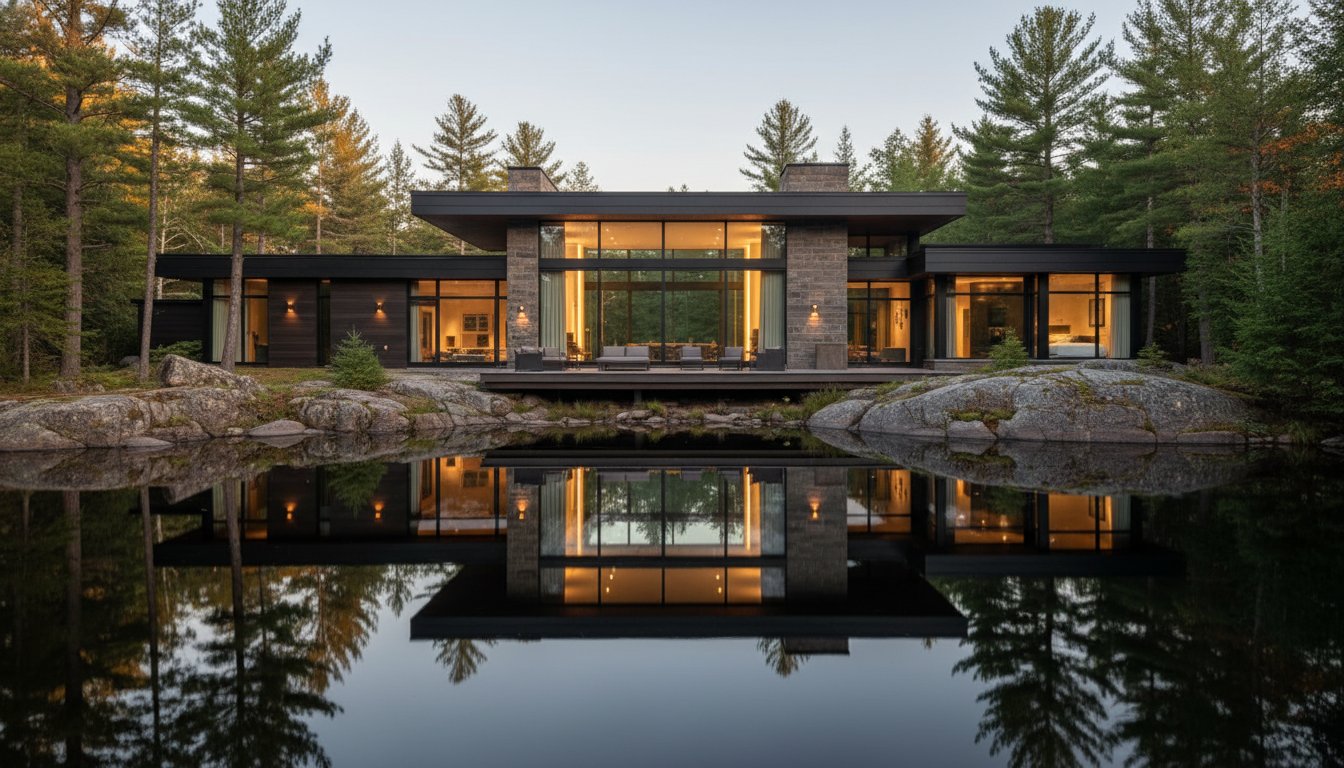
A home in Canada is far more than a simple structure; it’s a sophisticated dialogue between heritage resilience and modern creative foresight. While the aesthetic appeal of a property is paramount, the true test of architectural excellence lies in its ability to withstand demanding climates while reflecting a timeless sense of distinction. Choosing from the various architectural styles popular in canada often feels overwhelming, especially when you’re balancing the desire for a unique custom home build with the practicalities of the 2025 National Building Code updates arriving in 2026.
We recognize that a major renovation or new build represents a profound investment of both capital and vision. You likely want a space that feels contemporary yet avoids the pitfalls of fleeting trends that lose their lustre within a decade. This guide provides the clarity you need to move forward with quiet confidence. You’ll discover how to integrate enduring forms with modern performance, ensuring your project remains a source of pride for years to come. We’ll examine everything from the rise of warm modernism to the integration of biophilic principles, giving you a clear roadmap to realize a home that is both a sanctuary and a masterpiece of precision engineering.
Key Takeaways
- Understand how the interplay between European tradition and North American innovation has shaped the architectural styles popular in canada for high-end residential builds.
- Distinguish between timeless modernism and fluid contemporary trends to realize a design that seamlessly integrates the Canadian landscape through glass and natural light.
- Learn how to navigate the complexities of lot orientation and site constraints to ensure your custom home or major renovation achieves optimal form and function.
- Discover the value of a multidisciplinary approach that unites architectural design and interior styling to create a singular, sophisticated vision for your property.
- Gain insights into balancing aesthetic aspirations with the practical rigour of project management to safeguard your significant investment.
The Evolution of Canadian Architecture: Form, Function, and Heritage
Canadian residential design represents a sophisticated synthesis of European architectural tradition and North American creative innovation. This unique blend has matured over centuries, moving beyond the simple necessity of shelter to define a premium standard of bespoke living. Understanding the architectural styles popular in canada requires an appreciation for how our ancestors balanced aesthetic elegance with the practical grit required to survive a northern climate. Today, this evolution culminates in homes that are as much a statement of personal achievement as they are feats of modern engineering.
The vast diversity of the Canadian landscape necessitates a varied architectural response. From the limestone-rich regions of Ontario to the timber-heavy coasts of British Columbia, local materials have historically dictated the visual language of our neighbourhoods. The Evolution of Canadian Architecture demonstrates a persistent dedication to climate-driven design, a hallmark that remains a priority for any discerning homeowner today. This philosophy ensures that every custom home build or major renovation prioritizes the relationship between the structure and its environment, creating a sanctuary that is both beautiful and resilient.
The Influence of Heritage and Environment
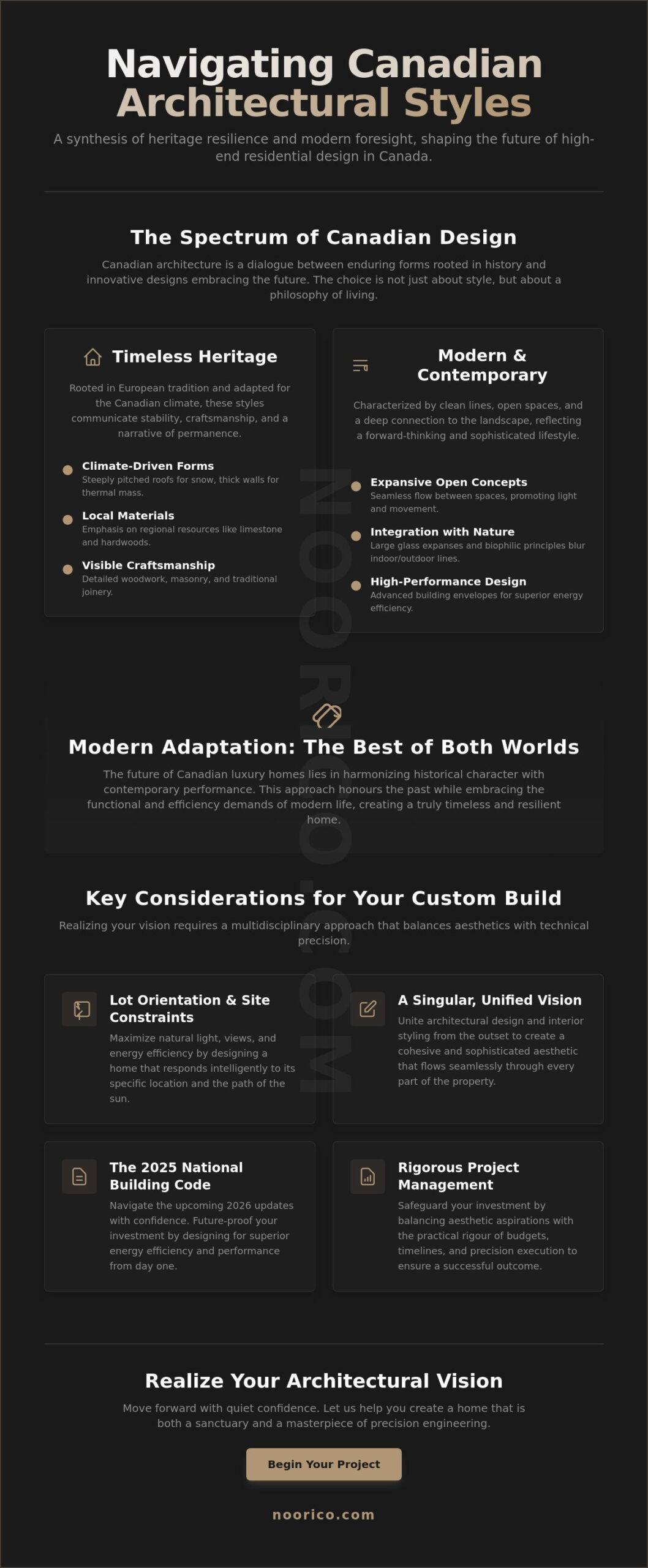
Early settlers realized quickly that French and British designs required significant modification to endure Canadian winters. They adapted traditional masonry and timber-framing techniques to create what we now recognize as the Canadian vernacular. This style is characterized by steeply pitched roofs to shed heavy snow and thick walls for thermal mass. By utilizing local limestone and resilient hardwoods, these builders established an aesthetic rooted in the earth itself. These heritage elements continue to inspire luxury residential design, offering a sense of permanence and stability that modern trends often lack.
Modern Adaptation of Traditional Forms
In 2026, architectural design has reached a new level of sophistication by pairing traditional silhouettes with advanced building envelopes. As provinces adopt the 2025 National Building Code, we see a shift toward high-performance homes that maintain their historical character while achieving superior energy efficiency. Modern custom residential projects often involve a transition from small, partitioned rooms to expansive, open-concept layouts. This allows for a seamless flow of light and movement without compromising the architectural integrity of the original form. Whether through a home addition or a complete structural overhaul, the goal remains the same: to honour the past while embracing the functional requirements of contemporary life.
Timeless Classics: Popular Heritage-Inspired Styles in Canada
Heritage architecture remains the enduring gold standard for luxury residential builds because it communicates a narrative of stability and refined taste. In established neighbourhoods across the country, these designs provide a stately presence that modern trends often struggle to replicate. Many homeowners choose these Popular Heritage-Inspired Styles in Canada to ensure their property retains a high market value while offering the emotional comfort of symmetry and visible craftsmanship. By focusing on the intersection of historical proportions and modern utility, a custom build can achieve a level of distinction that feels both rooted in the past and prepared for the future.
The emotional appeal of these architectural styles popular in canada lies in their predictability and order. A well-executed heritage-inspired home suggests a persistent dedication to quality that transcends seasonal fads. Whether you are planning a new custom home or a major renovation to an existing property, maintaining architectural integrity is essential for preserving the long-term value of your investment.
The Craftsman and Arts and Crafts Movement
The Craftsman aesthetic is particularly well-suited for the diverse Canadian landscape, from coastal retreats to mature suburban streets. This style emphasizes hand-crafted details such as tapered columns, exposed rafter tails, and deep covered porches. While the original movement prioritized manual labour, 2026 builds integrate these beautiful silhouettes with advanced energy-efficient building envelopes. Achieving this balance requires a high-intensity, uncompromising commitment to the final product, ensuring that every timber joint and stone pedestal meets a superlative standard of quality.
Victorian and Gothic Revival Influences
Victorian-inspired architecture is defined by its verticality and intricate ornamentation. Steep gables and ornate trim work create a sense of drama and sophistication that is highly sought after in premium markets. Realizing a Victorian-inspired addition or renovation requires a visionary partner who understands how to honour historical verticality without compromising the light-filled, open spaces desired by modern families. These projects often involve restoring architectural character to its original glory while discreetly integrating 21st-century systems.
Colonial and Georgian Symmetry
Georgian architecture is synonymous with authority and permanence. Its balanced proportions and stately brick or stone facades create a sense of order that is deeply reassuring. This style is frequently the preferred choice for large-scale custom estates where a commanding presence is required. By utilizing high-value materials and precise masonry, these homes establish a legacy of longevity. The rhythmic placement of windows and the central entry point provide a logical flow that mirrors the steady, structured approach required for successful project management.
Modern and Contemporary: Defining the 2026 Canadian Aesthetic
While often used interchangeably in casual conversation, “Modern” and “Contemporary” represent distinct philosophical approaches within the architectural styles popular in canada. Modernism refers to a specific historical movement rooted in mid-century principles, prioritizing functionalism and structured geometric clarity. Contemporary design is fluid and ever-evolving; it captures the aesthetic spirit of 2026 by integrating current technological advancements with artistic foresight. This distinction is critical for homeowners who seek a design that balances historical significance with the innovative spirit of a new custom home build or a major renovation.
A defining characteristic of the 2026 Canadian aesthetic is a persistent dedication to “bringing the outdoors in.” This is achieved through the strategic use of high-performance glass and expansive skylights that flood interior spaces with natural light. As the 2025 National Building Code takes effect in 2026, these large glass installations are now paired with advanced thermal breaks and sustainable, high-performance materials. This ensures that visual splendour doesn’t come at the cost of energy efficiency, creating a sanctuary that is both ecologically responsible and aesthetically superior.
West Coast Modernism and Organic Design
West Coast Modernism remains a premier choice for those building in rugged, natural environments. This style utilizes post-and-beam structures to allow for massive floor-to-ceiling glass walls, creating a seamless transition between the living area and the landscape. The integration of organic materials like cedar and stone grounds the structure, ensuring the home feels like an extension of the earth. This approach requires a sophisticated expert to manage the complex intersections of structural engineering and natural preservation.
The Rise of the Transitional Home
For many, the Transitional style offers the ideal middle ground for a custom build. It marries the comforting silhouettes of traditional rooflines with the clean, unobstructed windows of modern design. This versatility allows for a sophisticated interior styling that can adapt as tastes evolve. It provides a stable foundation for projects where the goal is to modernize a property while respecting its original footprint, offering the most flexibility for future-building.
Minimalist and International Style Influences
Minimalist architecture has seen a significant rise in the luxury market, driven by a “less is more” philosophy. These projects focus on pure geometric forms and flat roofs, demanding an uncompromising level of precision in construction. Without ornate trim to hide imperfections, the quality of the execution becomes the primary decorative element. This style represents the peak of professional design, where every line is intentional and every material choice is purposeful.
Selecting the Right Style for Your Custom Home Build
Choosing the right blueprint for your life is a profound responsibility that requires a balance of creative foresight and technical rigour. It involves moving beyond the visual appeal of architectural styles popular in canada to find a form that honours the specific topography and orientation of your land. A successful choice balances your personal aesthetic with the established character of the surrounding neighbourhood, creating a residence that feels inevitable rather than imposed. This strategic selection process ensures that your home serves as a functional sanctuary while maintaining its value as a significant financial asset.
The dimensions and orientation of your lot dictate the possibilities of your design. A stately Georgian estate requires a wide frontage to achieve its characteristic symmetry, while a narrow urban lot may be better suited for the verticality of a modern minimalist structure. Future-proofing your design also means considering the long-term resale potential. By selecting a style that offers timeless appeal and adheres to the 2026 energy efficiency standards, you protect your investment against shifting market trends and evolving regulatory requirements. This persistent dedication to both form and future-building is what defines a truly successful custom project.
Climatic and Environmental Considerations
In Canada, the environment is a primary architect. Snow loads and thermal performance requirements dictate everything from roof pitches to the placement of high-performance windows. Designing for the “Canadian light” is a specific art; it involves maximizing southern sun exposure during the short winter days to enhance both well-being and passive heating. Materials must be chosen for their ability to age gracefully despite extreme temperature fluctuations. Stone, brick, and treated timbers are often preferred for their resilience and their ability to develop a sophisticated patina over time.
Balancing Aesthetic Vision with Functional Requirements
A home must perform as well as it looks. Whether you are designing for multi-generational living or a high-intensity professional lifestyle, the architectural form must support your daily rituals. This is where the intersection of architectural design and professional project management becomes critical. A “design-build” approach ensures that your aspirational vision remains technically feasible and stays within the established financial framework. By integrating these disciplines from day one, you can move forward with the quiet confidence that your dream is rooted in practical reality. To begin refining your vision into a concrete plan, we invite you to explore our custom home building services and discover how we bridge the gap between inspiration and execution.
Realizing Your Vision with Bespoke Architectural Design
Building a custom home is a high-intensity endeavour that requires more than just a list of architectural styles popular in canada. It demands a visionary partner capable of translating abstract aspirations into a tangible, high-performance reality. At NOORICO, we serve as your multidisciplinary guide through the complex intersections of design, finance, and execution to ensure your significant investment results in a masterpiece of enduring value. Our approach is grounded in decades of industry experience and elevated by a pursuit of superior creative achievements. We provide the steady, structured rhythm necessary to move your project from initial concept to final construction with quiet confidence.
The transition from a conceptual drawing to a physical structure is a sophisticated process that requires persistent dedication to the original vision. By prioritizing ethical pillars and accountability, we reassure our clients that their projects are in safe, principled hands. This trust-based approach allows us to manage the practical grit of project management while maintaining the sophisticated elegance of high-end design. The result is a home that doesn’t just meet current standards but sets a new benchmark for quality and distinction in your specific geographic region.
The Role of the Visionary Partner
An established firm does not merely provide a service; it builds a legacy. The role of the visionary partner is to maintain a high-intensity, uncompromising commitment to the final product through every phase of the build. This involves navigating regulatory hurdles and technical challenges with transparency and professional rigour. By establishing enduring professional bonds with our clients, we ensure that every project is managed with the precision it deserves. Our project management process is methodical and logical, mirroring the operational excellence required for a successful and predictable outcome.
Integrating Interior Design with Architectural Form
True luxury is found in the continuity of design. Integrating interior design with architectural form from the earliest stages ensures that the interior of your home speaks the same language as its exterior architecture. We utilize high-value, superlative finishes to reinforce a premium market position, selecting materials that reflect the distinction of the overall structure. This holistic approach eliminates the disjointed feeling often found in standard renovations or additions. Whether you are inspired by the clean lines of modernism or the stately presence of heritage symmetry, we harmonize every element to create a singular, sophisticated vision. We invite you to consult with our experts to realize your custom home vision and experience the difference that professional architectural design and project management can make.
Building Your Legacy in the Canadian Landscape
Selecting the right form for your home is a profound act of future-building. Whether you choose the stately symmetry of a Georgian estate or the expansive glass of West Coast Modernism, your decision should reflect a deep understanding of the architectural styles popular in canada. We’ve explored how heritage resilience meets modern performance, ensuring your residence remains a sanctuary in our demanding climate. By prioritizing both aesthetic distinction and the technical rigour of the 2026 building codes, you create a property that is both a personal masterpiece and a secure financial asset.
Realizing such a complex vision doesn’t just happen; it requires a sophisticated expert with a persistent dedication to excellence. With over 25 years of established expertise, NOORICO offers an integrated multi-disciplinary group that specializes in high-intensity, uncompromising quality. We bridge the gap between creative foresight and practical execution, guiding you through every intersection of industry and design. We invite you to begin your journey toward a bespoke living space with NOORICO. Your vision deserves the precision of a seasoned professional dedicated to building enduring professional bonds.
Frequently Asked Questions
What is the most popular architectural style in Canada for 2026?
Warm Modernism is currently the most sought-after choice among architectural styles popular in canada for 2026. This aesthetic prioritizes natural materials and textured layers over stark, cold minimalism. It aligns perfectly with the new energy efficiency provisions of the 2025 National Building Code, ensuring your home is both visually stunning and environmentally responsible for decades to come.
How do I choose an architectural style that fits my neighbourhood?
Selecting a style requires a professional contextual analysis of your specific streetscape and community guidelines. You should aim for a design that respects the established character of the area while introducing your unique creative vision. Factors like lot orientation and the proximity of neighbouring structures will ultimately dictate the most harmonious architectural response for your custom home build.
What is the difference between Modern and Contemporary architecture?
Modern architecture refers to the functionalist movement of the mid-20th century, while Contemporary design reflects the artistic spirit of the present moment. Contemporary styles are fluid and incorporate the latest technological advancements available in 2026. Understanding this distinction helps you choose between a historically rooted aesthetic and a design that defines the cutting edge of current residential trends.
Can I mix different architectural styles in one custom home?
Mixing styles is entirely possible through the “Transitional” approach, which marries traditional silhouettes with clean, modern finishes. This method offers the most flexibility for your interior styling and future-building needs. However, it requires a sophisticated expert with a persistent dedication to precision to ensure the final form remains cohesive, structurally sound, and aesthetically balanced.
How does the Canadian climate affect architectural design choices?
The Canadian climate dictates essential design elements like roof pitch, thermal breaks, and high-performance window placement. Architects must account for heavy snow loads and extreme temperature fluctuations to ensure long-term durability and comfort. Designing for the “Canadian light” also involves strategic glazing and orientation to maximize sun exposure during our shorter winter days, enhancing both well-being and energy efficiency.
Is a flat roof a good idea for a home in Canada?
Flat roofs are a viable and sophisticated option provided they are engineered to manage drainage and snow accumulation effectively. They are central to the minimalist and international styles that are currently gaining traction in the luxury market. Professional project management ensures these structures utilize high-performance membranes and advanced insulation to safeguard your significant investment from the elements.
What architectural styles are best for major home renovations?
Heritage-inspired and Transitional styles are often the most successful choices among the architectural styles popular in canada for major renovations. These approaches allow you to modernize the floor plan and improve energy efficiency while respecting the original character of the home. They provide a stable foundation for additions that feel like a natural extension of the primary structure.
How long does the architectural design process usually take for a custom build?
The timeline for architectural design varies based on the complexity of the project and the required municipal approvals. A thorough process involves moving from initial concept to technical drawings with a persistent dedication to precision. Most high-end custom builds require several months of planning to ensure every detail is technically feasible and aesthetically aligned before construction begins.