
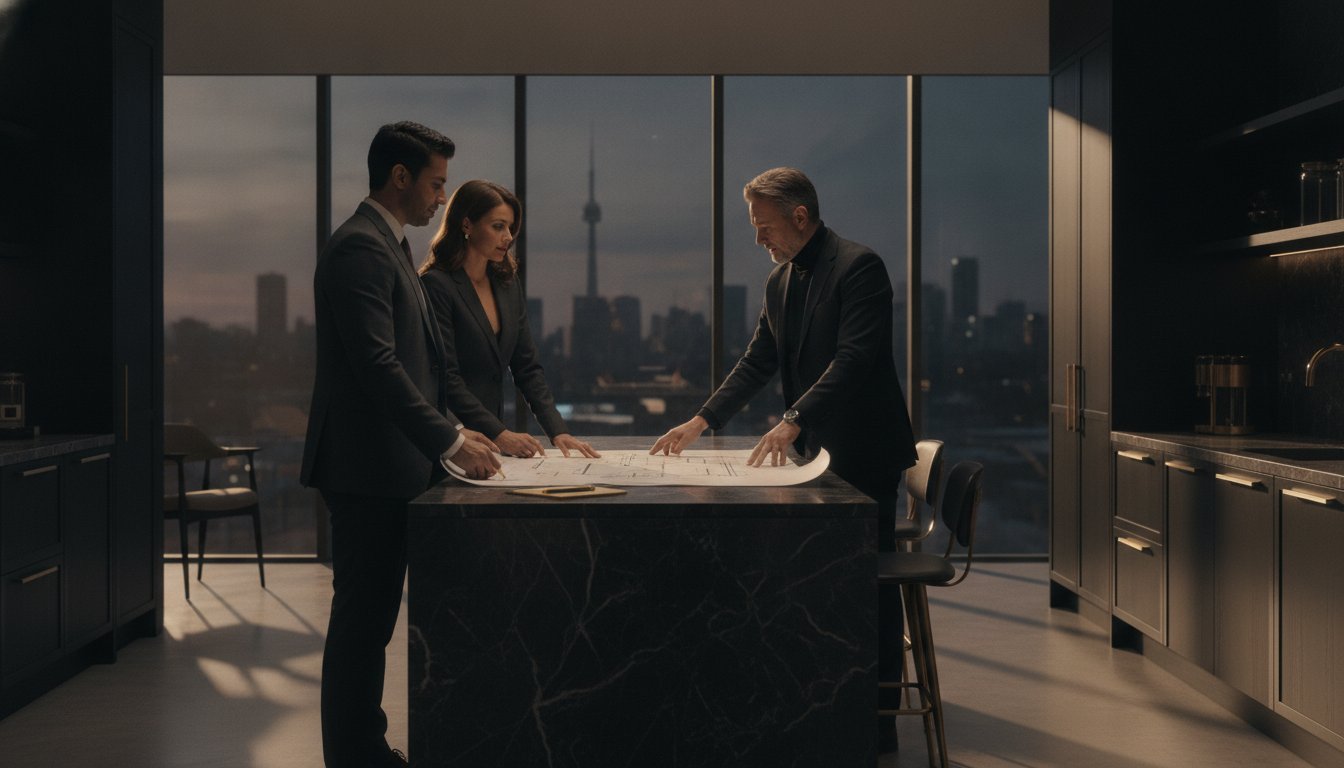
What if the most significant risk to your luxury residential project isn’t a surge in material costs, but a lack of transparency during your very first meeting? You likely recognize that building a bespoke residence in the Greater Toronto Area is a monumental investment of both capital and emotion, yet the fear of unfinished timelines or hidden contractual traps can turn a visionary dream into a source of persistent anxiety. It is natural to feel overwhelmed by the complexities of modern construction, especially as regulatory standards and building codes continue to evolve.
This guide provides the essential questions to ask a custom home builder toronto to ensure your project is anchored in ethical accountability and sophisticated project management. By mastering this interview checklist, you will gain the clarity needed to identify a partner who balances practical grit with superior creative achievements. We will explore 21 critical inquiries covering everything from the 2026 Ontario Building Code updates and Tarion deposit protections to the nuances of integrated architectural design, giving you total confidence in your project’s trajectory.
Key Takeaways
- Verify regulatory compliance by confirming HCRA licensing and Tarion registration to safeguard your significant capital investment.
- Bridge the gap between inspiration and execution by evaluating a builder’s integrated architectural design and budget management workflows.
- Utilize these specific questions to ask a custom home builder toronto to uncover hidden costs and clarify complex construction contracts before signing.
- Ensure operational excellence by confirming the presence of a dedicated project manager and a transparent, rhythmic site meeting schedule.
- Secure long-term peace of mind by mastering the Pre-Delivery Inspection process and understanding the critical seasonal adjustment period.
Table of Contents
Vetting Your Custom Home Builder in Toronto: Essential Credentials
The selection of a builder is a decision that defines the legacy of your property and the security of your capital. To protect your investment, you must move beyond aesthetic portfolios and scrutinize the legal and ethical pillars supporting a firm’s operations. One of the most vital questions to ask a custom home builder toronto is whether they are currently licensed by the Home Construction Regulatory Authority (HCRA) and registered in good standing with Tarion. This isn’t merely a formality; it is a mandatory legal requirement that ensures your project adheres to provincial standards and protects your significant financial deposits from the very beginning.
The Importance of Tarion Registration and Warranty
Tarion serves as the essential framework for consumer protection throughout the custom home building process in Ontario. A visionary partner will not only maintain their registration but will also demonstrate a transparent history on the Ontario Builder Directory, allowing you to verify their claims-to-build ratio. You should specifically ask about their history with warranty claims and how those resolutions were managed in the past. As of April 1, 2026, buyers must provide notice of their purchase to Tarion within 45 days of signing to ensure maximum deposit protection, which can reach up to $100,000 for freehold homes. A reputable builder proactively guides you through these deadlines, reflecting a persistent dedication to your financial security.
Insurance and Workplace Safety Standards
While many contractors carry basic liability coverage, a sophisticated expert maintains comprehensive General Liability Insurance specifically tailored for high-end residential construction. This distinction ensures that unforeseen events don’t stall your project or expose you to personal liability. Beyond the firm’s own coverage, verify that every member of the labour force on-site is compliant with the Workplace Safety and Insurance Board (WSIB). A sophisticated expert views this rigorous oversight as a non-negotiable standard that protects both the artisan and the homeowner’s peace of mind, ensuring that site safety is treated as a core operational value rather than an afterthought.
Finally, ask how many years the firm has operated under its current corporate name to gauge their stability and local reputation. Stability in corporate identity often signals a consistent record of adhering to the Ontario Building Code, including the 1,730 technical updates introduced in the 2026 version. By confirming these credentials early, you establish a relationship built on quiet confidence and principled accountability. This thorough vetting process transforms the builder from a mere contractor into a multi-disciplinary guide who can successfully navigate the complex intersections of industry regulations and high-end execution.
Evaluating the Integrated Architectural Design Process
The transition from a conceptual vision to a structural reality requires a seamless synergy between architectural intent and construction feasibility. One of the most revealing questions to ask a custom home builder toronto is whether they provide in-house architectural and interior design services or if they rely on external third parties. A visionary partner understands that luxury is not merely an aesthetic choice but a meticulously planned experience where every corridor, window placement, and material transition is considered long before the first shovel hits the ground. By integrating these disciplines, a firm can translate your abstract lifestyle needs into functional floor plans that respect both your creative aspirations and the underlying structural requirements.
The Design-Build Advantage for Custom Homes
The traditional siloed approach, where an architect and a builder operate as separate entities, often leads to unnecessary friction, budget overruns, and finger-pointing when challenges arise. Choosing an integrated design build model offers a sophisticated alternative that ensures continuity from the initial sketch to the final walkthrough. This unified delivery method allows for real-time cost feedback during the design phase, preventing the heartbreak of falling in love with a blueprint that is financially impossible to execute. When interviewing candidates, ask who will be your single point of contact for both design and construction. This clarity of communication is a hallmark of professional builder licensing and conduct standards, ensuring your project remains on a predictable and transparent path.
Interior Design and Material Selection
In the luxury market, the distinction of a home is found in the precision of its finishes and the quality of its bespoke materials. A sophisticated expert utilizes creative foresight to curate interiors that are both timeless and deeply personal, anticipating how natural light will interact with specific stone surfaces or custom millwork. Inquire about the firm’s process for material selection and how they organize the timeline to avoid construction delays. This methodical approach mirrors the operational excellence required for major renovations, where every selection must be finalized and ordered with persistent dedication to the project schedule. By establishing these expectations early, you ensure that the design process remains a source of inspiration rather than a catalyst for confusion or delay.
Finally, address the inevitable reality of design revisions. Ask how the firm manages changes once the build has commenced and what impact these adjustments have on the established budget. A partner grounded in ethical accountability will have a structured workflow for revisions, providing clear documentation and financial clarity before any work proceeds. This disciplined approach protects your investment and ensures that the final product is a precise reflection of your original vision, delivered with the quiet confidence that only decades of industry experience can provide.
Navigating Construction Contracts and Budget Transparency
Financial stewardship is the cornerstone of a successful high-end residential project. When you move from the design phase into the contractual stage, the level of detail provided in your financial agreement will determine the stability of your investment. One of the most essential questions to ask a custom home builder toronto relates to the specific structure of their construction contract and how they ensure budget transparency throughout the build. A sophisticated expert does not rely on vague estimates; they provide a comprehensive breakdown that aligns with the legal standards set by Ontario’s Consumer Protection Act, ensuring your rights are protected from the outset.
Fixed-Price vs. Cost-Plus Agreements
Most luxury builds utilize either a fixed-price or a cost-plus contract, each offering distinct advantages. A fixed-price agreement provides the security of a set total, which is ideal for those who prioritize budget certainty, though it may offer less flexibility for mid-build design changes. Conversely, a cost-plus arrangement offers total transparency into every invoice and labour hour, allowing for a more fluid and evolving creative process. You should always request a sample budget breakdown to understand how “soft costs,” such as municipal permits and architectural fees, are accounted for. This level of detail prevents the confusion that often arises when these indirect expenses are not clearly defined in the initial proposal.
Managing Financial Risk and Escalations
In the 2026 economic landscape, managing market volatility is a critical component of professional project management. Ask your builder how they mitigate the risk of sudden price surges in materials like timber or specialized glazing. A visionary partner uses strategic industry knowledge to lock in pricing early or suggest alternative materials that maintain the design intent without compromising the budget. Ethical accountability in financial reporting ensures that every dollar invested is tracked with surgical precision, providing the homeowner with absolute peace of mind.
Part of this strategy involves the Who-What-Why of a contingency fund. The builder identifies potential risks, such as unforeseen sub-surface soil conditions, and sets aside a specific percentage of the total budget to ensure these challenges are resolved without halting progress. This proactive approach mirrors the discipline required for custom home building, where financial foresight is as important as architectural design. Finally, clarify the process for documented change orders. Every deviation from the original plan must be recorded, priced, and approved in writing to ensure that “allowance” items, such as bespoke lighting or high-end appliances, never become a source of unexpected financial strain.
Understanding Project Management and Site Supervision
The operational success of a luxury residential project depends entirely on the discipline of its execution. While design and budgeting lay the foundation, the actual build phase requires a sophisticated expert who can manage the high-intensity environment of a Toronto construction site. One of the most essential questions to ask a custom home builder toronto is how they structure their project management and who will be responsible for the daily oversight of your home. A visionary partner does not leave site management to chance; they provide a dedicated professional who serves as the primary liaison between the design intent and the physical labour.
The Role of the Dedicated Site Supervisor
Will there be a supervisor on-site every day? This is a non-negotiable requirement for maintaining superior creative achievements. A dedicated site supervisor (Who) monitors every stage of the assembly (What) to ensure that the structural integrity and aesthetic details meet our uncompromising standards (Why). This daily presence fosters a sense of quiet confidence, as the supervisor can anticipate challenges before they escalate into costly delays. A structured “Who-What-Why” communication flow ensures that every stakeholder, from the electrician to the interior designer, understands their specific role in the broader transformation.
Timeline Realism and Delay Mitigation
A seasoned professional understands how to realize a schedule that accounts for the unique challenges of the Toronto climate, including the impact of Canadian winters on foundation work and exterior finishing. In the 2026 market, you must inquire about current lead times for specialized components like high-efficiency HVAC systems and custom glazing, which are now subject to stricter energy standards under the updated Ontario Building Code. Ask for a track record of meeting substantial completion dates to gauge their ability to deliver on their promises. Our commitment to professional project management ensures that your project remains on a predictable path, utilizing sophisticated software to provide real-time updates and progress reports.
Finally, ask how they vet and manage their specialized subcontractors. A builder’s reputation is only as strong as the artisans they employ. By maintaining enduring professional bonds with the GTA’s finest tradespeople, a builder can guarantee a level of quality and precision that is often missing from more generic construction firms. This methodical approach to site supervision ensures that your investment is protected by a team that shares your pursuit of excellence, moving your project from practical implementation to a lasting legacy.
Ensuring Long-Term Quality and Post-Build Support
The completion of your residence marks the beginning of a new chapter, not the conclusion of your relationship with the firm. A visionary partner remains committed to the integrity of the structure long after the final walkthrough is finished. When considering questions to ask a custom home builder toronto, you must prioritize their approach to post-occupancy care and long-term quality assurance. This period of transition requires a sophisticated expert who treats the Pre-Delivery Inspection (PDI) as a rigorous audit of their own craftsmanship rather than a mere box to be checked. It’s during this formal inspection that any minor defects or incomplete items are documented, ensuring they are resolved before you take full possession of the property.
The Tarion 1-2-7 Year Warranty Cycle
In Ontario, the Tarion warranty program provides a structured framework for consumer protection that spans seven years. A sophisticated expert welcomes this process, providing persistent dedication to your home’s performance throughout the entire cycle. The first year covers defects in workmanship and materials, while the second year focuses on water penetration through the building envelope and issues with the electrical, plumbing, and heating delivery systems. The seventh year provides protection against major structural defects. Ask your builder how they support you during the critical year-one warranty submission, as their guidance ensures that your home’s performance meets the highest industry standards.
Bespoke Aftercare and Maintenance
Modern luxury homes often feature complex systems, from geothermal heating to integrated smart home automation, that require specialized knowledge to maintain. Inquire if the builder provides a bespoke maintenance manual that outlines the specific care requirements for your high-end finishes and mechanical systems. A visionary partner views this as an opportunity to evolve the relationship into a long-term bond, offering guidance on the “seasonal adjustment” period as the home settles into the Toronto climate. Ask about their typical response time for non-emergency service requests; a principled firm maintains a rhythmic and reliable support structure to address your needs with quiet confidence.
Finally, request references for homes completed five or more years ago. This longevity is the ultimate litmus test for a builder’s quality. Speaking with past clients allows you to verify how the home has aged and how the builder responded to issues years after the final invoice was paid. By asking these final questions to ask a custom home builder toronto, you ensure that your investment is protected by a firm that takes immense pride in their legacy and remains dedicated to the enduring professional bonds they build with every homeowner. This comprehensive vetting process transforms your project from a mere construction contract into a lifelong achievement of design and stability.
Building Your Legacy with Quiet Confidence
Constructing a bespoke residence in the Greater Toronto Area is a transformative journey that requires a partner who balances architectural elegance with the practical grit of project management. By mastering these questions to ask a custom home builder toronto, you have secured the clarity needed to navigate the 2026 building code updates and complex construction contracts. You are now prepared to move beyond the fear of hidden costs and toward a relationship grounded in principled accountability and transparent site supervision.
At NOORICO, we bring over 25 years of residential excellence to the GTA, focusing on the seamless integration of architectural design and professional project management. We identify your unique lifestyle needs, implement strategic industry foresight, and deliver a home of enduring distinction that protects your significant capital investment. Our team maintains an uncompromising commitment to quality through every phase of the build and beyond. Partner with NOORICO to realize your architectural vision and begin the process of building a home that reflects your highest aspirations. Your future residence deserves the persistent dedication of a sophisticated expert.
Frequently Asked Questions
How long does it typically take to build a custom home in Ontario?
The construction phase of a bespoke residence usually spans 12 to 24 months, depending on the complexity of the architectural design and the property’s scale. This timeline does not include the pre-construction phase, which involves securing municipal permits and finalizing structural engineering. In the Greater Toronto Area, municipal approvals can add significant time before the first shovel hits the ground, so we prioritize early strategic planning to realize your move-in date.
Can I use my own architect and have you manage the construction?
Yes, we frequently collaborate with external architectural firms to bring a client’s specific vision to life. While we offer integrated design services, we can act as your dedicated project management lead for an existing blueprint. Our role involves ensuring the design remains structurally feasible and financially viable, acting as a multi-disciplinary guide through the complex intersections of high-end execution and industrial reality.
What is the difference between a general contractor and a custom home builder?
A custom home builder provides a holistic, multi-disciplinary approach that integrates architectural design, finance, and specialized project management. While a general contractor typically focuses on the physical execution of a provided plan, a custom builder acts as a visionary partner. We guide the project from the initial concept through to the final bespoke finishes, ensuring a level of precision and ethical accountability that generic contractors may not provide.
How do building permits work for major renovations or additions in the GTA?
Building permits are mandatory for any structural change, including home additions and major renovations, to ensure compliance with the 2026 Ontario Building Code. Many municipalities in the GTA have transitioned to digital permitting platforms to streamline the application process. We manage the entire submission, including zoning bylaw reviews and conservation authority approvals, to ensure your project proceeds without regulatory friction or unexpected delays.
What happens if we want to change the design after construction has started?
Design adjustments during the build are managed through a formal, documented change order process. We provide a clear assessment of how the revision impacts the project timeline and the established budget before any work proceeds. This disciplined approach ensures that your pursuit of superior creative achievements remains grounded in financial clarity, preventing the confusion that often arises from undocumented or verbal site instructions.
Are landscaping and interior styling usually included in the build price?
Landscaping and interior styling are typically considered separate components unless they are explicitly integrated into your initial construction contract. A sophisticated expert will clarify these boundaries during your first meeting. When preparing your questions to ask a custom home builder toronto, ensure you define the scope of “hard” construction costs versus “soft” finishing costs to maintain a transparent understanding of your total investment.
How do I verify a builder’s Tarion registration status?
You can verify a firm’s registration status by searching the Ontario Builder Directory, which is maintained by the Home Construction Regulatory Authority (HCRA). This public database confirms if the builder is licensed and in good standing with Tarion. It also provides a history of their completed projects and any past warranty claims, allowing you to reassure yourself that your significant capital investment is in safe, principled hands.
What is a cost escalation clause and how does it protect the project?
A cost escalation clause is a contractual provision that allows for price adjustments based on verified market volatility for specific materials like timber or steel. This clause protects the continuity of the build by ensuring that sudden global price surges don’t halt production or compromise quality. It reflects a commitment to ethical accountability, providing a transparent mechanism for managing financial risk in a fluctuating economic landscape.