
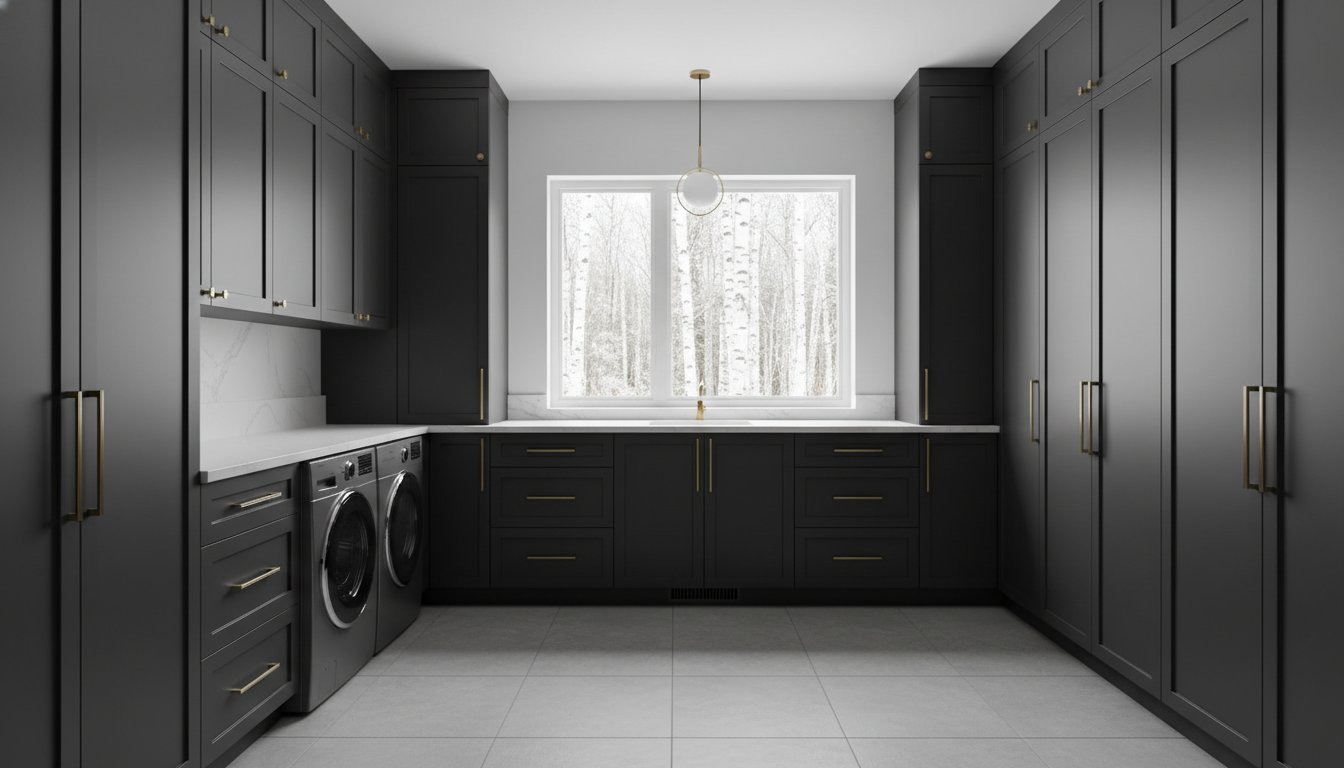
The most undervalued square footage in a high-end home isn’t the guest suite or the wine cellar, but the space where you manage the persistent rhythm of daily life. For many, designing a functional laundry room is treated as a secondary concern, resulting in cramped quarters, poor ergonomics, and a jarring disconnect from the home’s sophisticated aesthetic. We believe that every corner of your residence should reflect a commitment to excellence, ensuring that even the most utilitarian tasks are performed in an environment of quiet confidence and superior design.
You likely recognize the frustration of navigating cluttered sorting zones or enduring the hum of machines in a high-traffic hallway. This article promises to show you how to transform these practical challenges into a seamless, high-performance architectural asset. We will examine the intersection of strategic spatial planning and bespoke finishes. This approach ensures your laundry centre becomes a durable, moisture-resistant environment that adds tangible resale value while significantly reducing the time you spend on domestic chores.
Key Takeaways
- Implement the “Laundry Work Triangle” to streamline your workflow and minimize physical strain through ergonomic spatial planning.
- Identify the critical technical requirements for ventilation and moisture-resistant materials that protect your home’s integrity while maintaining a sophisticated aesthetic.
- Maximize every square centimetre of your utility space with bespoke cabinetry and vertical storage solutions designed to maintain a clutter-free environment.
- Discover the essential strategies for designing a functional laundry room that serves as a high-performance architectural asset within your custom home.
- Learn why positioning your laundry centre near primary living or sleeping areas during the architectural design phase enhances both daily convenience and home value.
Reimagining the Modern Laundry Room as a High-Performance Hub
The traditional laundry room has historically been a neglected, dimly lit afterthought tucked away in a damp basement corner. In contemporary Canadian architecture, this space has undergone a profound metamorphosis. It’s now celebrated as a high-performance hub that demands the same level of aesthetic rigour as a gourmet kitchen or a primary suite. Designing a functional laundry room is no longer just about choosing appliances; it’s about engineering a sophisticated utility centre that harmonizes with your lifestyle and elevates the daily experience of home management.
During major renovations, homeowners are increasingly prioritizing these spaces to reclaim time and mental energy. A well-conceived layout eliminates the friction of daily chores, turning a repetitive task into a streamlined, effortless experience. The psychological benefits of this transformation are significant. Transitioning from a cluttered, chaotic environment to an organized, light-filled workspace reduces the stress associated with domestic maintenance. This shift represents a commitment to living well in every square centimetre of the home, ensuring that even the most utilitarian moments are spent in an environment of quiet confidence.
The Evolution of the Utility Space
Modern floor plans often merge the laundry area with the mudroom, creating a multi-functional transition zone between the exterior and interior. This hybrid approach requires a keen eye for interior design to ensure the utility space doesn’t feel like a sterile departure from the home’s overall design language. Achieving this level of integration requires professional oversight. Our architectural design team ensures that custom cabinetry, durable surfaces, and high-end finishes mirror the elegance found in the rest of the residence. This maintains a cohesive narrative from the front door to the back service entrance, treating the utility wing as a vital component of the home’s architectural identity.
Defining Your Functional Requirements
Before the first sketch is drawn, you must define the specific demands of your household. A family of five has vastly different requirements than a professional couple. Designing a functional laundry room begins by assessing laundry frequency and volume to determine the necessary scale of folding surfaces and sorting bins. Many clients now request secondary uses for these spaces, including:
- Integrated pet washing stations for high-traffic mudrooms.
- Dedicated craft or gift-wrapping stations with bespoke storage.
- Climate-controlled seasonal storage for delicate textiles.
- Hidden charging stations for household robotics and vacuum cleaners.
By setting a clear vision that balances form and uncompromising function, we ensure your laundry room becomes a high-value asset. This methodical planning phase is where we bridge the gap between a simple chore room and a sophisticated architectural achievement. It’s about creating a space that works as hard as you do while maintaining a polished, serene atmosphere.
Mastering the Workflow: The Three Zones of Laundry Room Design
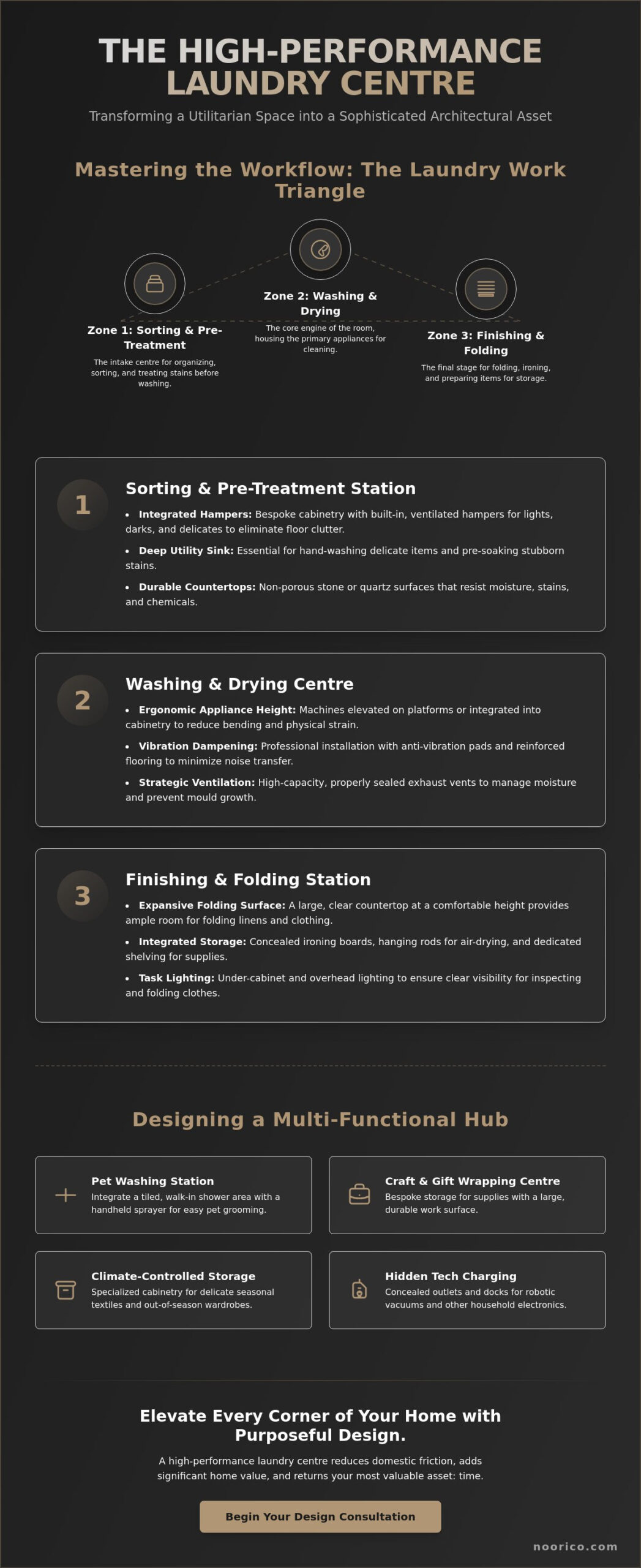
Efficiency in a high-end home is rarely accidental; it’s the result of precise engineering and strategic layout. While many focus on the aesthetic appeal of cabinetry, the true success of designing a functional laundry room lies in the “Laundry Work Triangle.” This concept mirrors the efficiency of a professional kitchen, establishing a logical flow between sorting, washing, and finishing. By minimizing unnecessary movement and reducing the physical strain of lifting heavy textiles, we transform a repetitive chore into a streamlined, ergonomic process.
A sophisticated workflow respects the natural progression of textiles. It begins with the arrival of soiled garments and concludes with crisp, folded linens ready for the closet. Our interior design team prioritizes this sequence to ensure that dirty laundry never crosses paths with sanitized items, maintaining a high standard of household hygiene and organizational order.
Zone 1: The Sorting and Pre-Treatment Station
The first zone serves as the intake centre for the room. Integrating built-in hampers for darks, lights, and delicates prevents floor clutter and simplifies the pre-wash phase. A deep utility sink is essential here, providing a dedicated space for soaking stained items or hand-washing delicate woollens. We recommend a stone or quartz surround with a specialized stain-removal area, keeping essential solvents and brushes within reach but hidden behind bespoke cabinetry to maintain a polished look.
Zone 2: The Washing and Drying Core
This is the engine room of the utility space. When designing a functional laundry room, the choice between side-by-side and stacked appliances depends on both available square footage and ergonomic requirements. Side-by-side configurations allow for a continuous countertop above the machines, creating valuable workspace. However, raising these machines on custom-built plinths is an architectural upgrade that significantly reduces bending. We ensure adequate clearance for appliance doors to swing fully open, allowing for easy maintenance access and efficient loading without obstructing the walkway.
Zone 3: The Finishing and Folding Gallery
The final zone is where the transformation is completed. A large, flat surface at a comfortable standing height is non-negotiable for sorting and folding clean linens. To maximize utility, we often incorporate a pull-out ironing board or a built-in steamer station that remains concealed when not in use. High-quality hanging rods are positioned to allow delicates to air-dry naturally, which reduces the need for mechanical drying and preserves the longevity of luxury fabrics. This methodical approach ensures your laundry room operates as a high-performance gallery of efficiency.
Essential Infrastructure and High-End Material Selection
While the previous sections focused on the spatial logic of the work triangle, the longevity of your investment depends on the technical precision of its infrastructure. Designing a functional laundry room requires a robust mechanical foundation that supports high-capacity appliances while protecting the architectural integrity of the home. Professional project management ensures that plumbing and electrical systems are not merely adequate but optimized for peak performance. This includes dedicated circuits for high-draw dryers and oversized drainage lines that prevent backflow during high-speed rinse cycles.
Ventilation remains the most critical factor in preventing moisture accumulation and mould growth. In the Canadian climate, where indoor air quality is paramount, a high-CFM (cubic feet per minute) extraction fan is essential to remove humid air quickly. Noise mitigation is equally vital, especially when the utility centre is situated near bedrooms or home offices. We utilize specialized acoustic insulation and vibration-dampening pads to ensure the persistent hum of a spin cycle never disrupts the serenity of your living quarters.
Structural Considerations for Upper-Floor Laundry
Relocating laundry services to the second floor offers immense convenience, but it demands rigorous structural reinforcement. High-RPM front-loading machines generate significant centrifugal force. This can cause structural vibration if the subflooring isn’t properly braced during the architectural design phase. We prioritize safety by installing emergency drain pans and automatic water shut-off valves that detect moisture. These systems provide an essential layer of accountability, protecting your home from potential water damage. Managing the complexities of venting dryers through exterior walls also requires a direct, efficient path to prevent lint buildup and maintain fire safety standards.
Premium Surfaces and Finishes
Selecting materials for a high-humidity environment requires a balance of sophisticated elegance and industrial durability. Non-porous countertops, such as quartz or high-grade natural stone, offer a resilient surface that resists staining from detergents and heat from steamers. Flooring must be slip-resistant tile paired with waterproof grout to ensure safety and longevity in wet zones. For cabinetry, we specify moisture-resistant finishes that won’t warp or delaminate over time. When designing a functional laundry room, these precise material choices ensure your workspace remains a pristine, high-performance asset for decades.
Bespoke Cabinetry and Ergonomic Storage Solutions
True luxury is often found in the absence of clutter. While infrastructure and workflow provide the skeleton of the space, bespoke cabinetry acts as the muscle that powers daily operations. Designing a functional laundry room requires a rejection of off-the-shelf solutions that leave wasted gaps and awkward corners. Custom millwork allows us to maximize every square centimetre, ensuring that the grit of domestic maintenance remains hidden behind a facade of sophisticated elegance. Our interior design specialists integrate bespoke drawer inserts to ensure that essential supplies remain organized and accessible, reflecting a commitment to order that mirrors the rest of your residence.
If you are ready to elevate your home’s service wing, our experts in major renovations provide the project management and design foresight needed to achieve these superior results. We move beyond surface-level aesthetics to solve deep-seated storage challenges through engineering and creative foresight.
Maximizing Vertical Real Estate
In many utility spaces, the upper third of the room remains entirely underutilized. By designing a functional laundry room with floor-to-ceiling millwork, you effectively triple your available storage for seasonal linens and bulky textiles. We prioritize the inclusion of tall utility closets specifically engineered to house brooms, step ladders, and vacuum cleaners, complete with integrated charging stations. Open shelving is strategically placed for frequently used items to improve accessibility, while custom cubbies for individual family members ensure that clean laundry is sorted and ready for collection without ever touching a countertop.
The Details That Define Luxury
The distinction between a standard utility room and a high-performance architectural asset is found in the details. We specify soft-close hardware and integrated cabinet pulls to ensure a tactile experience of quality and precision. Lighting is another critical component often overlooked in lesser designs. Under-cabinet LED strips eliminate shadows on work surfaces, providing the clarity needed to identify stains or perform delicate repairs. By choosing hardware finishes that complement the broader design language of your custom home, we ensure the laundry room feels like a deliberate extension of your living space rather than a forgotten annex. This persistent dedication to the final product ensures a workspace that is both durable and undeniably sophisticated.
Integrating Your Dream Laundry Room into a Custom Home Build
The true potential of a utility space is realized when it’s integrated into the initial architectural design of a custom home. While renovations allow for significant improvements, designing a functional laundry room from the ground up offers unparalleled freedom to optimize positioning and infrastructure. A visionary partner understands that the laundry centre shouldn’t be an isolated room. It must be a strategic component of the home’s circulation path, ideally situated near the primary bedrooms to minimize the transport of textiles or adjacent to the mudroom to capture outdoor debris at the point of entry.
Professional project management ensures that these placement decisions are backed by technical feasibility. When we plan the layout during the design stage, we can align the room’s mechanical needs with the home’s structural skeleton. This foresight prevents the compromises often required when working within the constraints of an existing floor plan. It ensures that your laundry room is not just a room for machines, but a high-performance architectural asset that enhances the daily rhythm of your household.
The Design-Build Advantage
An integrated design-build approach eliminates the costly plumbing and electrical errors that often plague standalone renovations. By coordinating the mechanical requirements with the structural frame, we ensure that drainage and ventilation are engineered for maximum efficiency without compromising the home’s aesthetic. This synergy allows the laundry room to match the architectural integrity of the residence perfectly. Whether it’s the repetition of a specific crown moulding or the use of consistent stone surfaces, a cohesive design language ensures that utility spaces feel as intentional and refined as the formal living areas. This methodical process mirrors our operational philosophy; it’s organized, transparent, and focused on enduring quality.
Realizing Your Vision with NOORICO
Selecting an ethical, established builder is the most critical decision you’ll make for a major residential project. At NOORICO, we act as your multi-disciplinary guide through the complex intersections of industry standards, finance, and execution. We manage every detail from the first architectural sketch to the final interior design styling, providing a trust-based approach that reassures you your investment is in safe, principled hands. Our persistent dedication to superior creative achievements ensures that your utility wing is a high-performance asset that adds tangible value to your property.
Ready to elevate your home? Explore our home additions and custom build services to see how we transform utilitarian necessities into sophisticated architectural achievements. We remain dedicated to building the enduring professional bonds that turn your residential vision into a lasting reality.
Elevating the Standards of Domestic Excellence
Transforming a utilitarian necessity into a high-performance architectural asset requires more than just aesthetic updates; it demands a strategic intersection of ergonomic workflow and technical precision. By implementing the “Laundry Work Triangle” and investing in moisture-resistant infrastructure, you ensure your home operates with a quiet, persistent efficiency. Masterfully designing a functional laundry room not only reclaims your valuable time but also secures the long-term value of your property through superior material selection and bespoke storage solutions.
With over 25 years of established expertise, NOORICO specializes in high-intensity, bespoke residential projects that bridge the gap between architectural design and final interior styling. Our integrated approach ensures that every utility space reflects the same sophisticated elegance as your primary living areas. We invite you to begin your custom home journey with NOORICO and experience the reliability of a visionary partner dedicated to ethical, principled execution. Your home deserves a service wing that works as hard as you do, providing a serene environment where uncompromising function meets distinguished design.
Frequently Asked Questions
Where is the best location for a laundry room in a two-storey home?
The optimal location is typically on the second floor near the primary bedrooms to minimize the transport of heavy textiles. This placement aligns with the natural flow of household chores, though a main-floor location adjacent to the mudroom is superior for active families who need to capture outdoor debris at the point of entry. Our architectural design team assesses your specific movement patterns to determine the most efficient placement for your lifestyle.
How much space do I realistically need for a functional laundry room?
A high-performance laundry room generally requires a minimum of 35 to 50 square feet to accommodate essential appliances and minimal folding space. For a truly sophisticated utility centre with bespoke cabinetry and a sorting station, we recommend a footprint of at least 80 to 100 square feet. This ensures enough clearance for appliance doors and allows for the ergonomic movement required in a professional-grade work triangle.
What are the most durable countertop materials for a high-moisture utility area?
Non-porous materials like quartz or high-grade natural stone are the most durable choices for high-moisture environments. These surfaces resist staining from concentrated detergents and withstand the heat from steamers or irons. Unlike wood or low-grade laminates, these premium materials won’t warp or delaminate when exposed to the persistent humidity typical of a busy laundry centre, ensuring your investment remains pristine for decades.
How can I soundproof my laundry room to minimize machine noise?
Effective soundproofing begins with the installation of specialized acoustic insulation within the wall cavities and the use of solid-core doors. We also utilize vibration-dampening pads beneath high-RPM machines to prevent structural noise transfer through the floor. These technical measures ensure that the mechanical hum of a spin cycle remains contained, preserving the serenity of your adjacent living or sleeping quarters during daily operations.
Is a floor drain necessary in a second-floor laundry room?
A floor drain is an essential safety feature for any second-floor laundry installation to prevent catastrophic water damage. When designing a functional laundry room on an upper level, we integrate emergency drain pans and automatic shut-off valves. These systems provide a critical layer of accountability, ensuring that a minor appliance failure doesn’t compromise the architectural integrity of the floors below or lead to costly structural repairs.
Can I combine my laundry room with a mudroom or craft space effectively?
You can absolutely combine these functions by utilizing strategic zoning and bespoke cabinetry to maintain organizational order. A hybrid mudroom-laundry space is highly effective for active households, while a craft station integration allows the room to serve as a multi-functional hobby hub. Success depends on maintaining a clear distinction between wet zones for washing and dry zones for creative tasks, ensuring the space remains uncluttered and efficient.
What type of lighting is best for a windowless laundry room?
Layered LED lighting is the superior choice for windowless spaces, utilizing a combination of high-CRI overhead fixtures and under-cabinet task lighting. This approach effectively eliminates shadows on work surfaces, providing the clarity needed for precise stain identification and garment care. When designing a functional laundry room, we select colour temperatures that mimic natural daylight to create an inviting, high-performance atmosphere that feels bright and spacious despite the lack of windows.