
What if your greatest architectural constraint isn’t your budget or the terrain, but a misunderstood municipal setback? With the 2025 National Building Code of Canada now being adopted across the country, navigating building permits and zoning laws in canada has evolved into a strategic design discipline that protects your architectural legacy. You likely realize that unpredictable municipal timelines and hidden zoning constraints can often feel like they’re designed to limit your creativity. It’s a valid concern; the high cost of non-compliance or rework can jeopardize even the most sophisticated investment.
We’ll show you how to transform these regulatory hurdles into a clear roadmap for success, ensuring your bespoke construction project moves seamlessly from concept to completion. This guide examines the 2026 fee increases in major centres like Toronto and Vancouver. It also provides the expert foresight needed to align your vision with the latest energy efficiency and climate requirements, giving you total confidence that your investment is legally protected and flawlessly executed.
Key Takeaways
- Learn how to decode invisible property constraints like setbacks and height restrictions to maximize your project’s creative scale and future value.
- Master the strategic roadmap for navigating building permits and zoning laws in canada to identify potential roadblocks before they impact your construction timeline.
- Discover how a comprehensive application package, uniting architectural and structural drawings, acts as a catalyst for seamless municipal approval.
- Understand the benefits of the design-build model in managing complex regulatory conflicts while preserving the integrity of your original architectural vision.
- Realize why early pre-consultation with municipal authorities is a critical step in protecting your investment and ensuring a predictable path to completion.
The Foundations of Canadian Residential Regulation: Why Permits and Zoning Matter
A building permit is far more than a mere administrative requirement. It’s the definitive legal authorization that transforms a conceptual design into a tangible structural reality. For the visionary homeowner, navigating building permits and zoning laws in canada represents a commitment to excellence and a safeguard against future liability. These regulations exist to ensure that every structural transformation meets rigorous safety standards, preserving the integrity of the built environment for decades to come. By adhering to these protocols, you aren’t just following rules; you’re ensuring that your home addition or custom build is resilient and safe for generations.
Beyond the immediate necessity of safety, legal compliance acts as a silent guardian of your financial investment. In a market where the national average home price reached $695,412 in April 2026, the distinction of a fully compliant custom estate is paramount. Potential buyers in the premium sector prioritize projects with clear, documented approvals. Non-compliance doesn’t just invite municipal fines. It erodes the long-term resale value of your property and creates friction during future transactions. A project grounded in legal precision is a project that retains its value.
The 2026 landscape introduces a higher level of complexity with the adoption of the 2025 National Building Code. This updated framework shifts the focus toward measurable greenhouse gas emissions and advanced energy efficiency. Modern residential builds must now account for high-performance envelopes and electrified systems from the very first sketch. Proactive compliance is no longer optional; it’s a strategic necessity for anyone looking to build a future-proof home in the current climate.
The Distinction Between Building Permits and Zoning Bylaws
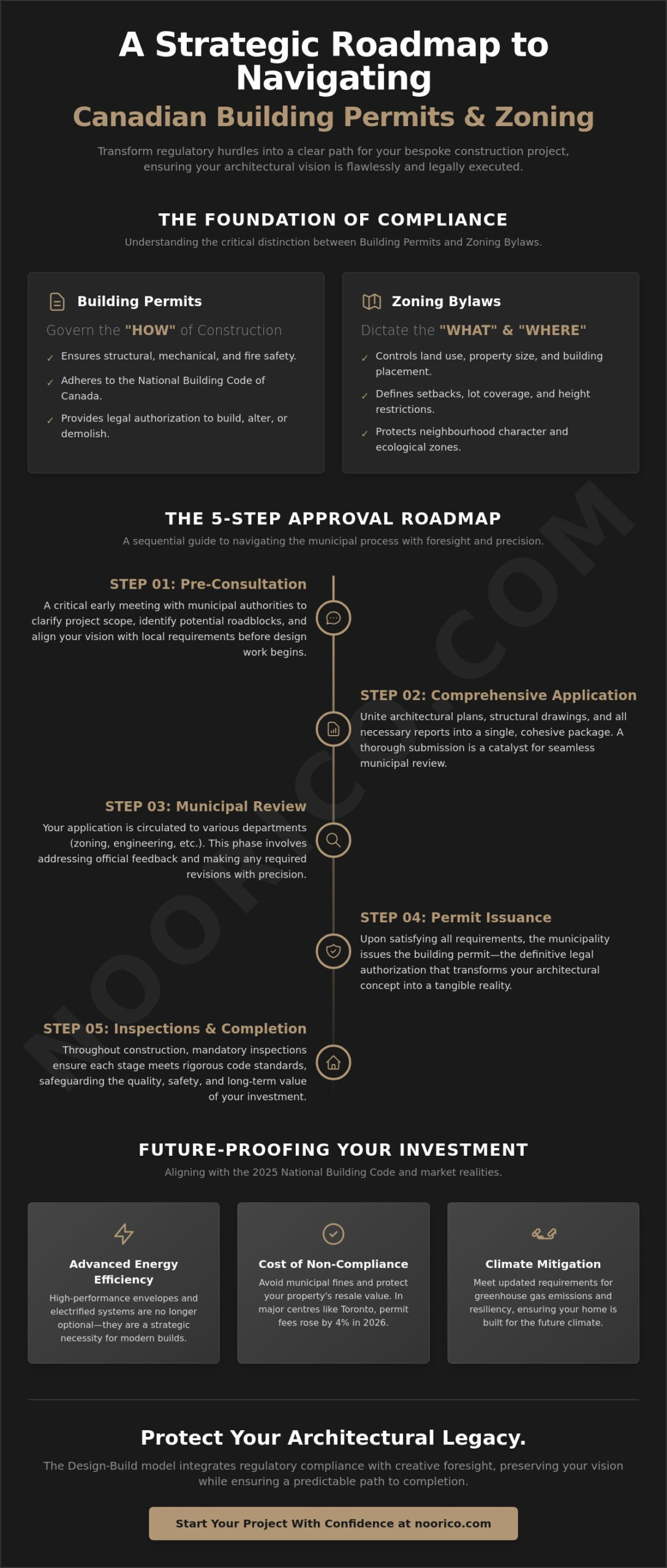
Understanding the nuance between these two pillars is essential for any major renovation. Building permits govern the “how” of construction, focusing on structural, mechanical, and fire safety. Conversely, Understanding Zoning is about the “where” and “what.” Zoning bylaws dictate land-use designations, setbacks, and height restrictions. Mastery of both ensures your project respects the community fabric while maximizing your property’s creative potential. It’s the intersection of these two forces that defines the boundaries of your architectural vision.
National Standards vs. Municipal Execution
While the National Building Code of Canada provides a baseline, execution remains a local endeavour. Municipalities from Toronto to Vancouver interpret these codes with varying degrees of rigour. Realizing that permission is a multi-layered process is the first step toward a successful build. Whether it’s the 4% fee increase in Toronto or the specific climate mitigation rules in Montreal, local expertise is the bridge between national policy and municipal approval. This localized precision ensures that navigating building permits and zoning laws in canada becomes a predictable, organized journey rather than a series of unforeseen obstacles.
Decoding Zoning Bylaws: Managing the Invisible Constraints of Your Property
Zoning is the silent architect of your property. While building codes ensure a structure is safe, zoning dictates whether that structure can exist at all. Land-use designations serve as the primary filter for your project’s creative potential, often determining the difference between a sprawling estate and a constrained footprint. In the 2026 market, where density and sustainability are increasingly prioritized, these designations are shifting. You must account for setbacks, lot coverage, and height restrictions that vary significantly between premium enclaves. Mastering these details is the first step in navigating building permits and zoning laws in canada without compromising your aesthetic goals.
Hidden encumbrances, such as heritage designations or environmental conservation zones, can suddenly halt a project. These aren’t mere suggestions; they are legal frameworks designed to protect the aesthetic harmony and ecological health of established neighbourhoods. Understanding the broader context of Canadian building regulations is essential when your vision borders on these sensitive zones. Effectively navigating building permits and zoning laws in canada requires an early audit of these invisible boundaries to ensure your architectural inspiration remains viable. This foresight is what separates a successful build from a stalled investment.
The Complexity of Setbacks and Lot Coverage
Calculating your buildable area is a precise science. Setbacks define how far your home must sit from property lines, while lot coverage limits the total percentage of the ground your structure can occupy. These rules are often influenced by the specific character of your neighbourhood. In established Canadian centres, municipal planners use these metrics to control the volume of new builds, ensuring they don’t overshadow existing homes. To maximize your space, you need a design that works within these limits rather than fighting them. Sophisticated architectural design can often find elegance in these constraints, turning a legal limit into a unique design feature that enhances the property’s character.
Navigating the Committee of Adjustment and Variances
Sometimes, a visionary project requires a Minor Variance. This is the official process for requesting a small deviation from standard zoning bylaws. It’s not a guarantee; it’s a professional presentation to the local Committee of Adjustment. You must prove that your request is minor and maintains the intent of the original bylaw. Strategic design is your best tool here. By aligning your goals with the community’s long-term plan, you can often mitigate the need for risky or lengthy zoning amendments. This methodical approach reduces risk and keeps your timeline on track. It’s about finding the intersection of your desires and the municipality’s requirements through disciplined planning.
The Roadmap to Approval: A Step-by-Step Guide to the Building Permit Process
The journey from architectural inspiration to a completed custom home follows a rigorous, predictable sequence. Successfully navigating building permits and zoning laws in canada requires moving beyond theory into a disciplined execution of the municipal roadmap. This process is designed to validate every technical detail, from the depth of your foundation to the efficiency of your mechanical systems. By approaching the permit cycle as a structured project management milestone, you eliminate the unpredictability that often plagues high-end construction. It’s about creating a transparent path where every submission is met with professional clarity rather than administrative friction.
Phase 1: Pre-Consultation and Architectural Alignment
The most successful projects begin long before a formal application is filed. Engaging with municipal planners during a pre-consultation phase allows you to realize the project’s feasibility before significant capital is committed. This stage is critical for ensuring every design element aligns with the specific colour and texture of local bylaws. It’s your opportunity to identify potential roadblocks, such as unique environmental setbacks or heritage requirements, and refine the vision accordingly. This proactive engagement saves months of potential delays by resolving conflicts during the earliest stages of architectural design.
Phase 2: Formal Submission and Technical Documentation
Once the design is solidified, the focus shifts to the assembly of a comprehensive application package. This isn’t merely a collection of sketches; it’s a sophisticated dossier of architectural, structural, and mechanical drawings. Detailed site plans and engineering specifications must meet the 2026 standards for energy efficiency and climate resilience. Understanding the specifics of how to apply for a building permit is essential, especially as administrative fees have risen in centres like Toronto and Vancouver this year. A project management expert oversees this administrative flow, addressing municipal comments with precision and professional authority to keep the review cycle moving toward approval.
Phase 3: Inspections and Final Certification
Approval is a significant milestone, but the regulatory journey continues through the construction lifecycle. Mandatory site visits are scheduled at critical stages, such as the pouring of the footings, the completion of framing, and the installation of insulation. Maintaining a meticulous record of these inspections is vital for ensuring a smooth closing. The process concludes with the issuance of the final occupancy permit. This document is the ultimate validation of your project’s integrity, serving as a critical requirement for insurance coverage and permanent financing. It signifies that navigating building permits and zoning laws in canada has been successfully completed, transforming your visionary concept into a legally protected architectural legacy.
Strategic Problem-Solving: Overcoming Common Regulatory Challenges and Delays
The pursuit of architectural excellence often encounters resistance in the form of bureaucratic inertia or conflicting mandates. Successfully navigating building permits and zoning laws in canada requires more than just technical knowledge; it demands a strategic mindset capable of resolving complex regulatory friction. One of the most significant risks to any custom build is underestimating the time required for municipal approvals. While you may be eager to break ground, the administrative review cycle can take months, especially as cities like Toronto and Vancouver implemented fee increases of 4% and 4.5% respectively in early 2026. These updates reflect a more rigorous examination process that prioritizes long-term community impact over construction speed.
Conflicting requirements between different regulatory bodies often create a stalemate that can jeopardize your timeline. For instance, the 2025 National Building Code may mandate specific energy-efficient mechanical systems that clash with local zoning bylaws regarding noise levels or exterior placement. Resolving these discrepancies requires professional authority and a deep understanding of how to negotiate with municipal examiners. It’s about finding a path that satisfies the legal framework without sacrificing the soul of your architectural design. By anticipating these overlaps, you protect your investment from the high cost of mid-project redesigns.
Mitigating Delays and Bureaucratic Friction
Incomplete documentation remains the primary cause of project stagnation in Canadian municipalities. When a submission lacks precision, it triggers a cycle of “comments” and resubmissions that can stall a major renovation for an entire season. Professional project management serves as the essential bridge between your vision and the city’s requirements. By maintaining proactive communication with officials, we resolve technical disputes before they become formal rejections. This persistent dedication to the process ensures that your investment remains on a predictable trajectory toward completion.
Handling Heritage and Conservation Authorities
Building within sensitive Canadian landscapes or heritage districts adds a layer of scrutiny that requires specialized expertise. You aren’t just building a home; you’re contributing to a historical or ecological narrative. Balancing modern luxury with the preservation of architectural integrity is a delicate art. Whether you’re dealing with a regional conservation authority or a local heritage board, the goal is to present a case that respects the past while embracing the future. Specialized consultants play a vital role here, providing the data-driven evidence needed to secure approvals for even the most complex sites. This level of foresight is a hallmark of a visionary partner who understands that navigating building permits and zoning laws in canada is as much about diplomacy as it is about design.
Integrating Compliance with Creative Foresight: The NOORICO Design-Build Approach
The design-build model isn’t just an operational choice; it’s the most efficient path for navigating building permits and zoning laws in canada. Traditional methods often create a disconnect between architectural inspiration and municipal reality, leading to costly revisions and stalled momentum. By unifying design and execution under one roof, we ensure that every creative decision is grounded in regulatory feasibility from the start. This integrated approach eliminates the friction between “what could be” and “what is allowed,” protecting the integrity of your bespoke construction project through a single, authoritative point of contact.
We view regulatory knowledge as a fundamental component of the creative process, not an administrative afterthought. Our team integrates zoning analysis into the earliest stages of conceptualization, ensuring your investment is viable before the first technical drawing is produced. This strategic foresight provides total accountability, moving your project from zoning analysis to final build with a level of precision that fragmented teams simply cannot match. We maintain an uncompromising commitment to ethical and transparent standards, ensuring your project meets the 2026 national code requirements for sustainability and resilience while upholding the highest professional values.
Visionary Partnership: Beyond the Blueprint
Our multi-disciplinary team anticipates zoning constraints before they manifest as project-halting problems. We bridge the gap between sophisticated interior styling and structural compliance, ensuring that a stunning aesthetic doesn’t compromise legal requirements. Realizing a bespoke living space requires a delicate balance; it must meet your highest personal aspirations while strictly adhering to municipal codes. By aligning these often-competing forces, we create a seamless transition from the initial vision to a final, legally permitted structure that stands as a testament to quality.
The NOORICO Distinction in Project Management
We leverage decades of industry experience to guide clients through the most complex residential builds in the region. Our project management philosophy is defined by meticulous attention to detail and a persistent dedication to the final product. We protect your investment by managing the intersection of industry, finance, and execution with quiet confidence. Whether you’re planning a custom build or a major renovation, our expertise ensures your architectural legacy is built on a foundation of legal excellence. Discover our approach to home additions to see how we apply this visionary framework to navigating building permits and zoning laws in canada for luxury residential growth.
Securing the Future of Your Bespoke Construction
Successfully navigating building permits and zoning laws in canada requires a sophisticated blend of technical mastery and strategic foresight. You’ve discovered that early pre-consultation and an integrated design-build approach transform municipal constraints into distinctive design opportunities. By aligning your vision with the 2025 National Building Code and current 2026 fee structures, you protect both the aesthetic integrity and the financial value of your estate. This methodical planning ensures that your project remains a source of pride rather than a series of administrative hurdles.
With over 25 years of integrated design-build expertise, NOORICO maintains a specialized focus on high-quality residential transformations. We provide comprehensive project management from the initial concept through to final occupancy; our team handles every complexity so you can focus on the inspiration. Partner with NOORICO to navigate your custom build with professional precision and realize an architectural legacy that is as legally sound as it is visually stunning. Your vision deserves a foundation built on experience and persistent dedication.
Frequently Asked Questions
Do I need a building permit for a major interior renovation in Canada?
A building permit is essential for any major interior renovation that involves structural changes, plumbing modifications, or updates to mechanical systems. While aesthetic updates like painting or new flooring don’t require authorization, your project management team must ensure that structural transformations meet the latest safety standards. This legal oversight guarantees that your architectural legacy remains both safe and compliant with current municipal regulations.
How long does it typically take to get a residential building permit in 2026?
Permit timelines in 2026 vary by municipality, though you should expect the process to take several weeks to several months. The adoption of the 2025 National Building Code has introduced more rigorous review cycles for energy efficiency and climate resilience. Successfully navigating building permits and zoning laws in canada requires early submission to account for these extended municipal review periods in major centres like Toronto and Vancouver.
What happens if I start construction without a permit?
Commencing construction without a permit results in immediate stop-work orders and potentially severe financial penalties. Municipal inspectors have the authority to demand the removal of non-compliant work, which leads to expensive rework and project stagnation. Beyond the immediate legal risks, building without a permit compromises your insurance coverage and the future resale value of your custom home.
Can a zoning bylaw be changed if my design doesn’t fit the current rules?
Zoning bylaws can be changed through a formal zoning amendment, though this is a complex and lengthy administrative process. Most homeowners find it more efficient to seek a Minor Variance through the local Committee of Adjustment for small deviations. A visionary partner can often refine your architectural design to align with existing constraints, protecting your timeline while still achieving your creative goals.
How much do building permits cost for a custom home?
Municipal permit fees are calculated based on the project’s scale and location, with several major cities implementing increases in early 2026. In Toronto, the fee for new residential construction is $18.56 per square metre as of January 1, 2026. Vancouver uses a base fee of $683 for projects between $100,000 and $500,000, plus an additional rate of $4.14 per $1,000 of value, making precise budget alignment essential.
What is the difference between a minor variance and a zoning amendment?
A minor variance is a request for a small deviation from specific rules like setbacks or height, whereas a zoning amendment seeks to change the fundamental land-use designation of a property. Variances are generally faster and more common for bespoke residential builds. Amendments involve a much higher level of municipal scrutiny and are typically reserved for significant transformations that don’t fit any current local designations.
Do I need a separate permit for demolition and new construction?
Most Canadian municipalities require a separate demolition permit before any existing structure can be removed from the site. This ensures that utility disconnections and environmental protections are managed safely before the new build begins. Coordinating these multiple layers of permission is a core function of professional project management, ensuring that your transition from old to new is seamless and legally protected.
Will my neighbours have a say in whether I get my building permit?
Neighbours don’t typically have a say in standard building permits that comply with all existing zoning bylaws. However, if your project requires a minor variance or a zoning amendment, the municipality will notify your neighbours and invite them to a public hearing. Successfully navigating building permits and zoning laws in canada often involves professional community engagement to mitigate potential opposition and ensure your project moves forward with community harmony.