
What if the true measure of a luxury transformation isn’t found in the selection of paint colours, but in the sophisticated architecture of your project schedule? Many homeowners approach a major renovation with a sense of dread, fearing that their residence will remain a construction zone indefinitely. You likely realize that the sequence of professional trades is complex, and the anxiety of living through unexpected delays can often overshadow the excitement of a new design. Creating a realistic home renovation timeline in 2026 requires more than just optimism; it demands a deep understanding of current industry shifts and municipal requirements.
By mastering the critical path of a high-end build, you can reclaim a predictable schedule for your family planning and gain absolute confidence in professional project management. This guide explores the strategic sequencing of architectural design and interior design, providing a visionary roadmap to ensure your project stays on track from the initial concept to the final reveal. We examine how factors like the 12.6 per cent annualized surge in construction input prices this year and updated permit timelines in regions like San Jose impact your planning. You will gain the clarity needed to oversee your transformation with an uncompromising commitment to the final result.
Key Takeaways
- Recognize that the most vital work happens before the first hammer is swung by prioritizing a comprehensive architectural and interior design phase.
- Master the complexities of creating a realistic home renovation timeline to transform your schedule from a static document into a dynamic roadmap for success.
- Gain clarity on the precise sequence of professional trades, ensuring that quality and safety standards are never sacrificed for the sake of an optimistic guess.
- Learn how to navigate Canadian seasonal shifts and external variables by building strategic buffers that keep your luxury project on a predictable path.
- Discover how integrating visionary design with rigorous project management eliminates traditional delays and ensures an elegant, unified execution of your home.
The Architecture of Time: Why a Realistic Home Renovation Timeline Is Essential
A superior home transformation is not merely a collection of high-end materials and aesthetic choices; it is a meticulously choreographed sequence of events. Many homeowners view a schedule as a static document, yet we recognize it as a dynamic roadmap that must adapt to the shifting realities of the industry. Creating a realistic home renovation timeline is the primary safeguard for your financial investment and your mental well-being. Precision in scheduling ensures that every artisan, from the architectural designer to the finishing carpenter, has the space required to achieve excellence without the pressure of artificial deadlines.
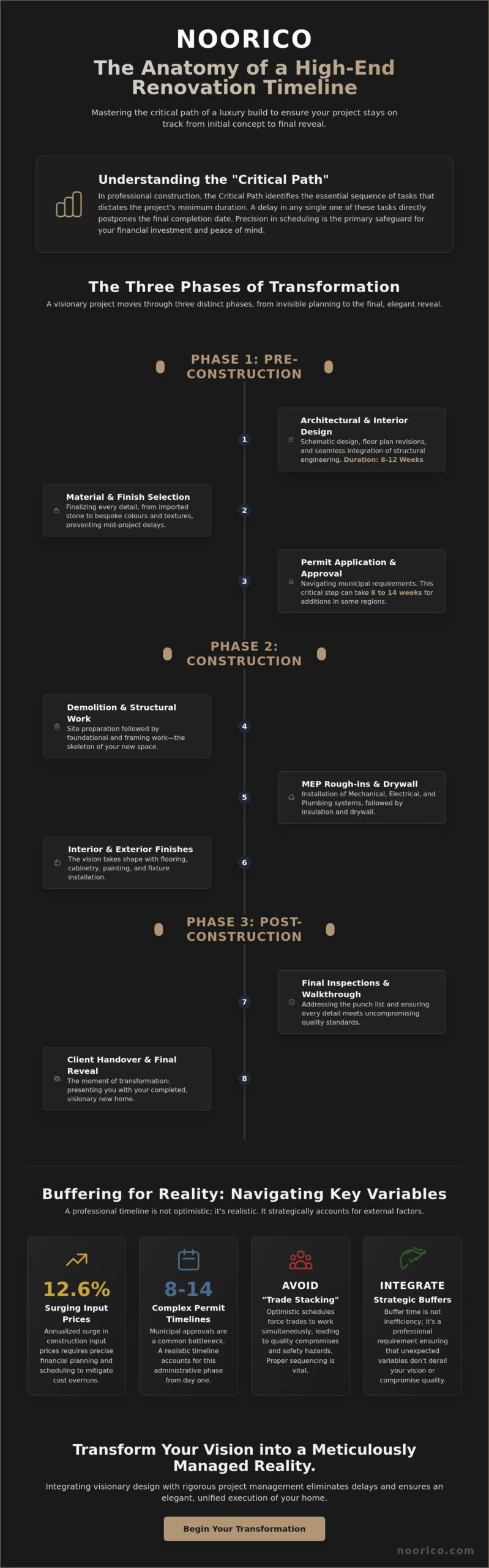
In professional residential construction, we utilize the concept of the “Critical Path.” This identifies the specific sequence of tasks that must be completed on time for the entire project to stay on schedule. If a single element on this path is delayed, the final reveal date shifts accordingly. Understanding the project management triangle is vital here, as any attempt to accelerate time often necessitates a compromise in either cost or quality. In 2026, this foresight is more critical than ever. With construction input prices surging at a 12.6 per cent annualized rate early this year, a fragmented schedule doesn’t just cause frustration; it leads to significant financial inefficiency.
The Consequences of an Optimistic Schedule
An overly optimistic schedule is often the root cause of “trade stacking,” where multiple professionals are forced to work in the same space simultaneously. This congestion inevitably leads to quality compromises and safety hazards. We’ve seen how a single delay in the permit phase, such as the eight to 14 weeks typically required for room additions in some jurisdictions, can create a ripple effect that disrupts the entire finishing stage. Professional project management views “buffer time” not as a sign of inefficiency, but as a strategic requirement. It allows for the persistent dedication to detail that a luxury home deserves, ensuring that unexpected variables don’t derail your vision.
Visualizing the Transformation Journey
Every visionary project moves through three distinct phases: pre-construction, the active build, and post-construction. The pre-construction phase is often the most invisible yet influential, involving months of architectural design and interior design before a single hammer is swung. Major renovations within an existing footprint generally follow a swifter rhythm than custom home additions, which require extensive structural and foundation work. A visionary partner doesn’t just provide a list of dates; they guide you through this journey with quiet confidence, ensuring that the transition from inspiration to practical implementation is seamless and transparent. By creating a realistic home renovation timeline, you transform an inherently complex process into a steady, logical progression toward your future home.
The Pre-Construction Phase: Mapping the Invisible Path to Success
The most profound transformations begin long before the first hammer is swung. While the visible progress of construction is exciting, the invisible path of pre-construction is where the true success of your project is secured. Creating a realistic home renovation timeline requires a disciplined approach to the planning phase, ensuring every detail is articulated before physical work commences. This period isn’t a delay; it’s a strategic investment in the architectural integrity and interior elegance of your future residence. By defining the scope with precision, you eliminate the ambiguity that often leads to schedule drift later in the build.
Architectural and Interior Design Development
A sophisticated design doesn’t emerge overnight. You should typically allot eight to twelve weeks for the schematic design and floor plan revision process. This window allows for the seamless integration of structural engineering into the aesthetic vision, ensuring that your home’s foundation supports its creative ambitions. Finalizing every finish, from imported stone to bespoke colours and textures, during this stage prevents the mid-construction delays that often plague less organized projects. As Forbes Advisor explains, balancing scope and time is essential for a project’s health. By securing long-lead items like custom cabinetry early, you protect the schedule from global supply chain volatility and ensure an uncompromising level of quality.
Navigating Regulatory Approvals
The regulatory landscape in 2026 demands meticulous preparation and local expertise. Municipal permit timelines remain a significant variable in the construction schedule, especially with high application volumes. For instance, current data for complex projects like room additions or ADUs suggests a window of eight to 14 weeks, while new construction or second-story additions can require 10 to 18 weeks. Local authorities often advise adding another two to three weeks to these estimates due to processing backlogs. Professional Project Management is the key to streamlining this process. By preparing “permit-ready” documentation that anticipates municipal feedback, we eliminate the friction that typically stalls ambitious builds.
As of January 1, 2026, all new permit applications must comply with updated building standards, including mandatory assessments such as seismic reviews for structural bathroom modifications. A visionary partner identifies these requirements early in the architectural design phase, ensuring your project moves from the drawing board to the active build without unnecessary interruption. This unwavering focus on compliance and preparation ensures that your investment remains on a steady, logical path toward completion. This methodical approach mirrors the operational process itself, moving you from inspiration to practical implementation with quiet confidence.
The Construction Sequence: From Demolition to Final Finishes
Once the invisible path of pre-construction is secured, the physical transformation of your residence begins. This stage is where the practical grit of project management meets the sophisticated vision of your design team. Creating a realistic home renovation timeline requires an uncompromising understanding of trade interdependencies. You cannot rush the physics of construction; certain trades simply cannot overlap without compromising safety or the integrity of the finish. A methodical, chronological approach ensures that every artisan has the environment they need to perform at a superlative level.
The Structural Foundation and Envelope
The active build commences with demolition and structural framing, a phase where the skeletal integrity of your home is established. For major home additions, site preparation and foundation work are the primary focus, often taking several weeks depending on soil conditions and architectural complexity. Securing the “envelope” is the most critical milestone during this period. Installing the roof and windows makes the structure weather-tight, protecting the interior from the elements. This is essential before any high-value interior materials are delivered to the site. With structural steel prices rising 7.5 per cent in the first quarter of 2026, precise scheduling of these deliveries is vital to avoid both site congestion and financial waste.
Mechanical Systems and the “Closed-Wall” Milestone
The “rough-in” phase represents the invisible progress of your home. This is when HVAC ducting, plumbing lines, and electrical wiring are integrated into the framing. While the visual changes might seem slow, this work is the lifeblood of a modern luxury home. Given that copper reached a record high of $6.61 per pound in May 2026, our project management team ensures these materials are installed and secured with high-intensity focus. Municipal inspections act as the gatekeepers here; walls cannot be closed until every system is verified for compliance. Once passed, insulation and drywall installation transform the site, moving the project from a construction zone to a recognizable living space.
The Art of the Finish
The final phase is where structural grit gives way to sophisticated interior elegance. This stage demands a dust-free environment and a steady, logical flow of trades. We typically sequence the work as follows:
- Cabinetry and Millwork: Custom cabinets and trim work are installed with precision, defining the character of each room.
- Painting and Surface Finishes: Walls receive their final colours and textures, requiring a clean atmosphere to ensure a flawless result.
- Flooring and Tile: Hardwood and stone are laid only when heavy traffic has ceased to protect these significant investments.
- Fixtures and Appliances: The final electrical and plumbing trims are completed, bringing the home to life.
The journey concludes with a meticulous “punch list” and a professional deep clean. This persistent dedication to the final details ensures that when we reveal the transformation, every element is polished, functional, and ready for your family to enjoy. Creating a realistic home renovation timeline allows this final stage to unfold with quiet confidence rather than a frantic rush to the finish.
Buffering for Reality: Navigating Common Delays and Variables
Even the most meticulously architected schedule encounters the friction of the real world. A visionary schedule isn’t one that ignores potential obstacles; it’s one that integrates them into a resilient strategy. Creating a realistic home renovation timeline involves anticipating the “known unknowns” that define the Canadian construction landscape. When unexpected challenges arise, the difference between a minor pivot and a major collapse lies in the persistent dedication of your project management team. We view these variables not as failures of planning, but as elements to be managed with quiet confidence and strategic foresight.
Environmental and Seasonal Factors
In Canada, the environment dictates much of the active build rhythm. Pouring concrete or completing exterior masonry during the winter months is entirely possible, yet it requires specialized heating and hoarding techniques that must be factored into the initial schedule. A sophisticated expert organizes the workflow so that interior trades continue their progress while exterior work is paused by extreme weather. We also account for the spring thaw. During this period, municipal load restrictions on residential roads can temporarily limit the delivery of heavy materials, such as the structural steel that saw a 7.5 per cent price increase in early 2026. Understanding these regional designations is a badge of local expertise that keeps your project moving year-round.
Supply Chain and Bespoke Procurement
The 2026 market continues to exhibit significant volatility in material costs and availability. With construction input prices rising at a 12.6 per cent annualized rate in the first two months of this year, procurement is a strategic exercise rather than a simple transaction. Early selection of high-value items, such as custom cabinetry or imported stone, acts as a timeline insurance policy. By securing these long-lead elements months in advance, you insulate your project from the supply chain disruptions that frequently derail less prepared builds. Managing the delivery and secure storage of these high-intensity investments ensures that when the site is ready, the materials are already waiting.
One of the most significant variables in any luxury build is “scope creep.” Every mid-construction change, however minor it may appear, ripples through the entire schedule and affects the sequence of professional trades. Changing a plumbing fixture location after the walls are closed doesn’t just involve a single trade; it requires rescheduling the plumber, the drywaller, and the painter. This fragmentation destroys the carefully built rhythm of the project. To maintain the integrity of your transformation, we prioritize finalizing all design details during the pre-construction phase. If you are ready to secure your investment with a schedule built for resilience, explore our specialized approach to Project Management. We remain dedicated to the enduring professional bonds we build by ensuring your vision is realized on time and without compromise.
Professional Project Management: The Secret to a Seamless Transformation
Mastering the complexities of a luxury transformation requires more than just a list of dates; it requires a unified management philosophy. Creating a realistic home renovation timeline is most effectively achieved through the Design-Build model, a system that bridges the gap between creative inspiration and technical execution. By consolidating every phase of the project, from the initial architectural design to the final interior finishes, you eliminate the friction that typically derails ambitious builds. This single point of accountability ensures that your investment is protected by a partner who understands both the aesthetic vision and the practical grit required to realize it.
The Design-Build Advantage
The primary benefit of an integrated model is the ability to utilize parallel processing. In a traditional construction arrangement, the builder often doesn’t see the plans until the architectural design is complete, leading to a “blame game” when designs prove difficult or costly to execute. We operate differently. By integrating our design and construction teams, we can begin procurement and site preparation while the final interior details are being polished. This synergy eliminates “handoff” delays and ensures that the project remains on a steady, logical path. It’s a methodical approach that respects your time and provides the quiet confidence you need to navigate a significant home transformation.
Your Next Steps with NOORICO
Realizing a visionary home requires a partner who remains dedicated to the enduring professional bonds they build. We don’t just provide a service; we act as a multi-disciplinary guide through the intersections of industry, finance, and design. Establishing a bespoke timeline begins with a professional consultation where we define the critical path of your specific project. Whether you are planning a major renovation or exploring home additions gta, our team brings decades of industry experience to ensure a seamless transition from inspiration to implementation.
A predictable schedule is the foundation of a successful family planning experience during construction. By creating a realistic home renovation timeline with a sophisticated expert, you move beyond the anxiety of construction zones and into the excitement of your home’s future. We invite you to experience a transformation where superior creative achievements are matched by rigorous, ethical project management. Your significant investment deserves nothing less than an uncompromising commitment to the final product and a schedule that reflects the true architecture of excellence.
Realizing Your Vision Through Precise Execution
Transforming a residence is a profound exercise in both creative foresight and rigorous execution. We’ve explored how the invisible path of architectural design and the strategic sequencing of professional trades provide the foundation for a successful transformation. Creating a realistic home renovation timeline is not about avoiding the inherent complexities of construction; it’s about mastering them through a trust-based partnership. By utilizing an integrated model, you eliminate the fragmentation that often stalls ambitious projects and protect your investment from avoidable delays.
With over 25 years of established expertise in custom residential construction, our multi-disciplinary group ensures seamless project management from the initial concept to the final reveal. We maintain an uncompromising commitment to ethical standards and superior creative achievements in every project we undertake. Partner with NOORICO to realize your visionary home renovation on a professional schedule. Your future home is a significant investment that deserves the steady, logical progression only a seasoned professional can provide. We look forward to building an enduring professional bond as we bring your vision to life with quiet confidence.
Frequently Asked Questions
How long does a typical major home renovation take in Canada?
A major renovation typically spans six to twelve months, though custom home additions or extensive structural transformations can extend to eighteen months. This window accounts for the meticulous craftsmanship and trade sequencing required in luxury residential construction. Every project is unique; therefore, establishing clear milestones early is essential for maintaining a steady, logical flow from demolition to the final reveal.
What is the “Critical Path” in a renovation schedule?
The “Critical Path” identifies the specific sequence of interconnected tasks that must be completed on time to ensure the project stays on schedule. If a task on this path is delayed by even a few days, it creates a ripple effect that shifts the final completion date. Understanding this path is vital when creating a realistic home renovation timeline, as it prioritizes the trades and materials that are most essential to the build’s integrity.
Can I live in my home during a major renovation or addition?
Residing in your home during a major renovation is generally discouraged due to the significant disruption of essential services and the presence of safety hazards. Major structural work often requires the temporary disconnection of plumbing and electrical systems, making the environment unsuitable for daily living. Vacating the premises allows our team to maintain a high-intensity focus on the build, ensuring a faster and more efficient transformation without compromising your family’s comfort.
How much time should I allot for the building permit process?
You should allot between eight and eighteen weeks for the permit process, depending on the complexity of your project and current municipal volumes. For instance, room additions typically require eight to fourteen weeks, while new construction or second-story additions can take up to eighteen weeks. Professional project management streamlines this phase by preparing “permit-ready” documentation that anticipates regulatory feedback and minimizes processing delays.
What are the most common causes of home renovation delays?
The most frequent delays result from permit processing backlogs, material supply chain volatility, and late-stage changes to the project scope. With construction input prices surging at a 12.6 per cent annualized rate early in 2026, procurement delays can occur if high-value materials aren’t secured well in advance. Maintaining a disciplined approach to the initial design phase is the most effective way to protect your schedule from these common variables.
How does the Design-Build model improve project timelines?
The Design-Build model optimizes timelines by integrating architectural design and construction under a single point of accountability. This allows for parallel processing, where we can begin procurement for long-lead items while the final interior details are still being refined. By eliminating the traditional handoff delays between separate architects and builders, we create a more fluid and predictable path toward your home’s completion.
When is the best time of year to start a large-scale renovation?
Late winter or early spring is the ideal time to commence the planning phase of a large-scale renovation. This timing ensures that the invisible path of pre-construction is completed just as the weather becomes favourable for exterior work and foundation pours. Starting the architectural design process in the colder months allows you to be permit-ready for a spring or summer build, maximizing the efficiency of the Canadian construction season.
How often should I receive timeline updates from my project manager?
You should expect to receive formal timeline updates on a weekly basis from a sophisticated project manager. These regular briefings provide transparency regarding the current stage of the build and any adjustments made to accommodate real-world variables. This steady rhythm of communication is a cornerstone of creating a realistic home renovation timeline, ensuring you remain informed and confident in the progress of your significant investment.