

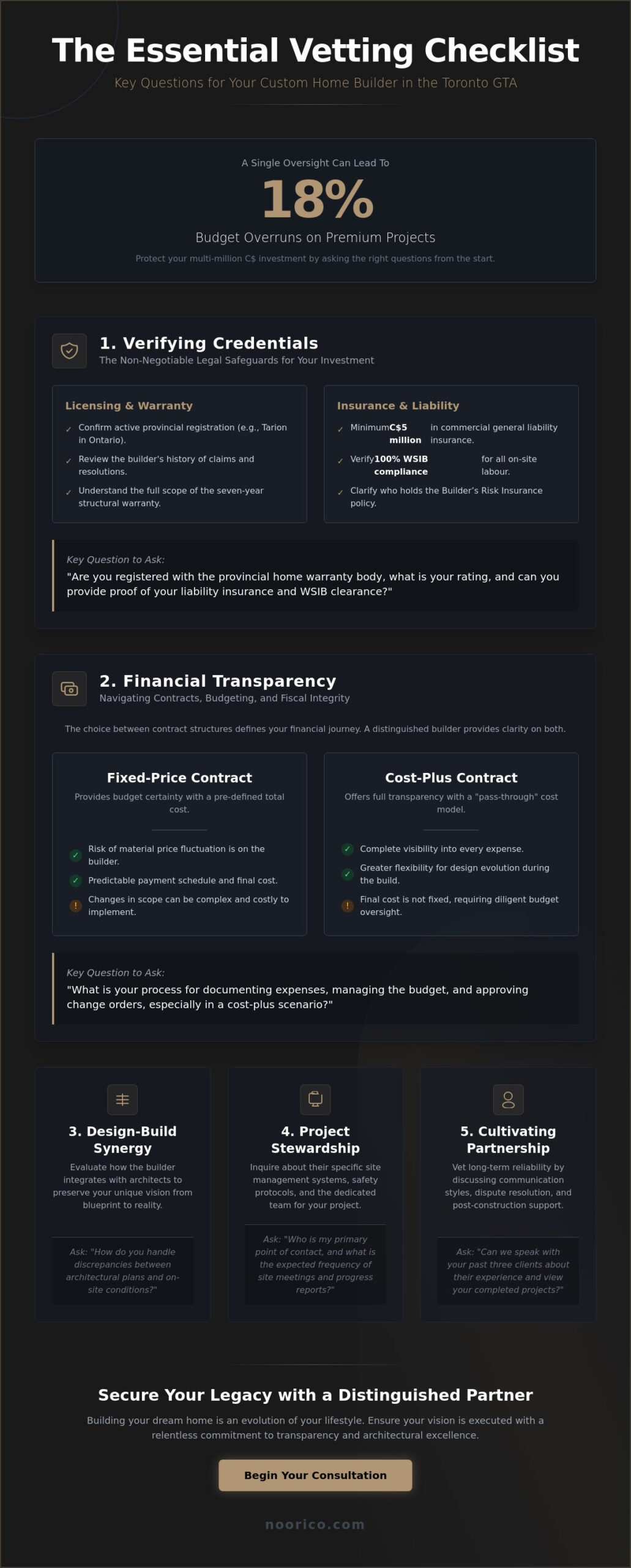
What if the most dangerous part of your custom home journey isn’t the construction itself, but the silence during your first meeting? In the Toronto GTA, where premium residential projects often represent a multi-million C$ investment, a single oversight in the vetting process can lead to budget overruns exceeding 18% of the initial quote. You likely believe that building your dream home should be an inspiring evolution of your lifestyle, not a battle against hidden costs and permit delays. We’re here to ensure your vision remains the priority through a relentless commitment to transparency and architectural excellence. This guide outlines the 15 essential questions to ask a custom home builder before hiring to help you distinguish a true professional from a mere contractor.
You’ll gain a clear framework for evaluating financial integrity and technical expertise. We’ve designed this checklist to provide you with the confidence that your investment is secure and your future home will stand as a distinguished masterpiece. By addressing everything from Ontario building regulations to construction timelines, we’ll help you find a partner who values your legacy as much as you do.
Key Takeaways
- Learn how to verify provincial licensing and mandatory home warranty programmes to ensure your investment is protected by essential legal safeguards.
- Master the nuances of financial transparency by distinguishing between fixed-price and cost-plus contracts to maintain clarity throughout your build.
- Discover the essential questions to ask a custom home builder before hiring to ensure your vision is executed with a relentless commitment to excellence.
- Evaluate project stewardship by identifying the specific site management systems and communication rhythms that transform architectural dreams into reality.
- Secure your legacy by learning how to vet a builder’s long-term reliability through past client experiences and comprehensive warranty coverage.
Verifying Credentials: The Non-Negotiable Legal Safeguards
Building an architectural marvel in the Toronto GTA requires more than just creative vision; it demands a foundation of absolute legal integrity. When compiling your list of questions to ask a custom home builder before hiring, the first inquiries must address the safeguards that protect your financial interests. Our approach to project stewardship is grounded in twenty-five years of experience, where we treat every client’s equity with the same reverence as the design itself. A builder’s credentials reflect their professional maturity and their ability to manage the intricate layers of understanding the construction process, from regulatory compliance to final occupancy.
Our firm provides comprehensive legal safeguards to protect your capital. This ensures that your premium investment remains a secure asset from the initial groundbreaking to the final walkthrough. We believe that transparency is the cornerstone of any distinguished partnership, especially when navigating the complexities of provincial regulations and site safety protocols.
Licensing and Warranty Standards
A valid provincial license is the absolute baseline for any premium project, but excellence requires going beyond the minimum. You should directly ask: “Are you registered with the provincial home warranty body, and what is your rating?” In Ontario, for instance, a builder’s record with Tarion provides a transparent history of their performance and reliability. Our distinguished track record is built on a relentless pursuit of perfection, ensuring every structural element meets or exceeds mandatory standards. We provide clients with a clear breakdown of the seven-year structural warranty, ensuring they realize the full scope of their protection.
- Confirm active registration with provincial authorities like Tarion or equivalent bodies.
- Review the builder’s history of claims or unresolved conciliations.
- Verify that the builder has the specific category of license required for large-scale custom residential projects.
Insurance and Liability Coverage
The financial scale of a high-end custom build necessitates robust protection. We advocate for a minimum of C$5 million in commercial general liability insurance to shield homeowners from unforeseen risks. It’s also vital to verify that all sub-trades are covered under the builder’s umbrella or maintain their own active WSIB accounts. Our commitment to accountability means we provide proof of 100% WSIB compliance for every labourer on your site.
One critical component often overlooked is Builder’s Risk Insurance, which is essential for protecting the homeowner’s equity against theft, fire, or weather damage during the build. When you refine your questions to ask a custom home builder before hiring, ensure you ask who will be responsible for maintaining this policy. Our team manages these complex requirements with precision, allowing you to focus on the creative journey of shaping your future home.
Financial Transparency: Navigating Contracts and Budgeting
Building a bespoke residence in the Toronto GTA requires more than just architectural vision; it demands a relentless commitment to fiscal integrity. A distinguished builder treats your investment with the same precision they apply to a foundation pour. When evaluating potential partners, your questions to ask a custom home builder before hiring must penetrate the surface of simple estimates to uncover their underlying financial philosophy. This clarity ensures that the pursuit of perfection remains grounded in reality.
Understanding Contract Structures
The choice between a fixed-price contract and a cost-plus model defines your financial journey. Fixed-price contracts provide a sense of security by establishing a total C$ amount for the build, placing the risk of material price fluctuations on the builder. Conversely, cost-plus models offer total transparency, where you pay the actual cost of construction plus a predetermined management fee. This latter model is often preferred for complex, high-end projects where the scope may evolve alongside the design.
You should seek a builder who provides a detailed, itemized breakdown of every expense rather than a vague lump sum. Ask: “What is your process for documenting and approving additional costs?” A professional firm will utilize digital project management platforms to provide weekly or bi-weekly financial reports. This steady communication rhythm allows you to track every C$ spent against the initial projections. For a deeper dive into contract nuances, consider these overlooked questions to ask your custom homebuilder to ensure no detail is left to chance.
Managing Hidden Costs and Allowances
Allowances are placeholders in your budget for items not yet selected, such as premium flooring or custom cabinetry. If these figures are set too low, they create an artificial sense of affordability that vanishes during the design phase. Ask: “How do you ensure that my interior design choices stay within the initial budget?” A sophisticated expert will base these allowances on historical data from similar architectural marvels they’ve completed in the past 25 years.
Be vigilant regarding “low-ball” estimates. Quotes that exclude essential site preparation, permit fees, or utility connections are red flags that signal a lack of accountability. Transparent project management is the best defence against hidden fees, ensuring that your vision is realized without financial compromise. Our construction management services are built on these ethical pillars, providing the stability you need for a successful build. To prevent budget creep, identify how they manage change orders. Every modification should require a written sign-off that details the impact on both the timeline and the final cost before any work commences.
The Design-Build Synergy: Architectural Integration
A custom home is more than a residence; it’s a legacy defined by the seamless fusion of form and function. Our approach is relentless in its pursuit of excellence, ensuring that the initial spark of inspiration isn’t lost during the transition to construction. When you’re refining your list of questions to ask a custom home builder before hiring, you must prioritize their ability to integrate architectural vision with structural reality. Many builders in the Toronto GTA act only as coordinators, but a true Visionary Partner manages the delicate “shaping futures” phase with in-house expertise. Ask if they offer integrated architectural and interior design services. This internal synergy allows the design team and construction crew to communicate daily, ensuring that complex architectural marvels are translated into buildable, high-performance plans without compromising the original aesthetic.
- Our design process is collaborative, pairing your lifestyle needs with our technical mastery.
- We utilize sustainable materials and modern contemporary trends to ensure your home remains timeless.
- Direct communication between architects and site supervisors prevents costly errors and delays.
Bridging the Gap Between Vision and Reality
Ask: “How do you ensure that the architectural design remains within my construction budget?” It’s a common tragedy in the industry when a stunning blueprint proves too expensive to build. You need a builder who understands the technical constraints of high-end aesthetics from day one. By maintaining a single point of accountability from the first sketch to the final structural beam, the builder protects your investment. This unified model ensures that every creative decision is grounded in financial reality. Our methodology is disciplined; we realize that true luxury is the result of meticulous planning and a deep understanding of Canadian building codes and material costs.
Interior Design and Material Selection
Ask: “Who assists me in selecting premium finishes that align with the architectural style?” The soul of a home lives in the details. You should evaluate their relationships with distinguished suppliers and local artisans who provide the bespoke elements that define a luxury property. The builder’s role is to ensure the final interior styling reflects a relentless focus on perfection. Whether it’s sourcing sustainable stone or custom cabinetry, the selection process must be curated. This ensures the interior palette complements the architectural bones of the house. This level of coordination is where realty meets vision, creating a cohesive environment that feels both sophisticated and personal.
A builder’s experience with modern contemporary trends is essential for longevity. In the Toronto market, this includes a mastery of:
- High-efficiency building envelopes and triple-glazed windows.
- Smart home integration that doesn’t disrupt the interior aesthetic.
- The use of natural, locally sourced materials that age gracefully.
When you’re assessing questions to ask a custom home builder before hiring, their answer regarding design-build synergy will tell you if they’re a mere contractor or a dedicated partner in your journey. Our commitment is absolute, ensuring your vision is executed with the precision it deserves.
Project Stewardship: Site Management and Execution
Transforming an architectural marvel from paper to property requires a relentless focus on daily operations. This phase is where your investment meets the grit of construction management. You must understand how the builder manages the complexities of a live site while maintaining the sophisticated standards you expect. These are the essential questions to ask a custom home builder before hiring to ensure your project remains on track and your neighbourhood relations stay intact.
Start by identifying your primary point of contact. You don’t want to get lost in a corporate hierarchy. Ask who will be the daily site supervisor and how they communicate progress. A distinguished builder uses integrated project management software to provide transparency. This allows you to track milestones, budget allocations, and schedule adjustments directly from your device. Additionally, enquire about their sub-contractor selection. In the Toronto GTA, the quality of your home depends on the specialized trades involved. Ask if they work with a consistent roster of vetted professionals who have partnered with them for at least five years. This longevity ensures they understand the builder’s high standards for excellence.
Site etiquette is equally vital. A professional management plan includes daily debris removal and strict adherence to local noise bylaws. This level of accountability prevents friction with neighbours and ensures a safe, organized environment for every artisan on site. It’s a reflection of the builder’s integrity and their respect for the community where you’ll soon live.
Daily Oversight and Accountability
Ask: “How often will you be physically present on the job site?” You’re looking for a partner who treats your home as their own. They should demonstrate a relentless approach to quality control at every milestone, from the first pour of the foundation to the final millwork installation. Modern builders utilize digital tools like Buildertrend or CoConstruct for real-time reporting. This ensures every detail aligns with the original vision and that potential issues are identified within 24 hours to avoid costly corrections later.
Timeline and Schedule Management
Ask: “What is your realistic estimate for completion, and how do you handle delays?” While a custom home in Ontario typically takes 12 to 18 months to complete, external factors can impact the flow. As of 2024, specialized materials like European glazing can still require a 16-week lead time. A seasoned expert prioritizes excellence over rushing the finishing stages. They’ll provide a schedule that accounts for a 15 percent time buffer for municipal inspections or weather, ensuring the final result is a masterpiece of perfection rather than a product of haste.
Cultivating the Partnership: Communication and Warranty
Building a bespoke residence in the Toronto GTA involves far more than just concrete and steel; it’s a collaborative journey that often spans eighteen months or more. One of the most vital questions to ask a custom home builder before hiring is how they manage the flow of information. You need a partner who values transparency as much as they value craftsmanship. Ask about their preferred frequency for updates. Whether it’s a weekly digital report or a bi-weekly on-site walkthrough, a structured communication plan prevents costly misunderstandings and ensures your vision remains the central priority. A builder’s ability to articulate complex construction phases in plain English is a hallmark of professional excellence.
Client References and Reputation
True excellence leaves a trail of satisfied homeowners. Don’t settle for a curated list of brand-new builds where the paint is still fresh. Ask: “Can I visit a project currently under construction and speak with the owner?” This provides a raw look at their site management and integrity in real-time. Seek out clients who’ve lived in their homes for at least two years. This duration is critical because it reveals how the structure performs through two full cycles of Canadian seasons. A builder’s reputation for creating architectural marvels is only as strong as their accountability when the initial polish fades. You want a firm that demonstrates a relentless commitment to their work long after the final inspection is signed off.
The Post-Construction Experience
The relationship shouldn’t dissolve once you receive the keys. Your final set of questions to ask a custom home builder before hiring must address the “punch list” and the subsequent warranty period. Ask: “What is your process for handling emergency repairs during the first year?” A professional builder maintains a structured system for seasonal maintenance check-ins to address natural settling or humidity-related adjustments. This level of care distinguishes a mere contractor from a visionary partner. They should view the move-in date as the beginning of a long-lasting relationship, ensuring your premium investment remains in peak condition. Look for these specific indicators of post-move-in support:
- A dedicated digital portal for logging warranty requests and tracking repair timelines.
- Clear documentation of Tarion warranty coverage and builder-specific guarantees.
- A scheduled 12-month walkthrough to address minor aesthetic settlements before the year ends.
Choosing a builder who prioritizes these long-term details ensures your home isn’t just a temporary achievement, but a lasting legacy. Partner with NOORICO to transform your vision into a distinguished reality.
Securing Your Vision with Expert Craftsmanship
Selecting a partner for your custom build is a decision that shapes your future lifestyle and protects your financial investment. You’ve learned how to verify essential legal credentials and navigate the complexities of financial transparency to avoid unexpected C$ budget overruns. Establishing a clear dialogue regarding site management and architectural integration ensures your home reflects your personal style while adhering to strict Ontario building standards. Mastering these questions to ask a custom home builder before hiring provides the clarity needed to move from a conceptual design to a physical reality.
At NOORICO, we bring over 25 years of distinguished experience to every project across the Toronto GTA. Our integrated multi-disciplinary group seamlessly blends design and construction, removing the friction between your vision and its execution. We maintain a relentless pursuit of perfection, ensuring that every detail meets our uncompromising standards for excellence. You deserve a sophisticated expert who treats your home as an architectural masterpiece rather than just another job site. Begin your journey toward a bespoke architectural marvel with NOORICO.
Your dream home is a significant milestone. We’re here to ensure it’s built on a foundation of integrity, expertise, and the professional care your investment deserves.
Frequently Asked Questions
How do I know if a custom home builder is truly licensed and insured?
You verify a builder’s credentials by checking the Tarion Ontario Builder Directory and requesting a current Certificate of Insurance for at least C$2 million in commercial general liability. In Ontario, any builder constructing new homes must be registered with Tarion under the Ontario New Home Warranties Plan Act. You should also confirm their Workplace Safety and Insurance Board (WSIB) clearance to ensure you aren’t liable for on-site injuries.
What is the difference between a fixed-price and a cost-plus construction contract?
A fixed-price contract sets a total cost for the entire project based on detailed specifications, while a cost-plus contract bills you for actual expenses plus a predetermined percentage fee for the builder’s overhead and profit. Fixed-price agreements offer financial certainty but often require a 10% to 15% contingency for changes. Cost-plus models provide transparency for complex architectural marvels where final material choices remain fluid during the initial phases.
Can a custom home builder also help with architectural and interior design?
Approximately 65% of distinguished builders in the GTA operate as design-build firms, providing integrated services that manage your project from initial sketches to final interior finishes. This holistic approach ensures that your vision remains consistent across all disciplines. By consolidating these services, you reduce the risk of design errors that often lead to budget overruns, which can account for 5% to 10% of total costs in fragmented projects.
How long does the typical custom home building process take in Canada?
A typical custom home build in Canada takes between 12 and 24 months from the initial design phase to the final walkthrough. This timeline includes approximately 3 to 6 months for architectural design and city permits, followed by 10 to 18 months of active construction. Factors like the City of Toronto’s Committee of Adjustment hearings can add 4 to 8 months to the pre-construction phase if variances are required.
What happens if I want to make changes to the design during construction?
Design changes during construction are handled through a formal Change Order process that documents the specific modification, cost adjustments, and timeline impacts. It’s essential to realize that mid-build changes can be expensive. Industry data suggests that a single major structural change after framing can increase costs by C$5,000 or more depending on the complexity and material lead times. Early decisions are vital for maintaining your budget.
Is it better to hire an architect first or a design-build firm?
Hiring a design-build firm is often more efficient because it creates a single point of accountability for both the aesthetic vision and the practical construction budget. When you consider the questions to ask a custom home builder before hiring, ask how their internal designers collaborate with their site managers. This unified structure prevents the common design-budget gap where an independent architect’s plans exceed the client’s financial reality by 20% or more.
What are the most common hidden costs in custom home building?
The most common hidden costs include development charges, site preparation fees, and utility connection levies which can exceed C$50,000 in certain GTA municipalities. You must also account for HST at 13% in Ontario, which is often excluded from initial rough estimates. A relentless pursuit of perfection requires a transparent budget that includes soft costs like soil tests and topographic surveys from the very beginning of the project.
How often should I expect updates from my project manager?
You should expect a comprehensive project update at least once a week to maintain transparency and trust throughout the construction journey. These updates often include progress photos, budget tracking against the initial estimate, and a schedule for upcoming milestones. Knowing the right questions to ask a custom home builder before hiring includes asking about their communication platform, as 85% of successful projects rely on consistent, documented reporting through specialized software.